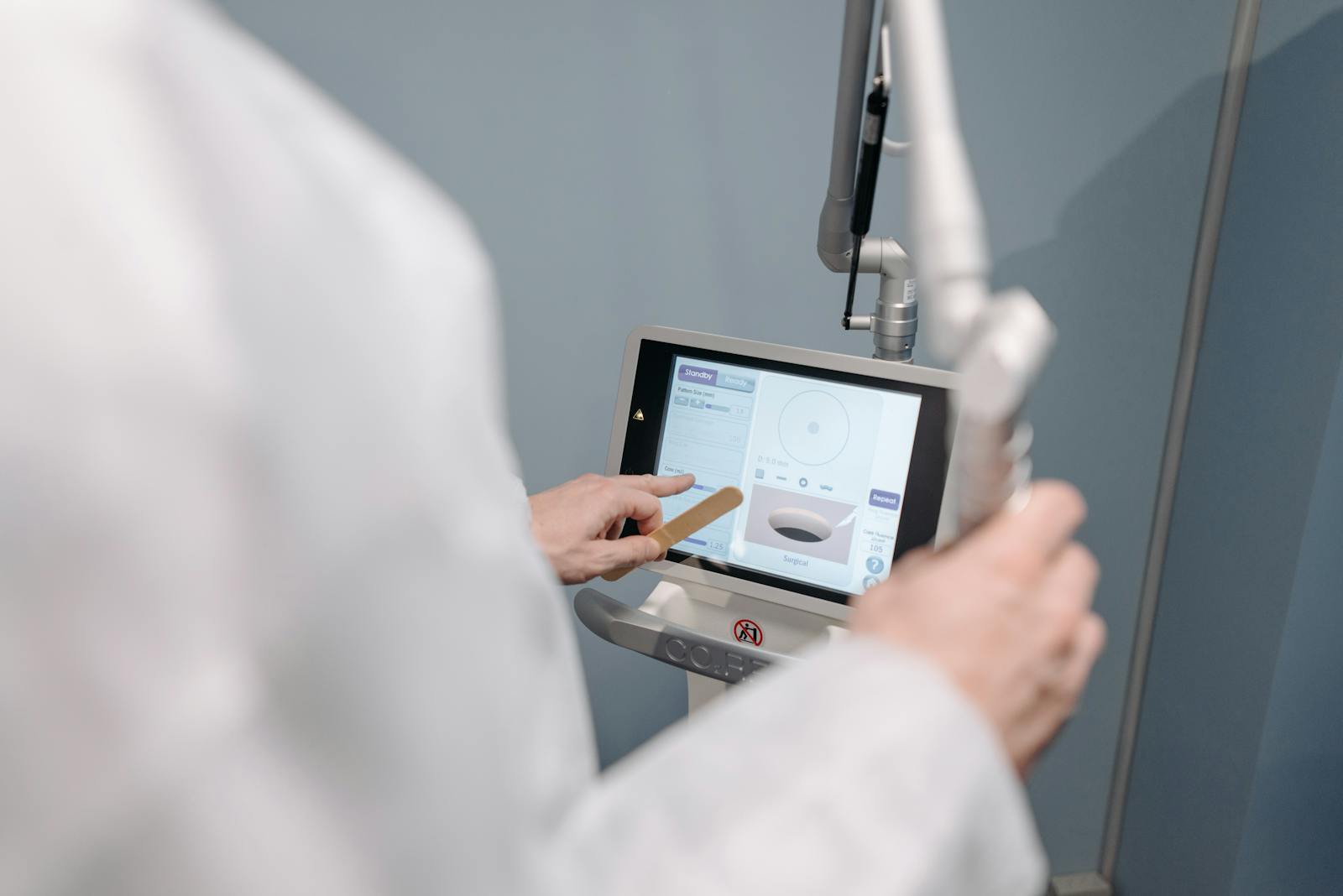
Fusion startup Xcimer Energy has activated Phoenix, a krypton-fluoride excimer laser system the company describes as the largest privately owned laser in the world. The system is a deliberate step toward a commercial laser-fusion power plant the company hopes to bring online in the mid-2030s.

What turned on
Phoenix generates over 1 kilojoule of energy at full strength, with a laser core measuring 38 metres long. The system is an electron-beam-pumped excimer laser — a type that has not been built by any organization in more than two decades. The system also demonstrates Stimulated Brillouin Scattering (SBS) pulse compression, operating at the highest energy ever achieved with that technique.
The architecture matters because it determines cost. Xcimer’s design uses long-pulse excimer lasers fired in microsecond-long bursts, then compresses that light down to nanoseconds before it reaches the fuel target. The faster the fuel is compressed, the more likely it is to fuse.
The NIF blueprint, rebuilt for economics
Xcimer’s approach is modelled on the National Ignition Facility, which in December 2022 became the first system to demonstrate that a controlled fusion reaction could release more energy than was required to ignite it. NIF trains 192 laser beams on a fuel target smaller than a pencil eraser; the lasers vaporise a gold hohlraum, converting the energy into X-rays that compress the fuel pellet until atoms fuse.
NIF proved the physics. It did not prove the economics. Its solid-state laser system is complex, expensive, and slow to cycle. Xcimer is betting that excimer amplification — the same family of gas-based ultraviolet lasers that underpins deep-UV semiconductor photolithography — can deliver more energy per dollar. Gas-based systems also avoid the thermal management problems that constrain shot rates at solid-state facilities like NIF.
The gap between Phoenix and a power plant
Phoenix’s 1 kilojoule output is a small fraction of what Xcimer says a commercial reactor will require: a system exceeding 12 megajoules — more than 10,000 times larger. The company plans to complete a prototype in 2028, followed by a scaled system designed to produce at least as much power as it consumes, with a first commercial-scale plant targeted for the mid-2030s.
The institutional layer
The Phoenix milestone sits inside a broader structural shift. Fusion research was, for decades, almost exclusively the domain of state-funded mega-facilities: NIF in California, ITER in France, the Naval Research Laboratory’s Electra and Nike systems. Private capital is now building hardware at scales previously reserved for national laboratories. The same excimer technology developed in the 1980s for inertial confinement fusion experiments is being re-industrialised by a venture-backed startup with a commercial deadline. Xcimer is one of eight companies funded under the DOE’s Milestone-Based Fusion Development Program, a public-private partnership designed to accelerate the path to a fusion pilot plant.
That transfer — from public R&D to private capex — is the quiet story underneath the kilojoule numbers. Whoever owns the lasers owns the supply curve for any energy market fusion eventually creates. Phoenix is one kilojoule today. The architecture it validates is what investors are actually buying.