
At 12:47 on a Tuesday, an Adyen engineer pushes back from the long wooden table in the canal house kitchen, sandwich half-eaten, to look at a fraud alert flashing on a colleague’s laptop. A Brazilian card issuer has started declining a sliver of Uber rides in São Paulo. By the time the coffee is poured, a rule has been adjusted and pushed. Nobody leaves the room.
This is how Adyen handles the credit-card swipes of major global platforms including Uber, Spotify, eBay, and Microsoft. The company runs all of it from a building on a former Amsterdam canal that drains into the Amstel, where engineers, account managers, compliance staff and the CEO still eat lunch at the same wooden table. When Adyen listed on Euronext Amsterdam in 2018, it had roughly 1,000 employees worldwide. That is fewer staff than a single midsize convention hotel runs on a busy weekend.
That ratio of billions of euros of valuation per employee is the part of the Adyen story that founders keep trying to copy and almost nobody manages to reproduce.
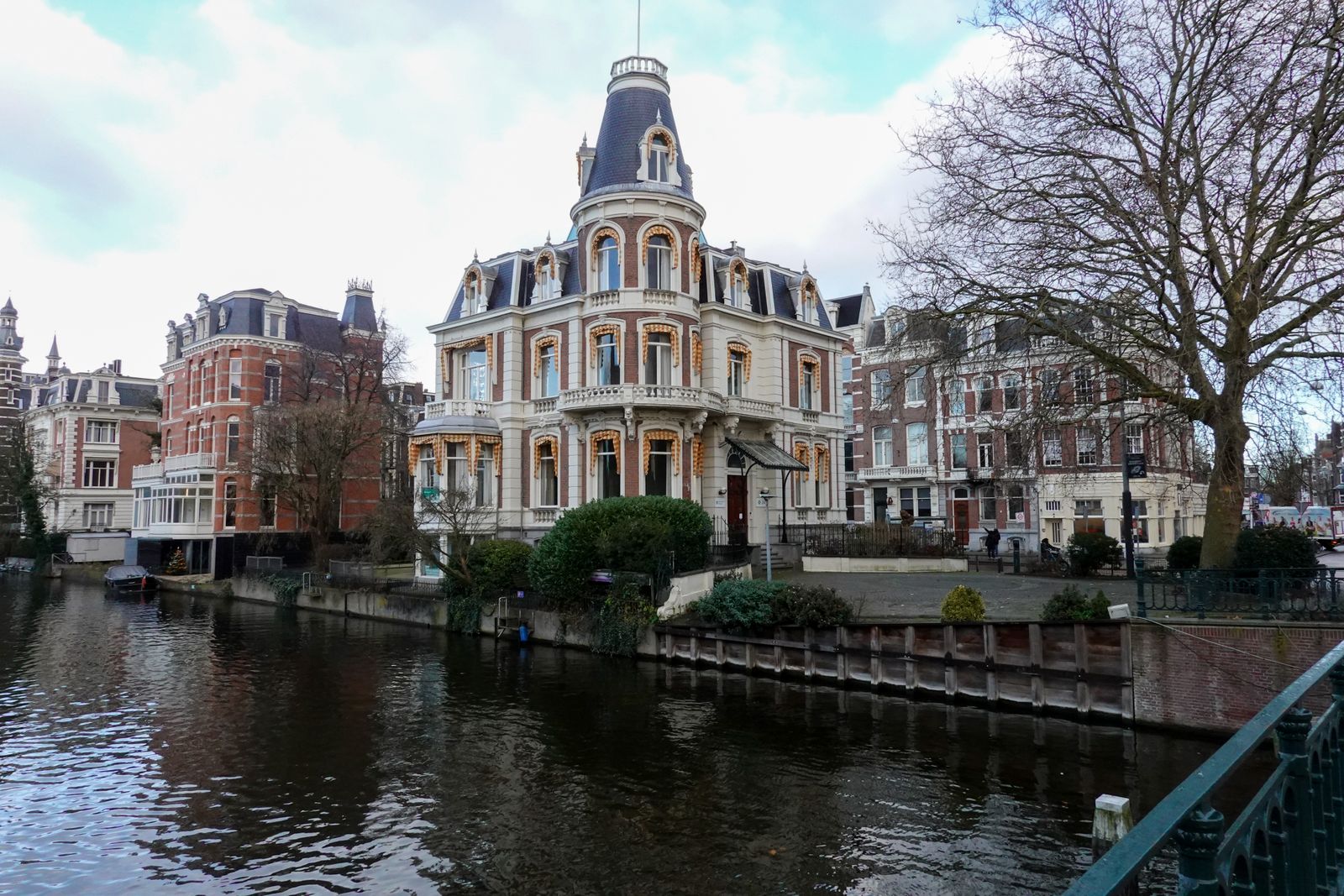
The canal house that clears Spotify’s payroll
Adyen’s headquarters sits in Amsterdam’s historic center. Inside, the architecture is deliberately ordinary. There are no glass meeting pods named after rivers. The kitchen is a kitchen. Engineers, account managers, compliance staff and the CEO take lunch at the same wooden table, a practice the company has kept since the early days when there were eight people on payroll and one platform to write.
The platform handles a single processing stack that authorises card payments, manages risk, settles funds and reports back to merchants. That single-stack architecture is why Spotify can accept a Brazilian debit card, a Japanese convenience-store voucher and a German SEPA direct debit through the same API call. Most payment processors stitch together acquired legacy systems. Adyen refused to.
How small is small
At its 2018 IPO, Adyen processed substantial transaction volume with about 1,000 staff. Stripe, the closest comparable company in the West, had roughly the same headcount that year but only a fraction of the public-market valuation. By recent years, Adyen had grown to several thousand employees while processing transaction volumes that meant each employee was tied to hundreds of millions in payment volume. A typical retail bank would need ten to twenty times the headcount to handle the same flow.
The lean-staff model is partly cultural and partly mechanical. Adyen does not run a sales-led growth motion. Merchants are onboarded through a small commercial team and integration engineers; the platform does the rest. There is no professional services arm billing hours, no army of solutions architects translating between teams.
Why the long lunch table matters more than it sounds
Communal eating is the kind of detail journalists tend to file under quirky office tradition. In Adyen’s case it is doing structural work. Research on team cohesion and performance dynamics finds that cohesion is an emergent state. It develops through repeated, low-stakes interaction patterns over time, not through quarterly off-sites. Sharing meals is one of the highest-frequency interaction patterns a workplace can engineer. The same body of work shows that when team members’ perceptions of shared goals drift apart, interaction quality degrades before performance does. A single lunch table is a cheap diagnostic instrument: when the engineering lead and the compliance officer stop sitting near each other, somebody notices within a week. In a payments business, that early-warning function is not a soft benefit. A fraud rule that has stopped matching a region’s purchasing patterns is the kind of thing a compliance officer might mention in passing over coffee, three days before it would surface in a dashboard. The physical room shortens the distance between a half-formed concern and a code change.
That is not the whole story, though. According to a 2025 Forbes essay by executive coach Elena Sarango-Muniz, obsessive cohesion can suppress dissent and produce homogeneous thinking despite surface-level diversity. Adyen’s internal answer to that risk has historically been its core principles, one of which explicitly demands that employees challenge each other’s assumptions in writing before consensus forms. The lunch table is paired with a written argument culture, not a substitute for it.
The engineering bet that scaled to Microsoft
Adyen was founded by Pieter van der Does and Arnout Schuijff after the pair sold their earlier payment company to Royal Bank of Scotland. The company name reflects a fresh start: the founders refused to reuse a single line of code from their previous venture.
The decision sounds dogmatic. It paid off when the smartphone arrived. Because Adyen’s platform was built in the era when mobile payments were emerging, it was positioned to win processing mandates from global tech platforms, contracts that effectively pulled the company into every market these clients entered. Spotify, Airbnb, Booking.com and Netflix followed for similar reasons: one integration, every market.

The CTO transition and what it didn’t disrupt
When long-serving chief technology officer Alexander Matthey stepped down, the internal handover was treated as a non-event by markets. The share price barely moved on the news, partly because the engineering organisation has always been structured around small, autonomous teams rather than a single visionary technical leader. The communal-table model means succession is distributed by design.
That structural choice has parallels with how other lean, high-leverage European technology operators are run: small teams, narrow technical stack, customer concentration in a handful of global anchor accounts.
The economics of the lean stack
At the 2018 IPO, Adyen’s net revenue was in the hundreds of millions of euros with EBITDA margins significantly above industry averages. By comparison, traditional acquirers ran EBITDA margins in the high teens. The gap is what the single platform and the small headcount buy.
The model has costs too. Volume concentration with a few megamerchants (Uber, eBay, Microsoft) means any one renegotiation can move the stock several percent in a day. In 2023, Adyen experienced significant market value fluctuation in a single trading session after a report showed slowing North American growth as US merchants traded down to cheaper, lower-quality processors. The shares have since recovered most of the ground, but the episode showed how exposed a lean operator becomes when its customer roster is short and powerful.
What the small-team model trades away
Keeping a payment processor lean while it clears substantial transaction volume requires saying no constantly: to acquisitions, to side products, to consulting revenue, to bolt-on geographic teams. Adyen has done exactly that. There is no Adyen-branded BNPL product competing with Klarna. There is no Adyen lending arm competing with Stripe Capital. There is no white-label issuing business chasing the neobanks.
The discipline shows up in retention. Work on employee engagement and retention consistently finds that flat hierarchies and shared informal rituals reduce voluntary turnover during hypergrowth phases, exactly the period in which payment processors typically lose senior engineers to competing offers. Adyen’s reported voluntary attrition has remained notably low during years when US fintech peers reported higher churn.
The cost of running this hot
There is a psychological tax to the model. Writing in Psychology Today on team conflict, organisational researchers cite work on psychological safety: small teams under high external pressure either develop strong norms for surfacing disagreement, or they implode. A payments engineer at Adyen has fewer people to hand a problem to at 2am than a counterpart at JPMorgan Chase. The single long table is also a single short escalation path.
Whether that cultural compression scales to 10,000 employees is the open question. Adyen’s San Francisco, São Paulo and Singapore offices have replicated the communal-table layout, but the company has been careful never to grow any single site past a few hundred people. The architecture of the office is, in effect, a hard cap on org-chart entropy.
What the canal house actually is
The Amsterdam headquarters is not a quaint relic. It is a deliberate piece of operational engineering. The merchant on the other end of the API, the Uber driver in Lagos taking a card, the Spotify subscriber in Jakarta, never sees the building. But the speed at which a payments bug gets triaged, the latency between a fraud signal and a rule update, the willingness of a compliance officer to interrupt an engineer mid-sandwich: those things are downstream of the room.
The numbers, set beside one another, are the argument:
Employees at IPO: roughly 1,000. Market capitalisation at IPO: about €7 billion. Valuation per employee at listing: around €7 million. EBITDA margin: well above 50%, against a high-teens industry baseline. Headcount multiple a traditional bank would need for the same flow: 10x to 20x. Maximum site size the company will tolerate: a few hundred. Distance, in metres, between the CEO’s chair at lunch and the engineer who can ship a fraud rule before dessert: roughly zero.