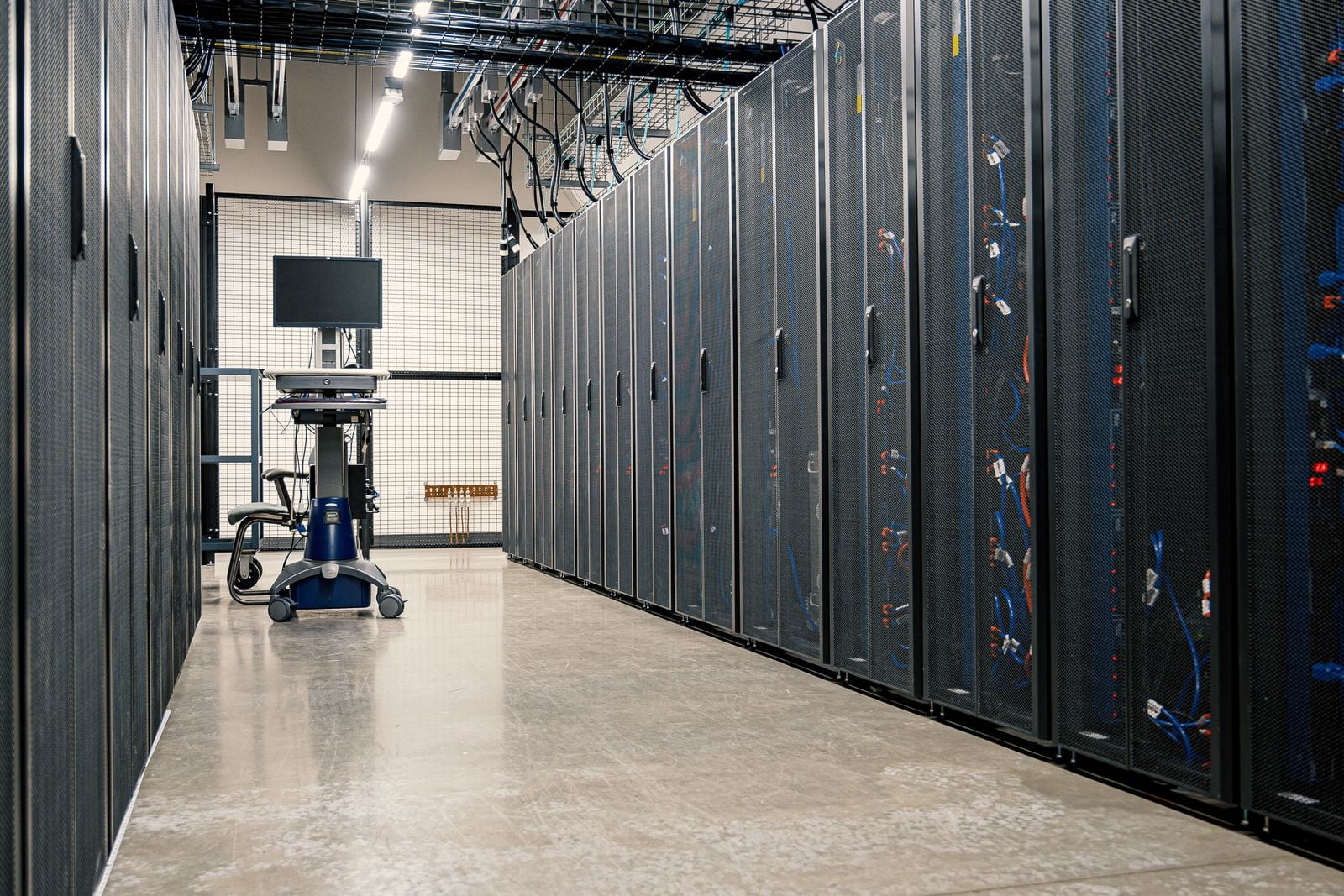
Saudi Arabia and the United Arab Emirates are spending heavily to build artificial-intelligence capacity they can control at home. Their procurement choices, however, point to a narrower form of sovereignty than the branding suggests: domestic data centers and national AI companies built on foreign chips, software and supply chains.
Multi-vendor does not mean independent
Saudi Arabia’s Humain has deliberately spread its orders across suppliers. Fortune reported a $10 billion AMD plan to deploy 500 megawatts of AI compute over five years, alongside separate partnerships with Qualcomm and Groq.
Those agreements broaden Humain’s supplier base, but they do not remove Nvidia from the center of the buildout. The Associated Press reported that Nvidia would ship 18,000 chips to Humain for a new Saudi data-center project. The order demonstrates Nvidia’s continuing importance without proving that every competing accelerator is confined to inference.
The UAE is diversifying around Nvidia, not replacing it
G42 is following a similar multi-supplier strategy at its planned Stargate cluster in Abu Dhabi. Its chief executive said deliveries would be mostly Nvidia, with AMD and Cerebras systems also included.
That supports an argument about Nvidia’s continuing weight in the project. It does not support a 400,000-chip count for the UAE site’s first stage. Buying from several vendors can improve access, pricing and resilience, but it is not the same as owning an independent chip stack.
The software moat is harder to diversify
Nvidia’s advantage extends beyond the GPU. CUDA has accumulated libraries, cloud integrations and engineering knowledge over many years. An analysis of Nvidia’s software moat notes that the platform has built up production hardening, third-party integrations and institutional knowledge across millions of developers.
The same analysis describes AMD and Intel as credible challengers while arguing that the migration penalty is measured in multi-year adoption cycles rather than quarters. That is a more precise explanation of the lock-in than saying competing hardware cannot perform the work.
A buyer can assign different accelerators to different workloads while keeping Nvidia at the center of its most mature software, networking and support environment. Supplier diversity can reduce commercial concentration without producing technological independence.
Washington’s role is changing, not disappearing
US policy still shapes access to advanced American hardware, but the rules are no longer identical across the Gulf. In July 2026, the United States relaxed export controls on advanced chips for the UAE.
That change weakens any blanket claim that Washington must approve every Gulf chip purchase individually. It does not eliminate political dependence. The UAE’s access still rests on a policy status set by Washington, while the underlying technology remains controlled by American companies and a global manufacturing network that neither Abu Dhabi nor Riyadh owns.
Why Nvidia remains difficult to dislodge
The financial scale helps explain why buyers continue to prioritize access. For the quarter ended October 26, 2025, Nvidia reported $51.2 billion in data-center revenue, up 66% year over year.
Capital can secure land, energy, construction and long-term purchase agreements. It cannot instantly reproduce a mature accelerator ecosystem, advanced manufacturing capacity or the engineering work already built around CUDA. Saudi Arabia and the UAE can buy scale faster than most countries, but they cannot remove every external dependency at the same speed.
What sovereign AI means in practice
The procurement record does not show that Saudi Arabia and the UAE have abandoned sovereignty. It shows that they are pursuing a limited and pragmatic version: domestic data centers, greater local control of workloads and data, national AI companies, and privileged access to foreign technology.
That is strategically valuable, but it is different from owning the full stack. Riyadh and Abu Dhabi are moving more computing capacity onto domestic soil while accepting continued reliance on foreign chip designers, software ecosystems and manufacturing networks. The result is not the opposite of sovereignty. It is sovereignty negotiated through interdependence.