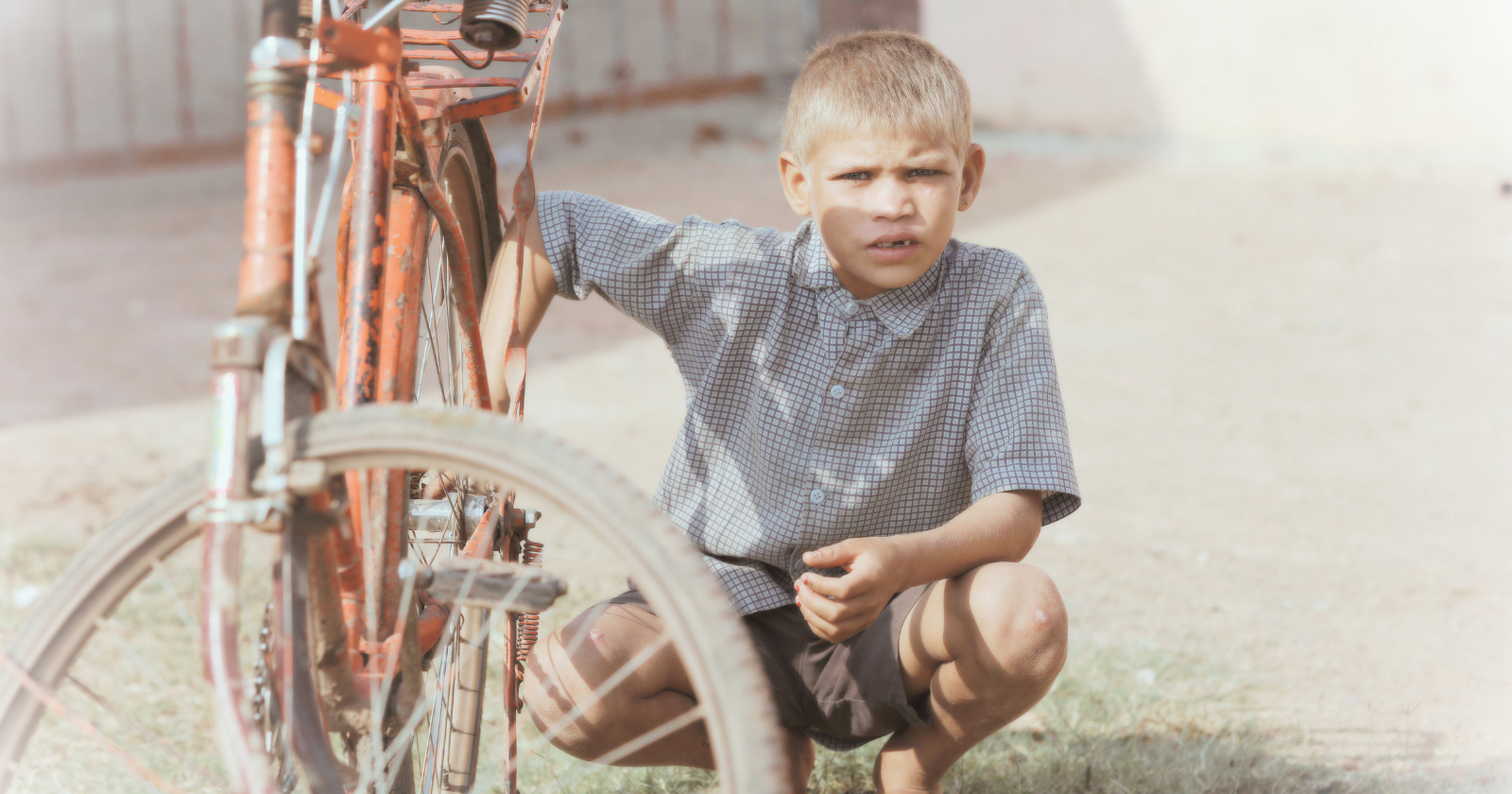
There is a version of the 1970s childhood that gets handed around now as a kind of lost paradise. School let out, the front door opened, and the child was gone until dinner. No timetable, no supervising adult, no arranged playdate with a start and finish. Just a stretch of empty hours that the children themselves had to fill.
Told against the standards of the present, that looks careless. A modern parent who let a seven-year-old vanish into the neighbourhood until dusk would be answering questions. Yet a growing line of argument in developmental psychology reads those empty afternoons the other way around. The unstructured time was doing work. It gave children practice at a capacity most of their modern counterparts get far fewer chances to build: organising their own play, with other children, without an adult running it.
What the research actually argues
The clearest version of this case comes from Peter Gray, a research professor at Boston College who has spent years documenting the long decline of what he calls independent, self-directed play. In a 2011 paper in the American Journal of Play, The Decline of Play and the Rise of Psychopathology in Children and Adolescents, he laid out the pattern: across several decades in the United States and comparable countries, children’s free play with other children fell sharply, while measures of anxiety, depression and a felt lack of control over their own lives rose over the same stretch.
In 2023, Gray, the anthropologist David Lancy and the psychologist David Bjorklund extended the argument in the Journal of Pediatrics, in a paper titled Decline in Independent Activity as a Cause of Decline in Children’s Mental Well-being. Their thesis is stated plainly in the abstract: that a primary cause of rising mental disorders in children is a decades-long fall in opportunities to play, roam and act independently of direct adult oversight. In a plain-language summary from Florida Atlantic University, where Bjorklund teaches, he framed the point around children needing to feel they can handle the real world, not only the world of school.
Two things are worth keeping straight here. This is largely one research group’s synthesis of existing evidence, much of it correlational and historical, not a settled consensus reached across the field. It is worth taking seriously, but it should not be read as the final word.
The distinction matters because a great deal changed across those same decades. Television, then computers, then phones. Longer school days and more homework. Smaller families, busier parents, a sharper culture of safety. When two long trends move together over fifty years, one declining and one rising, the pattern is suggestive. It is not proof that the first caused the second.
What the empty afternoon was training
Set the causal question aside and look at the activity itself, because that part is less contested.
When children organise their own play, they take on work that a supervised, adult-designed activity quietly removes. They have to agree on the rules, and then agree again when someone breaks them. They have to decide what the game is, keep it going when it sags, and settle the arguments that would otherwise end it. Nobody is standing by to adjudicate a dispute or restart the fun when it stalls. The children carry all of that themselves.
This is the ordinary machinery of a pick-up game, a fort, an invented world in a vacant lot. It is also the machinery of negotiation, decision-making, self-restraint and the plain sense that you can act on the world and change what happens next. Gray’s argument is that this last one, the feeling of being in charge of your own experience, is what independent play builds and what its loss removes.
The idea is older than his papers. Lev Vygotsky, in a 1933 lecture on play, and Jean Piaget both treated make-believe and rule-making play as central to how children learn to think. The historian Howard Chudacoff, in Children at Play, his history of American childhood, described a long tradition of children constructing their own games out of whatever the street and the season offered, mostly out of adult sight. What the 1970s had was not a new invention. It was the last decade in which that older arrangement was still the default rather than the exception.
What the nostalgia leaves out
None of this is a story about wiser parents.
The freedom of the 1970s afternoon was rarely a deliberate method. Very few parents were consciously withholding supervision to cultivate independence. The unstructured hours came from circumstance: a lower ambient level of parental anxiety, fewer organised activities to fill the calendar, and a neighbourhood that still held other unsupervised children to play with. The skill-building was a side effect of the setup, not the aim of a plan.
And not every empty afternoon was generative. Some were lonely. Some were genuinely unsafe. The same absence of adults that let one child invent a world let another child sit alone, or worse. Reading the whole era as an intentional apprenticeship in self-reliance launders a lot of real neglect into pedagogy after the fact. The narrower claim survives that objection. The same lack of supervision that left some children exposed gave others real practice at running their own play. Both were true at once.
Why you cannot simply hand it back
The practical trap in all of this is the assumption that a parent today could reproduce the effect by decree. Send the child outside, take away the phone, refuse to schedule the week, and the old competence will grow back.
It will not, or not easily, because the missing ingredient was always shared rather than personal. Self-directed play with other children requires other children who are also free at the same hour, adults nearby who tolerate a stray kid in the yard, and space safe enough to be left alone in. A single child sent out onto an empty street gets a thinner version of the thing, if any version at all. What vanished was a piece of neighbourhood infrastructure, and one family opting out of the calendar cannot rebuild it alone.
There is also a live disagreement about how much weight the loss of independence can bear. The social psychologist Jonathan Haidt, in his 2024 book The Anxious Generation, draws on much of the same evidence but puts far more of the causal load on the arrival of the smartphone and the reshaping of adolescence around it. Gray’s account and Haidt’s overlap, but they are not the same claim, and the question of which factor matters most, or how they compound, is unresolved. A reader who takes either as the whole explanation is getting ahead of what the evidence can currently settle.
What can be said with more confidence is smaller and steadier. Children given real stretches of unsupervised time with other children tend to get practice at running their own affairs, and that practice is hard to reproduce inside a structured activity, however well designed.
The empty afternoon was never something anyone set out to teach. It was something the era happened to afford, and it receded as the era changed.