

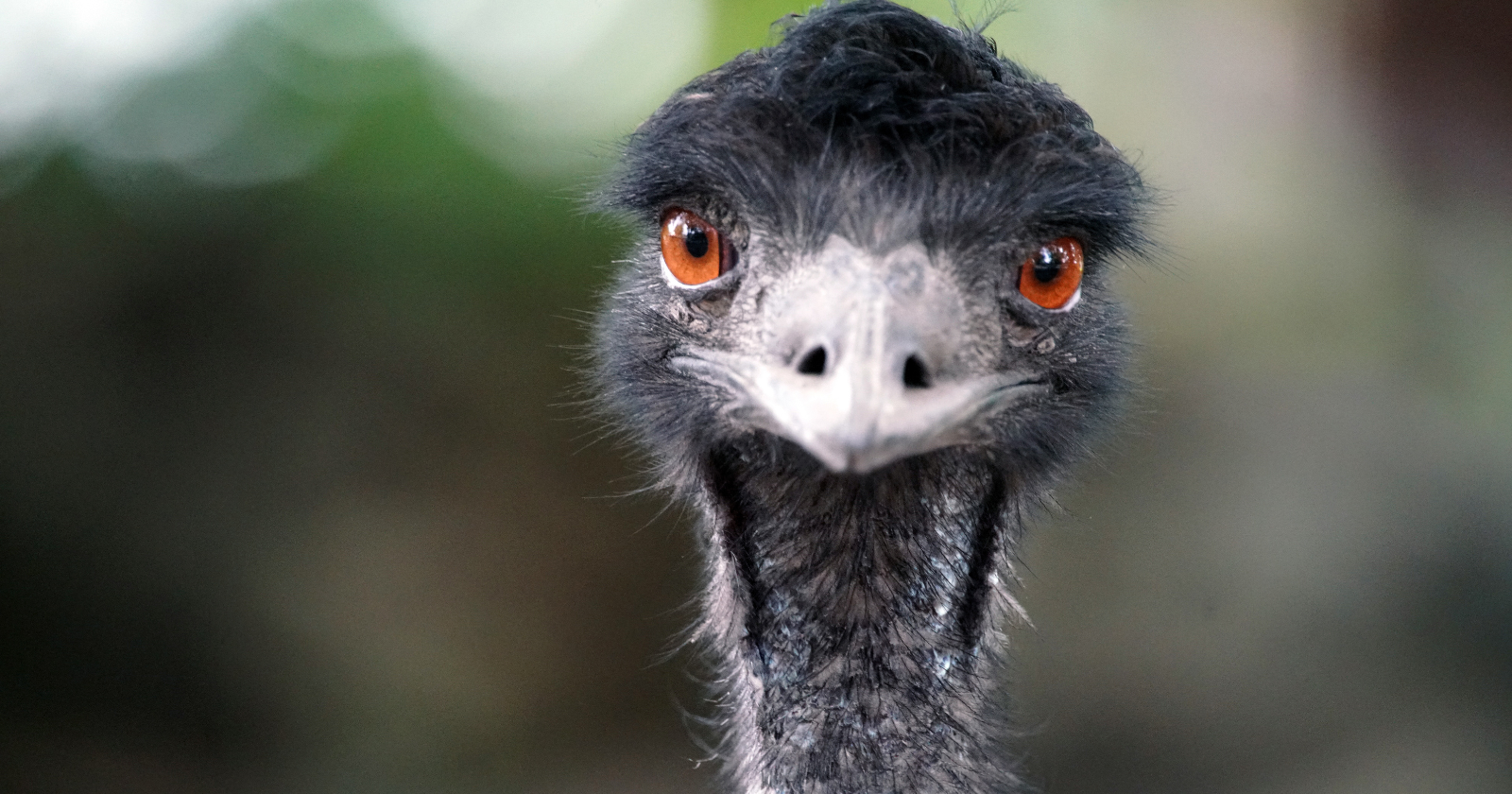
In October 1932, the Australian government dispatched a military detachment to the wheat country east of Perth. The force consisted of Major G.P.W. Meredith of the Seventh Heavy Battery of the Royal Australian Artillery, two soldiers, two Lewis light machine guns, and 10,000 rounds of ammunition.
The enemy was approximately 20,000 emus.
What followed has gone down in history, only half-jokingly, as the Great Emu War, and Australia lost it.
How a country ends up at war with a bird
Nothing about the setup was funny to the people living it. Western Australia’s wheat belt had been settled after the First World War partly by ex-soldiers, veterans handed marginal farmland under a soldier-settlement scheme and encouraged to grow wheat. By 1932 the Great Depression had collapsed wheat prices, the government’s promised subsidies had not materialized, and the farmers were hanging on by their fingernails.
Then the emus arrived. Emus migrate inland after their breeding season, and that year an enormous population, commonly put at 20,000 birds, discovered that the new farms lay directly on their route, offering cleared land, crops, and water piped in for stock. A six-foot flightless bird that can weigh 40 kilograms and sprint at 50 kilometers per hour is a formidable agricultural pest at any number. Twenty thousand of them flattened fences as they came, and every gap they tore open let rabbits pour through after them. The ex-soldier farmers, who knew exactly what machine guns could do, petitioned the Minister of Defence for military assistance. The minister, George Pearce, agreed, on condition the farmers fed and housed the troops and paid for the ammunition. A Fox Movietone cameraman came along; the campaign was expected to make good newsreel footage and double as target practice.
The campaign
Contact with the enemy came on 2 November 1932, near the town of Campion, and the war immediately stopped following the script. A group of about 50 emus was spotted; the birds were out of range, so beaters tried to herd them toward the guns, at which point the flock did the thing that would define the entire conflict: it broke into small parties and scattered in every direction, presenting no massed target at all. The first bursts killed perhaps a dozen birds.
Two days later Meredith set an ambush at a dam where a thousand emus were seen approaching. The gunners waited until the birds were at point-blank range and opened fire, and after roughly a dozen kills the Lewis gun jammed. The survivors dispersed before the weapon could be cleared, and no further birds were seen that day.
By the sixth day, around 2,500 rounds had been fired for a body count that observers put anywhere from 50 to 200. Meredith, increasingly desperate, mounted one of the guns on a truck to chase the birds down, a tactic that failed completely: the ride over rough paddocks was so violent the gunner could not fire a shot, and the emus outran the truck anyway. Meredith’s own reports took on a tone of grudging military respect, comparing the birds’ ability to absorb bullets and keep running to the invulnerability of tanks, and remarking that an army with the bullet-carrying capacity of emus could face any fighting force on earth.
Each emu pack, observers noted, now seemed to post a lookout, a tall sentinel bird that watched while the others fed and gave the alarm at the first approach. The birds’ guerrilla logic was simple and unbeatable: never bunch up, never stay in range, and always be faster than the enemy.
Surrender
Word of the fiasco reached Canberra within the week. On 8 November, after questions in the federal House of Representatives, where one member asked, to laughter, whether a medal would be struck for the war, Pearce withdrew the troops. The tally for the first engagement: roughly 2,500 rounds expended, somewhere between 50 and a few hundred emus killed, out of 20,000. Ornithologist Dominic Serventy delivered the verdict that stuck: the emu command had evidently ordered guerrilla tactics, and the machine guns’ dreams of point-blank fire into massed birds were dissipated, leaving the field to an unwieldy army facing an enemy that would not stand still.
The farmers’ pleas resumed almost immediately, and the gunners actually returned within the month for a longer second operation, which claimed nearly a thousand birds and expended almost the full 10,000 rounds, still under one bullet per emu in effectiveness terms and a dent of perhaps five percent in the emu population. The military never came back. The press, in Australia and abroad, gleefully scored the contest for the birds, and the name Emu War, with the emus as victors, was fixed forever.
What actually beat the emus
The coda is less charming and worth telling straight. Australia did not make peace with the emus; it changed weapons. The government reverted to a bounty system, paying farmers per beak, and it worked with grim efficiency: over 57,000 bounties were claimed in six months of 1934, hundreds of thousands more across the following decade, killing far more birds than the army ever managed. What finally secured the wheat belt was not firepower but fencing, hundreds of kilometers of emu-proof barrier that simply kept the migration out.
The emu, for its part, came through it all completely fine. The species remains abundant across Australia, adorns the national coat of arms alongside the kangaroo, and enjoys the unique distinction of being, by popular acclamation, the only bird ever to defeat a modern military in the field. The real lesson of 1932 was the one Meredith’s trucks discovered in the first week: a machine gun is a weapon for enemies that mass together, and the emus declined, individually and by the thousand, to cooperate.
