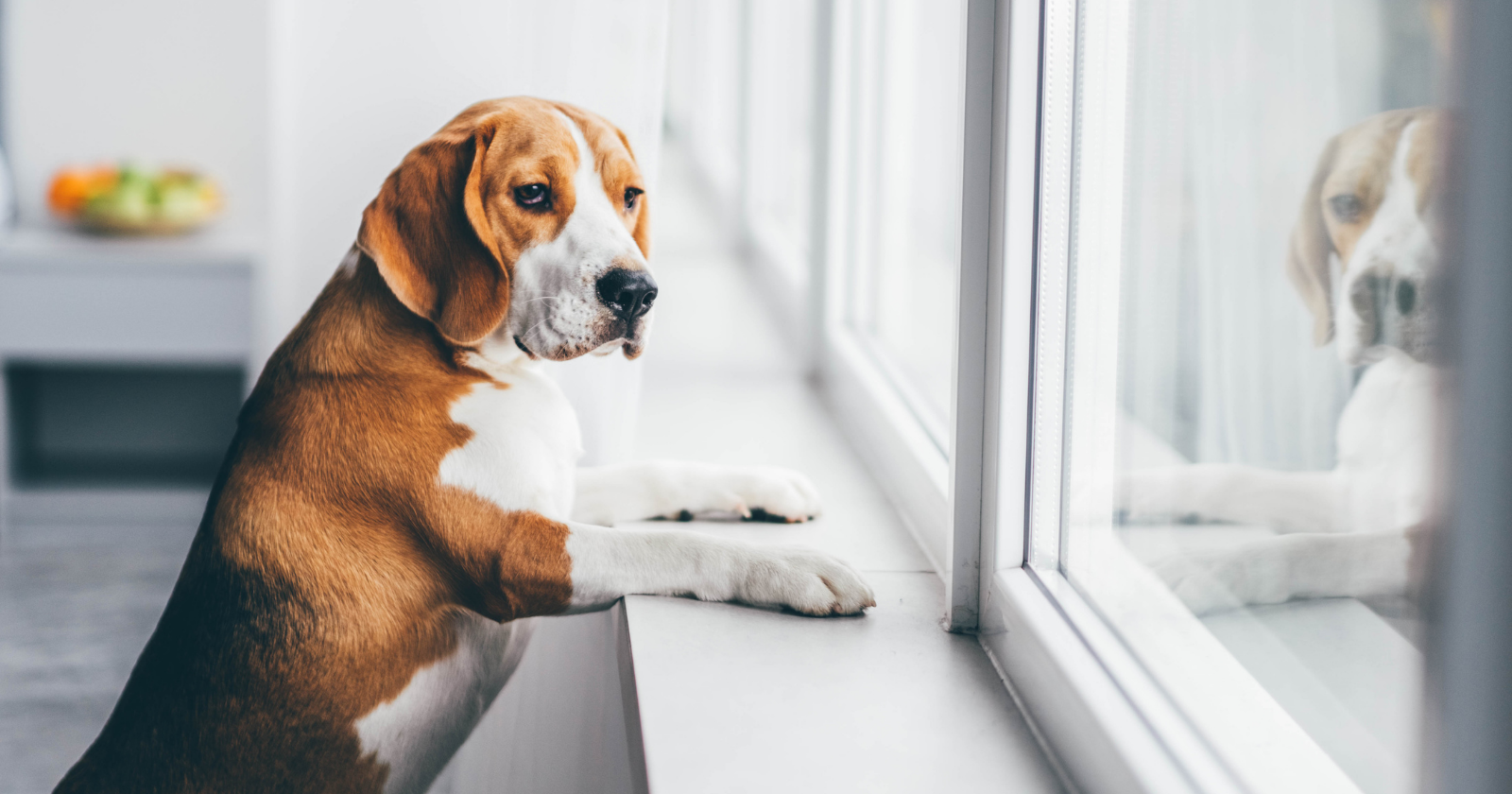
The keys rattle and the dog reads it instantly. Ears down. Tail gone quiet. Eyes doing that particular flavour of betrayal only a dog can manage. By the time the door is locked, a fully grown adult is standing in the hallway re-litigating whether the meeting could have been an email.
Friends are no help here. Tell them and you get the same three lines back: the dog sleeps most of the day, it’s four hours, have a word with yourself.
Psychology takes a far more sympathetic view. And it turns up with the receipts.
Owner guilt scores about the same as parent guilt
Lori Kogan and her team at Colorado State University decided to measure the thing properly. They took the Guilt about Parenting Scale, swapped the word “child” for “dog”, and handed it to 592 American dog owners in a study published in the journal Animals. Average score came in at 44.75 out of 70. The human-parent version of the same scale has produced averages around 49.
Close enough to make the point. This is the same emotional machinery, running at roughly the same intensity, pointed at a labrador.
Around a third of the working respondents scored above the established cutoff for work-family conflict once “family” was replaced with “dog”. The two heaviest sources of guilt were time and attention, and leaving the dog alone. Kogan’s team called the whole business disenfranchised guilt, borrowing a term from pet bereavement research, because almost nobody validates it and most people carry it privately.
Compensating behaviour showed up in the numbers too. Roughly 40 per cent of respondents cut back on socialising because of the dog, and about 35 per cent gave the dog time at the expense of other family members.
Why the dog registers as an attachment figure
Why does an animal that cannot operate a fridge end up occupying the same emotional slot as a spouse? Attachment theory has an answer. Sigal Zilcha-Mano and colleagues ran two experiments testing whether pets meet the criteria for an attachment figure, meaning a source of comfort when things go wrong and a base of confidence for heading out into the world. In one, 165 owners generated life goals. In the other, 120 owners sat through a stress task with their blood pressure monitored.
Having the pet in the room, or in some conditions merely being prompted to think about it, changed the results. Owners generated more life goals, felt more confident about reaching them and showed a smaller blood pressure spike under stress.
That is the profile a good human relationship produces. Feeling wretched about walking out on an attachment figure is therefore fairly ordinary. Its absence would be the stranger finding.
Anxious attachment turns the volume up
Nobody pays this tax at the same rate. A follow-up study found that owners with an anxious attachment style, the pattern where closeness feels both necessary and precarious, reported considerably higher dog-parent guilt. Anxious attachment on its own accounted for about 17 per cent of the variation in guilt scores. Kogan’s later work found younger owners and women scoring higher, with heavier guilt tracking alongside higher measured anxiety and depression.
Odd wrinkle here: dog guilt barely overlapped with general guilt-proneness in Kogan’s data. This isn’t a guilty personality spilling onto the dog. It’s something the dog specifically provokes.
Sometimes the guilt is telling the truth
None of which makes every twinge a false alarm. Researchers tracking 1,807 dogs across the UK through 2020 recorded signs of separation-related behaviour in 22.1 per cent of them before the pandemic, dropping to 17.2 per cent later in the year as household routines shifted again.
The RSPCA advises leaving a dog no longer than four hours, and points to research suggesting most dogs find being alone difficult, with roughly half showing no obvious signs of it. Owner reports almost certainly undercount, given that panting, lip-licking and pacing all happen behind a closed door.
So the guilt occasionally carries real information. Working out which case applies costs about the price of a cheap camera and two weeks of attention.
The homecoming matters more than the exit
Here the research turns counterintuitive. The Generation Pup longitudinal study tracked puppies to six months old. Owners who fussed over their dog’s bad behaviour the moment they walked back in had puppies six times more likely to develop separation-related behaviour later on. Puppies who slept nine hours or more overnight in an enclosed space were less likely to develop it.
Those are correlations rather than demonstrated causes, and the authors are careful to say so.
The practical takeaway lines up with standard training advice regardless: keep both ends of the absence low-key. Make a fuss over the anxious behaviour on your return and the dog has less reason to unlearn whatever caused it. A boring exit and a boring homecoming break the cycle instead.
Guilt at the door is evidence of a real bond behaving the way bonds behave. Whether it is also evidence of a distressed dog is a separate question, and one that a camera and a fortnight of short, dull absences will answer far better than another month of feeling terrible.