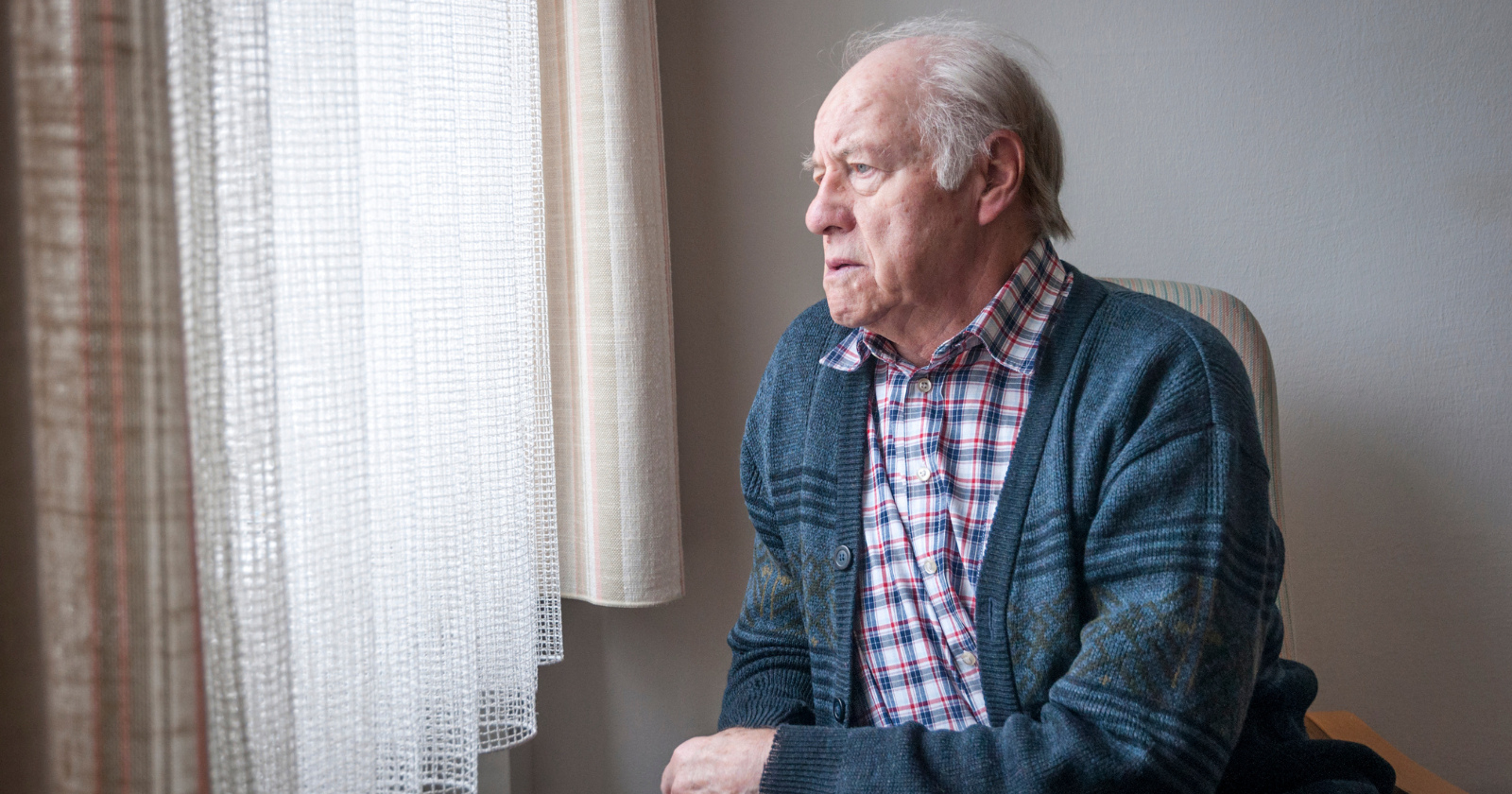
There is a man on my floor who waters the corridor plants nobody asked him to water. He is eighty-six. Last month I watched a server at the noodle shop downstairs take his order, listen to it, then turn to me and ask what he wanted.
He had already said what he wanted. Twice. In two languages.
On the walk back up he said something I have not been able to put down. “I have become furniture.”
I have seen the idea going round that people who feel invisible after seventy are misreading things, and that what they are really feeling is a lifetime of usefulness running out. I think that gets it backwards in both halves, and the backwards version does real damage to the people who swallow it.
He was reading the room correctly
Start with the easy part. The invisibility is not a perception problem. It is a fairly accurate report of how a room behaves.
In 2021 the WHO and three other UN bodies pulled together the first global report on ageism, built partly on a survey of 83,034 people across 57 countries. One in every two people held moderately or highly ageist attitudes towards older people.
Read that again with my neighbour in mind. If half the room has absorbed the idea that he is diminished, then every second person he deals with is running that script. He is not imagining being skipped over. He is being skipped over, at scale, by people who would be horrified to hear themselves described as prejudiced.
The tone gives it away before the words do
There is a name for the giveaway. Researchers call it elderspeak: the slow, loud, sing-song register people slip into around old faces. Short sentences. Baby vocabulary. “Are we ready for our lunch?” Pet names from strangers.
A review of the research on it is blunt about where it comes from: the trigger is ageism, switched on by grey hair or any sign of frailty. Older adults reliably read it as patronising, and rate the person doing it as less respectful. Most of that work was done in hospitals and care homes rather than noodle shops, so I am extending it. But anyone who has watched a waiter crouch down to shout the menu at a sharp octogenarian knows the register travels.
The cruelty of it is that it arrives dressed as kindness. You cannot object to it without looking difficult, which is its own trap.
The dangerous bit is the conclusion, not the feeling
Here is where I part company with the original claim.
Feeling invisible is accurate. Concluding from it that your usefulness has expired is a leap, and it is the leap that costs you.
Becca Levy and her colleagues at Yale followed 660 people aged fifty and over for more than two decades. Those who had held more positive views of their own ageing, measured up to twenty-three years earlier, lived a median 7.5 years longer than the gloomier ones. The gap survived adjustment for age, sex, socioeconomic status, loneliness and functional health, and the researchers found it was partly explained by something they called will to live.
Caveats, because this gets waved about badly: it is one cohort, it is correlational, and nobody has shown that cheering up adds years to a specific person’s life. What it does suggest is that the story you tell yourself about your own age is not cosmetic. It behaves like a health variable.
So when a man decides he is furniture, he is doing more than feeling low. He is adopting the room’s opinion as a self-assessment, and that download has a cost attached.
What I learned by becoming useless at thirty-six
I will keep this short because it is not really my story.
I sold my restaurants in 2020. One month I was the person forty-odd people phoned when the walk-in freezer died at midnight, and the next month I was nobody’s answer to anything. My phone went quiet in a way I found genuinely disorienting. Nobody needed me to sign a thing.
What surprised me was how quickly I concluded something about myself rather than about my circumstances. I was not less capable in July than I had been in June. I had simply stopped being addressed. It took me most of a year to spot the difference, and I had youth, options and a bank transfer to soften it. My neighbour has none of those cushions and gets the same treatment daily, from strangers.
Usefulness, it turns out, is a terrible thing to build a self on. It is not a property you own. It is a thing other people decide to route through you, and they can stop routing at any time, for reasons that have nothing to do with your competence.
Small things that seemed to actually help
I am wary of tidy advice here, so these are just the things that changed the temperature on my floor.
Talk to the person, not their companion. If someone has ordered, do not audit it with whoever is standing next to them. This sounds absurdly basic. Watch for it this week and count how often it happens.
Ask questions only they can answer. Not “how are you keeping” but “how did they run the lifts in this building in the eighties”. Specific knowledge is the fastest route back to being a person with a name.
Give a job with a deadline, not a hobby. My neighbour now signs for my parcels when I travel, which is a genuine inconvenience to him and, I suspect, the point.
And if you are the one feeling like furniture: separate the two claims. That the room is behaving badly is very probably true, and half the research literature agrees with you. That you have run out is a conclusion you have been handed, and you are allowed to decline it.
He is out there now with the watering can. The plants, for the record, are thriving.