

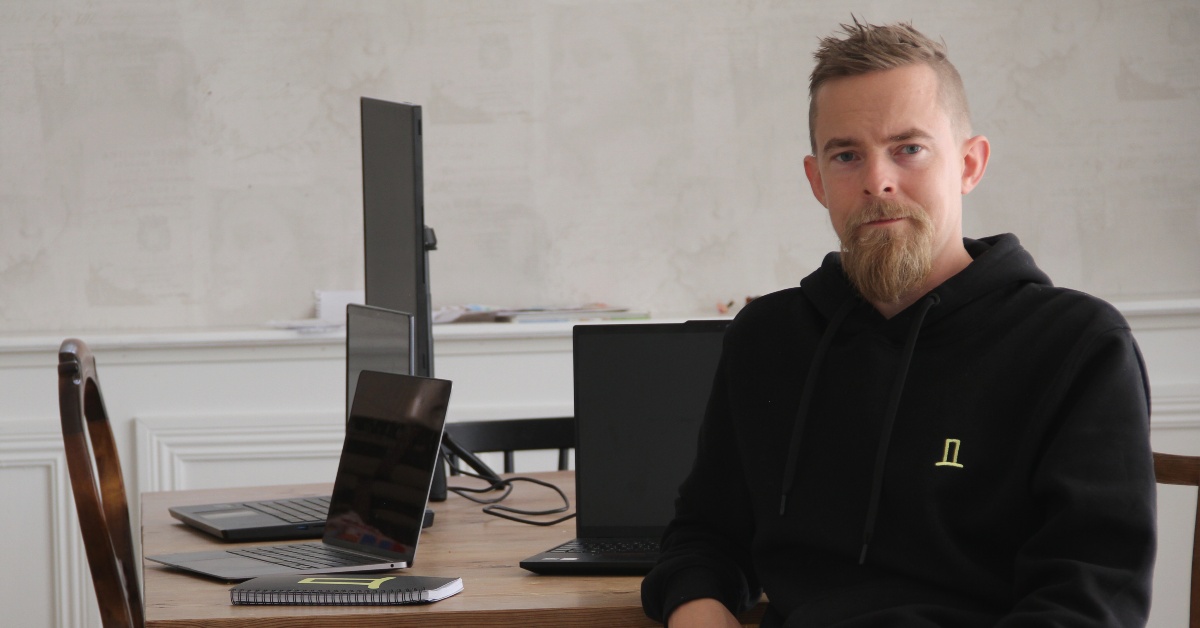
Farang, an AI research lab based in Stockholm, has raised €1.5M in seed funding to develop its next-generation large language models.
Contentlockr
Swedish AI research lab Farang has raised €1.5M in seed funding to develop a next-generation AI architecture that outperforms existing transformer models while using 25 times fewer computational resources.
The Stockholm-based company, founded in 2025, secured investment from Voima Ventures and the Amadeus APEX Technology Fund, alongside notable angel investors including Tero Ojanpera (Co-founder, Silo AI), Nilay Oza, and Niraj Aswani (Former Founders, Klevu).
Capital utilisation
The funding will primarily scale up Farang’s proof-of-concept models and invest in the compute power needed for training and fine-tuning models toward select specialisations such as programming and medical applications.
The company plans to target individual developers and AI enthusiasts as early users through its launched waitlist programme.
Led by founder Emil Romanus, an engineer with over 20 years of experience in search and AI, Farang comprises a team of five experienced researchers, developers, and business professionals. The company has developed a novel foundational architecture that competes directly with the Transformer models powering ChatGPT, Claude, and Gemini.
AI architecture challenges industry standards
Unlike existing models that predict text word-by-word, Farang’s architecture comprehends the complete response first—akin to imagining a picture before painting it—then translates that concept into words.
This thinking process is conducted internally through non-textual mechanisms, resulting in more coherent responses while dramatically reducing computational requirements.
The company initially targets specialised applications where current AI assistants struggle, including AI assistants for specific programming languages and frameworks, specialised medical fields, and internal company AI tools.
Ambitious vision from experienced leadership
Farang’s technology enables organisations to deploy specialised AI models on their own premises with full privacy controls—a critical advantage for healthcare, legal, and financial services companies handling sensitive data.
Rather than sending proprietary information to external AI services, companies can train and run Farang’s models entirely in-house while maintaining complete data sovereignty.
“We’re not building another application layer on top of existing models. We’ve developed a completely new foundational architecture that enables us to create specialised AI assistants that outperform current solutions in specific domains like programming and medicine, while using twenty-five times less computational resources,” says Emil Romanus, Farang’s Founder.
Strategic market entry with global ambitions
Farang’s first target market is React programming, where it aims to produce more optimised and iterable code than existing LLMs. However, the company has set ambitious long-term goals to become a market leader in artificial intelligence, ultimately aiming to compete with and surpass OpenAI in the general AI space by first proving its architecture in specialised domains.
“We look for exceptional founders and technologies that reset the curve—not just optimise around the edges. Farang showcases how Europe can step up in the global AI race, as its foundational architecture provides a true paradigm shift—specialised, efficient, and enterprise-grade from day one,” says Inka Mero, Managing Partner & Founder of Voima Ventures.
