

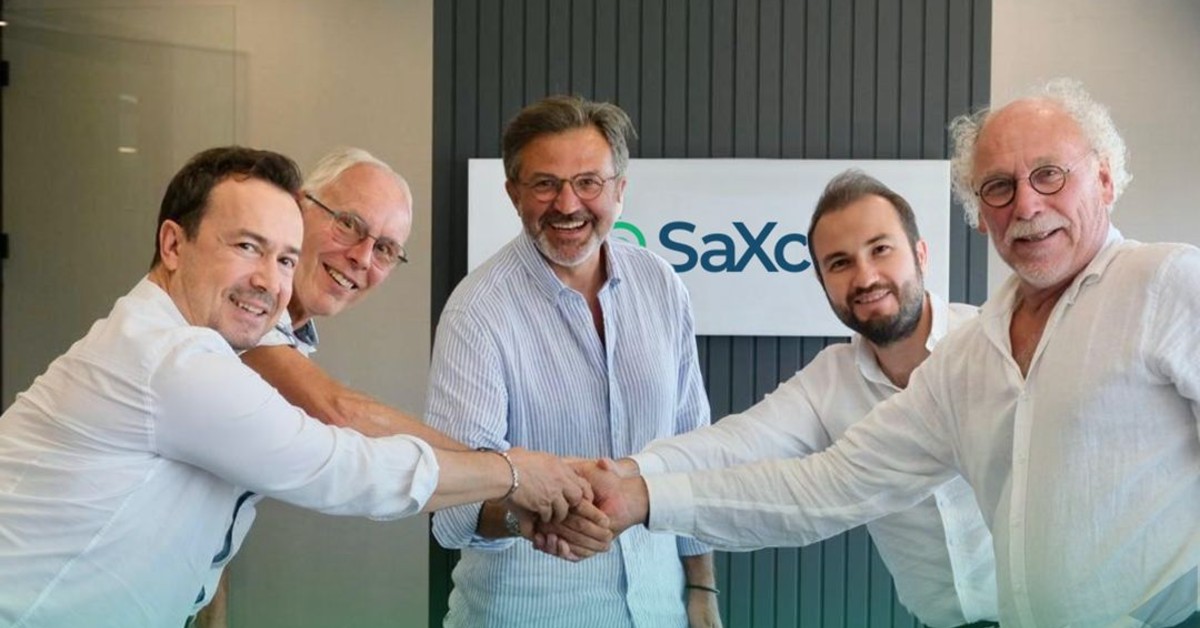
Dutch company SaXcell secures fresh funding to expand its operations in Enschede, Netherlands, with support from Turkish shareholders.
Contentlockr
Overijssel-based SaXcell, a Dutch company turning textile waste into valuable new fibres, has secured €4M of a planned €5M investment to build a production plant and pulp development centre in Enschede, the Netherlands.
The funding comes from Turkish shareholders Modeco Textile, Uğurlular Tekstil, and Selin Tekstil, supporting the company’s plan to scale circular textiles.
Pushing textile recycling
Founded in 2011, SaXcell produces regenerated man-made cellulose fibre from used cotton textiles. The fibre is used to make new textiles, including garments and household textiles.
The recycling process dissolves used cotton textiles in a closed-loop system. Water and chemicals used in the process are recycled. The resulting pulp is converted into fibres through lyocell wet spinning. SaXcell collaborates with Birla Cellulose for this step, and the fibres can be processed using existing textile equipment.
The process requires about 10 litres of water per kilogram of SaXcell fibre, compared to at least 2,000 litres per kilogram for conventional cotton. The process also reduces the need for dyes.
The SaXcell recycling process
The SaXcell recycling process begins with professional organisations collecting discarded textiles and transporting them to sorting centres. At the centres, textiles are categorised for reuse or recycling, and SaXcell requires at least 90 per cent cotton content.
Non-fibre components such as zippers, buttons, and trimmings are removed, and contaminants like colours, polyester, and elastane are extracted using chemicals that are recycled during the process, resulting in SaXcell cellulose pulp. The pulp is then dissolved in a lyocell wet spinning process to produce man-made cellulose fibres.
Currently, SaXcell fibres contain 30 per cent SaXcell pulp and 70 per cent wood pulp, with plans to gradually increase the SaXcell pulp content to 100 per cent.
These fibres are cut to specific lengths and spun into yarns, with colouring possible at the fibre, yarn, or fabric stage. The yarns are used to weave or knit new textiles, which production facilities convert into garments or household items.
Brands and retailers use SaXcell fibres to reduce the environmental impact of their products.
Finally, consumers are encouraged to return used textiles to collection bins or donate them to secondhand shops, ensuring that textiles are separated from other waste to maintain quality for recycling.
