


Travel is the most rewarding experience, but in the competitive landscape of travel technology, where established players dominate market share, Amsterdam-based Vio.com has carved out its niche by embracing what many startups struggle with: building a truly international workforce from the outset.
The hotel booking platform, which helps travellers access better prices through features like split booking and price-sensitive auctions, has grown to 200 employees, boasting a striking demographic reality: 90 per cent of its workforce comes from other countries, and 40 per cent work remotely from abroad.
“There is no tech ecosystem in the Netherlands without a large portion of international talent, and it’s true for every company that passes the 20 FTE mark,” says Oz Har Adir, CEO and founder of Vio.com.
The STEM Talent Gap
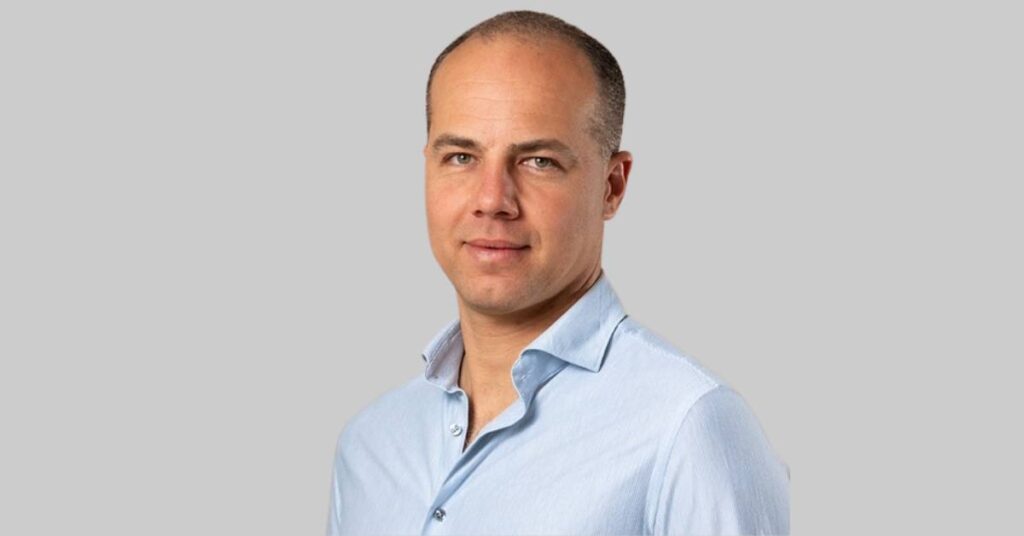
Har Adir’s observation points to a fundamental challenge facing Dutch tech startups. While the Netherlands offers an attractive environment for founding companies and accessing venture capital, it faces a shortage of both technical talent and experienced managers who have scaled companies.
At Vio.com, approximately three-quarters of the 200-person team hold STEM qualifications. Given the relatively low share of STEM graduates produced domestically, the company sources this expertise primarily from abroad.
“If we would like to see these jobs go to the Netherlands’ young people, we must expand STEM or expect startups like Vio.com to either recruit from abroad and migrate to the Netherlands or outsource these roles,” Har Adir explains, adding, “There is no future for a company like ours without a STEM-educated workforce.”
The company itself was founded by international talent. Har Adir, an Israeli who came to the Netherlands to study at Erasmus University Rotterdam, started the company upon graduation, with three of his four co-founders also hailing from abroad (Turkey, Spain, and Ukraine).
The HSM Visa as Strategic Infrastructure
Vio.com’s international hiring strategy centres on the Netherlands’ Highly Skilled Migrant (HSM) Visa program, which the company views as an underappreciated national asset.
The company’s first experience with the visa came through a Logic Masters student who joined during his post-graduation orientation year visa. When that period ended, Vio.com became recognised as an HSM employer and secured his visa.
“We loved the simplicity and cost-effectiveness of the process and decided that visa would not be a criterion in our hiring of highly skilled roles,” Har Adir says. The company has since hired dozens of employees from Brazil, Argentina, India, Iran, and other non-European countries.
Har Adir contrasts the Dutch system favourably with the United States’ H-1B visa program, noting the instability and changing dynamics of the American approach. Last month, US President Donald Trump hiked the cost of the H-1B programme to $100,000, creating confusion and panic in the tech sector.
“The HSM visa program in the Netherlands is a complete contrast to the US one, and has steadily been an affordable and highly predictable mechanism that enables companies to access the talent they need, globally,” adds Har Adir.
This stability has proven valuable for investor relations as well. “They have surely helped us hit our hiring targets and enjoy long-term and loyal team members who built the company to what it is today,” he notes.

While the Highly Skilled Migrant (HSM) visa has existed for over two decades, its high salary threshold often limited smaller companies from accessing global talent. The Essential Startup Personnel (ESP) visa, introduced as a pilot in June 2021, aims to give innovative Dutch startups more flexibility to hire talent based on innovation potential rather than salary level. Initially introduced as a temporary measure to help startups attract and retain talent that didn’t fit existing residency routes, the program has since been extended until June 2026.
“The Highly Skilled Migrant and Essential Startup Personnel Visa programs have led to a significant influx of talent into sectors critical for the Netherlands’ current and future economic growth, such as quantum technology, semiconductors, and photonics,” says a former government affairs officer at Techleap.nl.
He adds that these industries have a scarcity of skilled professionals needed to scale disruptive innovations and business models, and streamlined visa schemes like HSM and ESP, alongside fiscal incentives, allow the Dutch startups to attract talent to the Netherlands.
“HSM and ESP serve different but complementary phases in the entrepreneurial journey and, especially after the HSM adjustments, are not interchangeable. Together, they create a comprehensive system supporting founders from inception to scaling,” he explained.
“Due to recent changes in the HSM program, many startups may no longer qualify or would face lengthy and complex application processes,” adds the former government affairs officer at Techleap.nl. “This makes the ESP visa crucial, as it now becomes the only practical pathway for small startups to attract international talent—often vital during the early stages of growth.”
Going Beyond The Process

Having a favourable visa program represents only the first step. Azhar Dubad, who leads people operations at Vio.com, emphasises that successful international hiring requires going beyond standard procedures.
“When I first joined Vio.com, our CEO gave me one clear mandate: to make sure every employee is set up for success,” Dubad says. “For us, it is never just about following a process.”
The company’s approach includes one-on-one calls before arrival to set expectations, connections with immigration lawyers and housing agents, buddy systems, and structured onboarding that balances practical necessities with cultural integration. Even pre-boarding receives particular attention. In some cases, CEO Har Adir has personally visited the IND (Immigration and Naturalisation Service) to advocate for employees.
“The few weeks before joining are often the most anxious, especially when someone is relocating to a new country,” Dubad explains. The company provides detailed guidance through tools like the “Welcome to NL website” and app, along with customised information forms.
For employees relocating with families, Vio.com connects them with education experts to identify appropriate schools and offers internal spouse support services.
The company also demonstrates a willingness to engage with policy challenges. During the Ukraine-Russia conflict, when the team faced significant IND delays and Russian colleagues encountered uncertainty about their status, Vio.com publicly raised the issue and worked with Netherlands Enterprise Agency (RVO), Techleap.nl, and the Ministry of Asylum and Migration to develop solutions.
“Because we approached this with solutions rather than only problems, we were able to improve outcomes not only for our own team but for others as well,” Dubad notes.
Diversity as Competitive Advantage

Gregory Kukolj, who joined Vio.com as Chief Marketing Officer earlier this year after stints at brands such as Heineken, Booking.com, Marktplaats, and Whoppah, argues that international team members not only add to the company’s culture but also define it.
“When you bring together a SEM expert from Spain, a head of acquisition from the UK, and an analyst from Taiwan, you don’t just get different viewpoints, you get deeper insights, sharper solutions, and a product that feels relevant to a truly global customer base,” Kukolj says.
This international composition aligns with the company’s mission to make travel smarter and fairer for everyone. Vio.com challenges traditional booking platforms by giving travellers transparent, trustworthy tools to book confidently — like insiders.
“We’re not aspiring to be the ‘biggest employer’ in Amsterdam; we’re building a global platform that can stand alongside giants,” Kukolj explains. “To do that, we need people who think beyond borders.”
Implications for the Dutch Startup Ecosystem
Vio.com’s experience suggests that the Netherlands’ attractiveness as a startup hub depends significantly on maintaining accessible pathways for international talent.
Amsterdam’s concentration of tech companies—more than half of the Netherlands’ total—creates an ecosystem that supports international professionals through bureaucratic readiness, professional meetups, and founder-supporting organisations like Techleap.nl.
“Amsterdam is clearly the easiest place to attract talent to and manage from,” Har Adir says.
However, the company’s reliance on international hiring also highlights the constraints facing Dutch tech companies. Without either expanding domestic STEM education or maintaining robust immigration programs for skilled workers, startups face a choice between international recruitment, outsourcing, or limiting growth ambitions.
“We would have never been able to build Vio.com without international talent,” quips Har Adir.
As the Dutch government and ecosystem partners shape policies for attracting tech talent, Vio.com’s journey highlights how the Netherlands’ immigration programs serve as strategic enablers for building globally competitive companies.
