

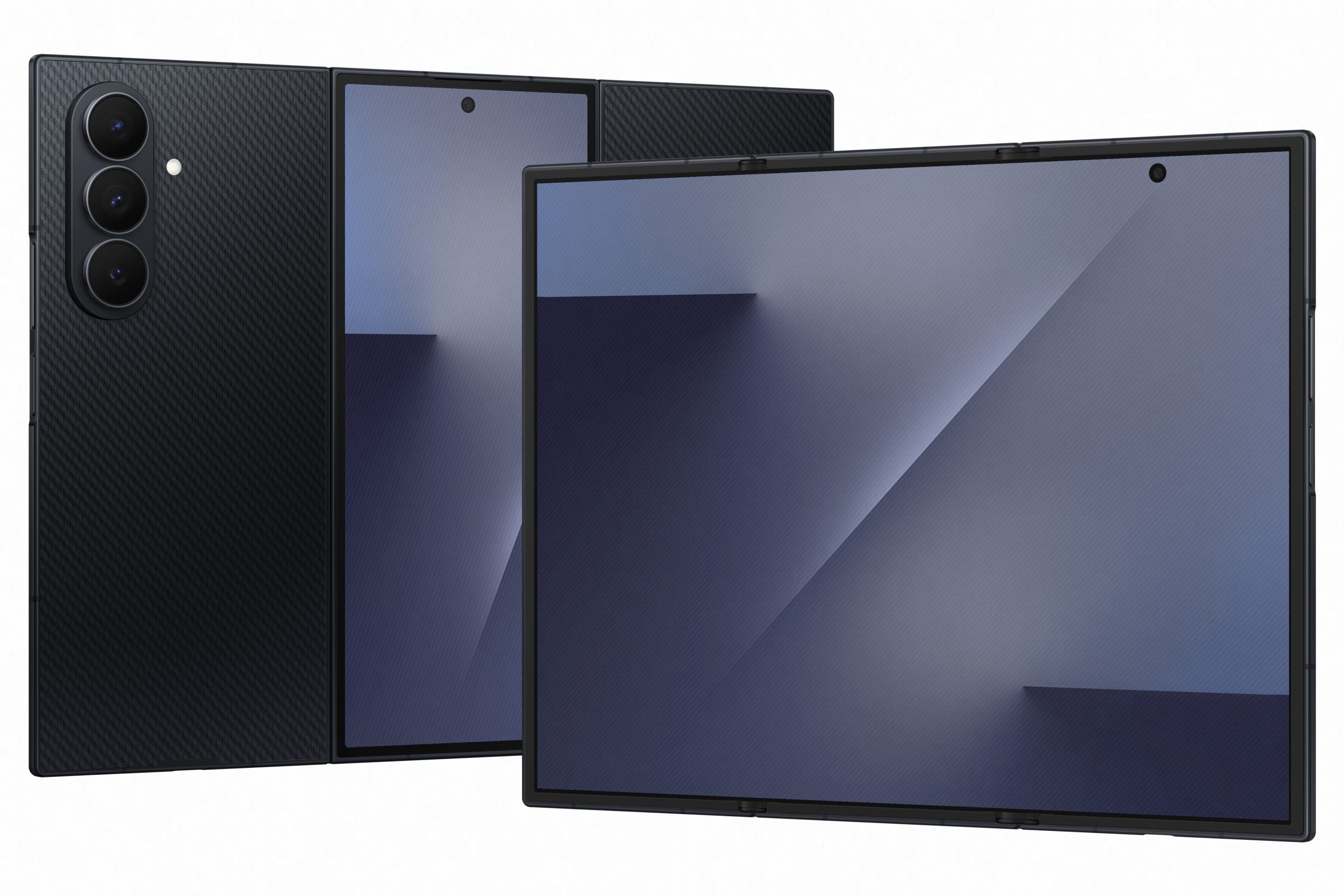
I’ve spent the past two years chasing the perfect foldable phone. It’s been an expensive journey through three devices across three continents, each one getting closer to what I actually need but never quite arriving. The Samsung Galaxy Z TriFold, priced at S$3,988 in Singapore, finally looks like the destination.
Let me explain why I’m willing to pay what amounts to nearly $4,000 for a first-generation device that critics are already calling a compromise.
The Samsung Fold 5 problem
My foldable journey started with the Samsung Galaxy Z Fold 5. The technology was impressive—that hinge mechanism, the way the two halves folded perfectly flat, the internal display that turned a phone into a mini tablet. Samsung had clearly spent years perfecting the engineering.
But the cover screen was painfully narrow. At just 904 pixels across with that 23.1:9 aspect ratio, using the Fold 5 while closed felt like typing on a TV remote. Some apps rendered incorrectly. The keyboard was cramped. I found myself constantly unfolding the phone just to send a text message, which defeated half the point of having a foldable in the first place.
The internal screen was great, but I needed a device that worked properly in both states. The Fold 5 was only half a solution.
The Vivo revelation
In January, I switched to the Vivo X Fold 3 Pro. This was a game-changer for form factor. The 6.53-inch cover screen finally felt like using a real smartphone—proper width, proper aspect ratio, proper typing experience. When closed, it didn’t feel like a compromise.
I’ve been using it as my daily driver ever since. The 8.03-inch internal display is bright, the 5,700mAh battery lasts all day, and the Snapdragon 8 Gen 3 handles everything I throw at it. Vivo proved that a foldable could work as a proper phone when closed.
But there’s a catch. That internal display has a 10.1:9 aspect ratio—almost square. For productivity and multitasking, it’s fine. For watching video content? You’re staring at black bars. The square-ish dimensions mean you’re not getting a cinematic experience; you’re getting a slightly larger version of what you’d see on a regular phone. Better, but not transformative.
The Huawei experiment
When Huawei released the Mate XT—the world’s first tri-fold—I bought one as a hobby phone. The hardware was genuinely impressive. That 10.2-inch display unfolding from something pocketable felt like science fiction made real.
But HarmonyOS without Google services was a dealbreaker. Yes, you can use workarounds like GBox to run Google apps through a virtual machine, but the experience is clunky. Netflix doesn’t work properly because of certification issues. Google Wallet is completely non-functional. Basic apps that I rely on daily either don’t exist in Huawei’s AppGallery or require convoluted installation processes.
The Mate XT now sits at home as an expensive tablet. I use it for reading and occasional video watching on the couch. As a daily driver? Impossible. I kept using the Vivo.
Why the TriFold changes everything
The Samsung Galaxy Z TriFold solves the equation that’s been frustrating me for two years.
When folded, the 6.5-inch cover screen is a proper smartphone. Not a narrow sliver like the Fold series, but an actual phone with a 21:9 aspect ratio that matches conventional flagship devices. You can type comfortably, use apps normally, and never feel like you’re compromising just because your phone happens to fold.
When fully unfolded, you get a 10-inch display with a 4:3-ish aspect ratio that’s actually optimised for multimedia consumption. This isn’t the square-ish compromise of traditional book-style foldables—it’s closer to the proportions you’d want for watching films, reading documents, or running Samsung DeX as a portable workstation.
And critically, it runs One UI 8 on Android 16 with full Google services. No workarounds. No virtual machines. No missing apps. Just a phone that works.
What the critics say (and why they might be right)
I’m not blind to the risks. Critics argue the TriFold is neither a great phone nor a great tablet—it’s a compromise in both directions. The 309-gram weight is noticeable. At 12.9mm when folded, it’s thicker than any conventional smartphone. The Snapdragon 8 Elite is already a generation behind the latest chip. And the IP48 rating means you should probably keep it away from swimming pools.
These are legitimate concerns. This is a first-generation tri-fold from Samsung, and first-generation devices always carry risks. The hinges are untested at scale. The display technology is novel. Things could go wrong.
But I’ve spent enough time with foldables to know what I’m looking for, and the TriFold’s form factor is exactly right. The proportions make sense. The cover screen is usable. The internal display is cinematic. For the first time, I’m looking at a foldable that doesn’t ask me to accept a fundamental compromise in one of its two primary states.
Will it be perfect? Probably not. Will it be better than anything else currently available for how I use a phone? I’m betting yes.
The Singapore situation
Getting one is proving to be the hard part. I’m currently on Samsung Singapore’s waitlist, hoping to secure a unit when retail begins on December 19. The first allocation already sold out before most people even knew the price, and there’s no guarantee the second wave will have enough stock.
I’ve been offered units from resellers at around S$6,000—a premium of over 50% above retail. I’m tempted, but I’m holding out. Samsung says they’re restocking, and I’d rather wait a few extra weeks than pay scalper prices for a device I plan to use daily for the next two years.
If I don’t get one on December 19, I’ll reassess. But I’m cautiously optimistic that Samsung will allocate enough units to clear the waitlist. They want this device in people’s hands—it’s a statement product, and statements don’t work if nobody can actually buy the thing.
The bottom line
Four thousand dollars is a lot of money for a phone. I’m aware of that. But I’ve already spent more than that chasing the right foldable over the past two years, and I’m still carrying a device that doesn’t quite deliver what I need.
The Samsung Galaxy Z TriFold looks like it finally unifies everything—a proper phone when folded, a proper multimedia device when open, running software that actually works. Maybe I’m wrong. Maybe first-generation issues will make this a regret.
But after two years of compromises, I’m ready to find out.
