

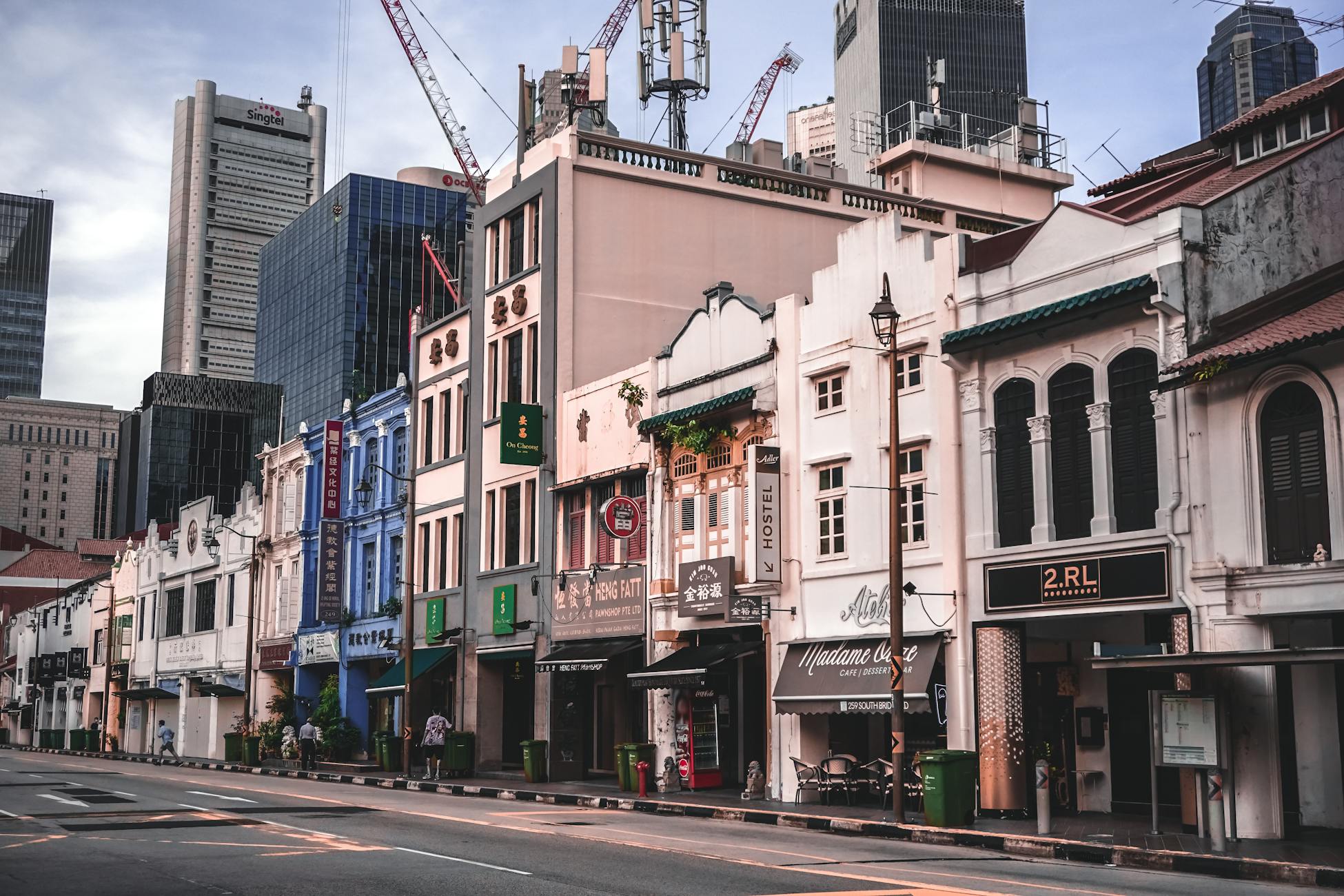
A fire broke out at a restaurant in Singapore’s historic Chinatown district on the second day of Chinese New Year, casting an eerie red glow over streets packed with festive revellers and prompting a swift emergency response. No injuries were reported, but the blaze — which struck during one of the busiest periods of the lunar calendar — has renewed scrutiny of fire preparedness in the city-state’s densely packed commercial heritage zones.
The incident, which occurred on February 18, 2026, was first reported by The Straits Times, which confirmed that the Singapore Civil Defence Force (SCDF) responded to the scene and that no injuries resulted from the blaze. The fire appeared to originate within a restaurant premises in the Chinatown precinct, one of Singapore’s most visited cultural and culinary neighbourhoods.
A festive district disrupted
Chinatown during Chinese New Year is among the most congested areas in Singapore. Thousands of residents and tourists converge on its narrow streets for seasonal markets, lion dance performances, and meals at the district’s storied restaurants and hawker centres. The timing of the fire — on the second day of CNY, traditionally reserved for visiting family and dining out — meant foot traffic in the area was at or near peak levels.
AsiaOne reported that the fire broke out at a Chinatown restaurant on the second day of CNY, placing it among several fire-related incidents across Singapore and the wider region during the festive period. Among those incidents: a Johor man lost a leg while setting off fireworks on the first day of CNY, and 12 people were killed in China’s Hubei province when a firecracker store explosion triggered a larger blaze.
The juxtaposition is stark. Chinese New Year celebrations, with their emphasis on pyrotechnics, open flames for cooking, and dense crowds, carry inherent fire risks that are amplified in older commercial districts where building codes may predate modern safety standards.
No casualties, but a pattern of concern
The Star confirmed that no injuries were reported in the Chinatown restaurant fire, a fact that points to the effectiveness of Singapore’s emergency response infrastructure. The SCDF, which maintains one of the fastest average response times among fire services in the Asia-Pacific region, contained the blaze before it could spread to adjacent shophouses — a critical factor in a district where buildings share party walls and are separated by narrow alleyways.
The fire was not an isolated episode. Barely six weeks earlier, on January 2, 2026, a fire broke out at Hong Lim food centre during lunchtime, another Chinatown-area establishment. That incident disrupted service at a beloved hawker centre and drew significant public attention.
One patron, as documented by Stomp, had queued for an hour to purchase char kway teow at the food centre before the fire erupted. The account, while anecdotal, underscored the human dimension of such incidents — they strike at gathering places that are central to Singaporean communal life. Stomp described the scene as a “red glow in Chinatown” that initially confused onlookers before it became clear a fire was underway.
The recurrence of fires in the Chinatown area within a span of weeks warrants serious examination of whether the district’s ageing commercial infrastructure is keeping pace with the fire loads generated by modern restaurant operations.
Heritage districts and the fire safety paradox
Singapore’s Chinatown is a conservation area. Its shophouses, many dating to the 19th century, are protected under the Urban Redevelopment Authority’s conservation framework. This creates a tension familiar to cities worldwide: the architectural features that give heritage districts their character — timber floors, narrow staircases, shared walls, limited setbacks — are precisely the features that make them vulnerable to fire.
Modern fire safety codes in Singapore are among the most rigorous in Southeast Asia. The Fire Safety Act mandates fire safety certificates for commercial premises, and the SCDF conducts regular inspections. Restaurants, which operate commercial kitchens with open flames, grease-laden exhaust systems, and high electrical loads, are subject to particularly stringent requirements.
Yet compliance in older buildings can be complicated. Retrofitting heritage shophouses with modern fire suppression systems — sprinklers, fire-rated partitions, adequate egress routes — is expensive and sometimes structurally challenging. Restaurant operators in Chinatown often occupy premises with layouts designed in an era when fire safety engineering did not exist as a discipline.
The question is not whether Singapore’s regulatory framework is adequate in theory. It is whether enforcement and infrastructure investment are keeping pace with the actual risk profile of these districts, particularly during high-traffic festival periods when kitchens operate at maximum capacity and streets are too congested for easy emergency vehicle access.
Technology as a potential mitigant
The challenge of fire prevention in dense urban environments is not unique to Singapore. Across Europe, a growing cohort of technology companies is developing solutions that address precisely the kind of risk factors present in heritage commercial districts. From AI-powered fire detection systems that identify smoke signatures before flames become visible, to IoT sensor networks that monitor temperature anomalies in real time, several European startups are deploying technology specifically designed to prevent fire accidents before they escalate.
Such systems could have particular applicability in contexts like Chinatown, where the density of cooking operations, the age of electrical wiring, and the proximity of combustible building materials create a compounding risk matrix. Early detection — measured in seconds rather than minutes — can mean the difference between a contained kitchen fire and one that engulfs an entire shophouse row.
Singapore, with its established reputation as a smart city and its deep integration of technology into urban management, is well positioned to pilot such systems. Whether the political and commercial will exists to mandate them in heritage districts — where retrofit costs would fall on property owners and tenants already operating on thin margins — is a separate question.
A region on edge during the festive season
The Chinatown restaurant fire unfolded against a backdrop of fire-related tragedies across the region during the Chinese New Year period. The explosion at a firecracker store in China’s Hubei province, which killed 12 people, was a grim reminder of the lethal potential of festive pyrotechnics. In Johor, just across the causeway from Singapore, a man lost a leg to fireworks on the first day of CNY.
Singapore has long banned the private use of firecrackers and fireworks, a policy enacted after a series of deadly fires in the 1970s. That prohibition has unquestionably reduced one category of festive fire risk. But it has not eliminated the others: overloaded kitchens, ageing electrical systems, and the sheer density of human activity in confined commercial spaces during peak periods.
The SCDF’s swift response to the Chinatown fire, and the absence of injuries, should be recognised as a success of Singapore’s emergency preparedness apparatus. The city-state’s fire fatality rate is among the lowest in Asia, a testament to decades of investment in fire services, public education, and building regulation.
What the pattern reveals
Two fires in the Chinatown area within six weeks do not, by themselves, constitute a crisis. Singapore records hundreds of fire incidents annually, the vast majority of which are contained without serious harm. The SCDF’s 2024 annual report recorded over 4,000 fire calls, with the overwhelming majority classified as minor.
What these incidents do reveal is a structural vulnerability that is not going away. Singapore’s heritage commercial districts are growing more popular, not less. Tourist arrivals to Chinatown have increased year on year. Restaurant operations have intensified. And the buildings themselves are a year older every year, their electrical systems and structural timbers incrementally more fatigued.
The absence of casualties on February 18 was a relief. It was also, in part, a function of luck — the fire broke out at a time when the restaurant’s occupancy, the wind conditions, and the SCDF’s positioning all aligned favourably. A different combination of variables, on a different day, could yield a different outcome.
Singapore’s fire safety regime is strong. The question now is whether it is evolving fast enough to match the compounding risks in the very districts that define the city-state’s cultural identity. The answer will be written not in policy papers but in the investment decisions — in detection technology, in building retrofits, in crowd management during festivals — that are made in the months ahead.
