Ask an adult when they felt safest in their whole life and a striking number of them will not name a wedding day or a graduation or a birthday. They will describe an ordinary afternoon in a kitchen they can barely picture anymore. Researchers who study autobiographical memory have noticed this pattern for years: the memories that anchor a person’s sense of security tend to be low-stakes, sensory, and repeated, not singular and dramatic. The brain, it turns out, does not file safety the way we file events.
That is a strange thing to sit with as a parent. It means the moments we brace for, plan around, and photograph are usually not the ones that lodge. What lodges is the plain texture of ordinary safety, repeated so often that it becomes the floor a person stands on for the rest of their life.
Picture a kitchen in the late afternoon. There is the smell of something slow on the stove, onions maybe, or bread. Light comes in low and golden across a worn wooden table. A small child sits on the floor with a pile of pots, banging out a song only she can hear, while a grandmother moves around above her, humming, reaching down now and then to rest a hand on the top of her head. From the outside it looks like an unremarkable hour, the kind nobody would think to photograph. Sixty years from now, asked when she felt safest in her whole life, she may well describe this exact ordinary hour. And not one adult in that kitchen has any idea it is happening.
What turns an ordinary hour into a safe one is rarely anything the adult is doing on purpose. It is the steadiness underneath. A child reads a room the way the rest of us read weather, and what she registers is whether the big people around her are calm, whether the rhythm of the day is predictable, whether she can wander off and come back and find everything still in place. Safety, to a small child, is mostly the absence of bracing.
The science backs up how quietly this works. The Center on the Developing Child at Harvard explains that “simple serve and return interactions between adults and young children help make strong connections in developing brains,” the small back-and-forth of a look, a sound, a response. None of it looks dramatic in the moment. Yet the research the Center points to finds that “sensitive parental care, characterized by prompt and adequate response to the child’s signals and needs, predicts a more secure attachment relationship.” Security gets built out of thousands of unremarkable moments rather than a few grand ones.
When I try to find my own version of that afternoon, it is nothing impressive. I am small, in my grandmother’s kitchen, and she is letting me do some pointless helpful task while the radio plays. I could not tell you the year, or a single thing we said. I can still feel exactly how safe it was, decades later, in my body more than my mind. No one in that room marked it as important, and that is precisely why it stuck. Where I grew up, children were folded into the everyday life of adults rather than entertained off to the side. You sat under the table while the grown-ups talked and cooked, half-listening and fully held. Nobody was trying to give you an experience. You were simply there, part of the fabric of an afternoon, and I have come to think that kind of plain belonging is its own deep form of safety.
It humbles me as a parent, because it means the moments I am proudest of are probably not the ones my daughter will keep.
The elaborate birthday, the carefully planned outing, the photo I staged. More likely she will hold onto some unremarkable afternoon when I happened to be relaxed and close and not trying to make a memory at all.
This has changed how I think about the unglamorous middle of our days. The half hour where my husband and I are just cooking while Emilia plays at our feet, nobody performing, the apartment a little bit of a mess. I used to treat that as the in-between, the filler before the real moments arrived. Now I suspect it is the real moment, the one being quietly filed away for good.
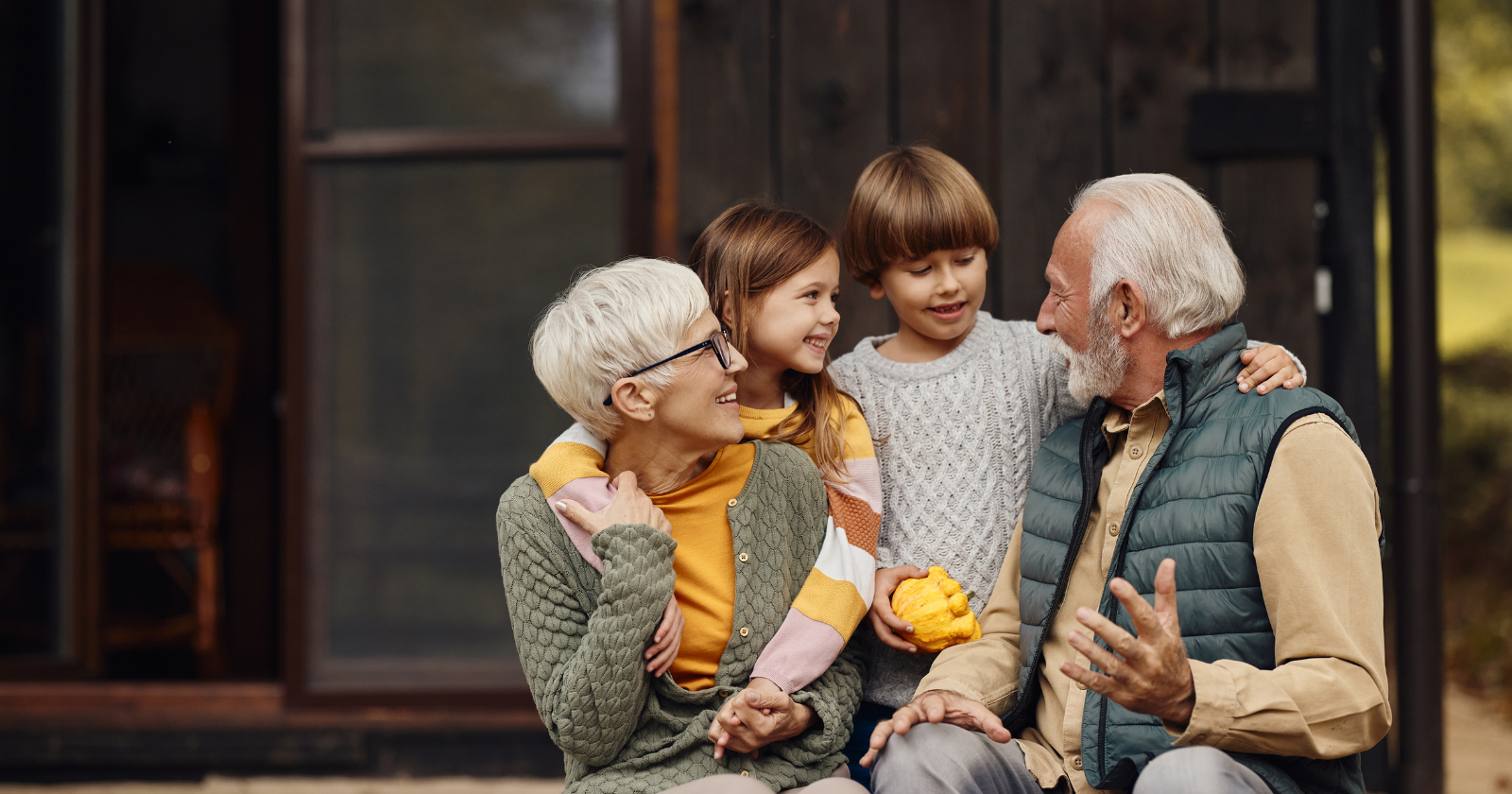
It also makes me think differently about the grandparents in our life, the ones my daughter sees in person only sometimes. When my parents visit from the other side of the world, or when we are all together in Chile, I used to worry about engineering special outings to make the short time count. I am letting that go. A grandparent simply being calm and present in the same room, humming over a pot, may be doing the most important work there is, with nobody in the room noticing.
I feel this keenly because so much of my daughter’s bond with her grandparents has to happen across distance and screens. When the rare in-person afternoons finally come, the pressure to make them magical is enormous. But if the research is right, the magic is not the part she will keep. What stays is the plain feeling of being in a warm room with people who love her and ask nothing of her at all.
So here is the harder question underneath all of this. If a child’s deepest sense of safety is being built right now, in the room you are half-present in, what is actually being recorded? The distracted scroll, the sharp voice about nothing, the low hum of adult stress a child cannot name but absorbs anyway — those get filed too. Softness in ordinary rooms is not a passive virtue. It is a discipline, and most of us are worse at it than we think. Somewhere right now a child is tucking an afternoon away for life. The unsettling part is that we do not get to choose which one, only what we are like when it happens.