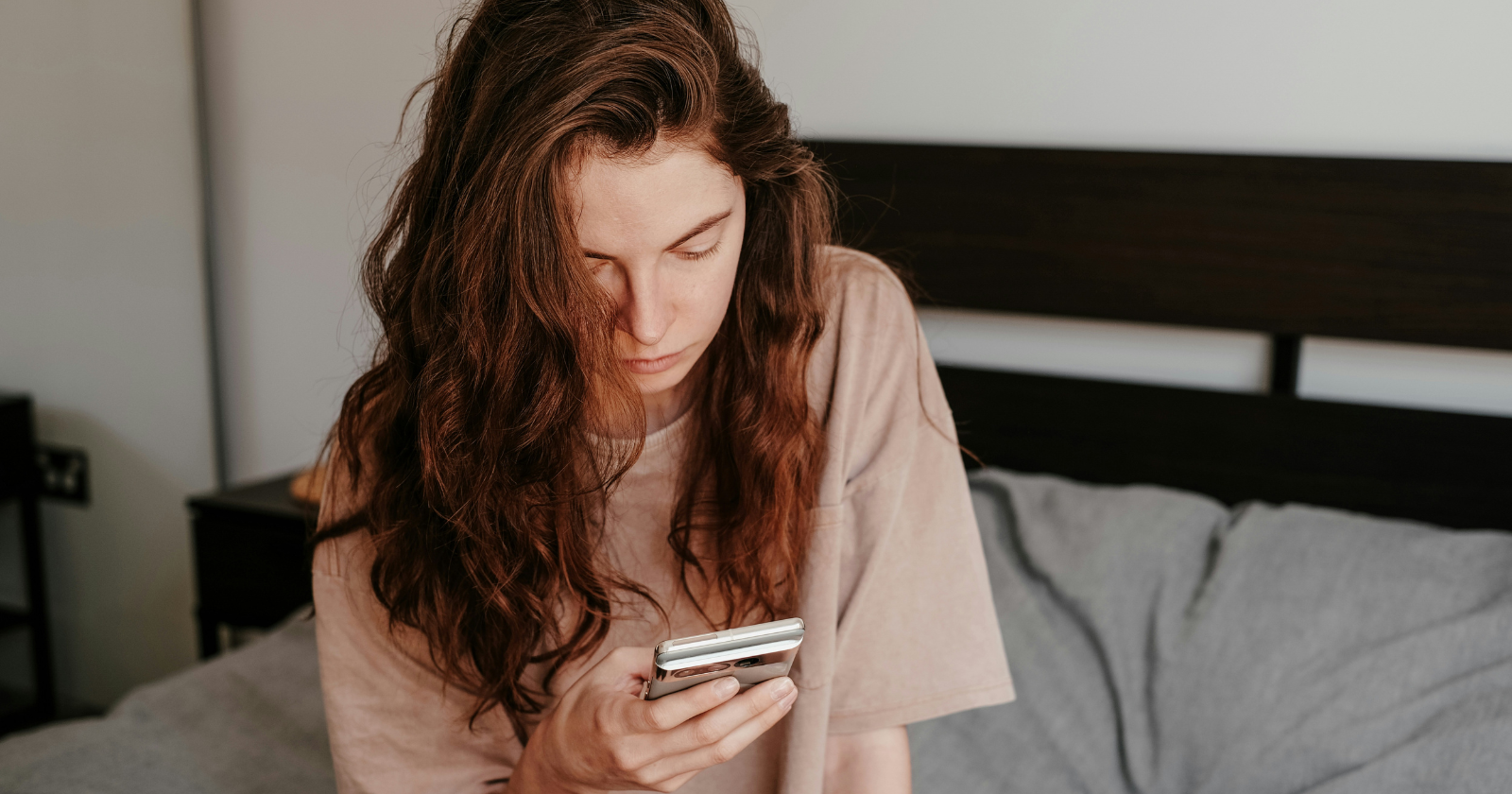
I’ve been thinking about the exact moment doomscrolling flips from “I’m just catching up” to “why do I feel weird in my body.”
For me, it usually happens late at night in São Paulo, when the apartment is finally quiet. Emilia is asleep, Matias is winding down, and I tell myself I’ll check one thing. A headline. A comment thread. A quick video. Ten minutes later, my jaw is tight, my chest feels buzzy, and I’m suddenly convinced I forgot something important. Nothing happened in real life, yet my nervous system acts like it did.
If you relate, you’re not dramatic. You’re noticing something real.
A recent Washington Post piece pulled together what a lot of us have been describing for years: the “brain rot” feeling isn’t just slang. Researchers are linking heavy social media use and rapid-fire content to measurable changes in attention and memory, and the way it shows up day-to-day can look a lot like anxiety.
Doomscrolling doesn’t only affect your mood, it affects your attention
When people talk about doomscrolling, they usually focus on emotional impact: fear, anger, hopelessness. That matters. But the cognitive piece is the part that sneaks up on you, because it’s quieter.
It looks like this:
You sit down to read something longer and feel almost itchy. You open a tab, then another tab, then you forget why you opened the first tab. You try to listen to someone talk and you keep mentally reaching for your phone. You walk into a room and your brain does that blank “what was I doing?” thing more often than it used to.
This is not a moral failure. It’s a training effect.
Short-form feeds train your brain to expect a steady drip of novelty. Each swipe is a tiny reset. Your attention never has to tolerate boredom, or effort, or the slow warm-up it takes to focus deeply. Over time, sustained attention starts to feel uncomfortable, even when nothing is wrong.
That discomfort is one reason doomscrolling can feel like anxiety. Not because every scroll is traumatic, but because constant switching puts your brain into a restless, scanning mode. Scanning mode is useful when there’s danger. It’s exhausting when it becomes your default.
Why it can feel like anxiety even when your life is fine
Anxiety isn’t only thoughts. Anxiety is also sensations.
Fast content, constant context switching, and emotionally charged posts can create a body-level response: shallow breathing, tension, agitation, irritability, trouble settling. Then your mind tries to make sense of those sensations, so it goes looking for a reason. That’s how you end up feeling vaguely worried even on a normal Tuesday.
I notice it most when I doomscroll right before bed. If I do it, I fall asleep later, I sleep lighter, and I wake up feeling behind before the day even starts. Then I’m more likely to reach for my phone in the morning for “just a minute” because my brain wants an easy hit of stimulation. It’s a loop that feeds itself.
The Washington Post article includes a line that stuck with me because it’s so simple: “There’s a kernel of important truth in what sounds like a silly term.”
The “measurable” part is not a scare tactic, it’s a clue
Whenever you see claims about cognitive “damage,” it’s smart to pause and ask what that actually means. Are we talking about vibes, or data?
One of the more concrete threads behind the discussion is research using large longitudinal datasets. A 2025 paper in Translational Psychiatry analyzed data from the Adolescent Brain Cognitive Development (ABCD) study and found that screen time was associated with increased ADHD symptoms and reduced cortical thickness in specific brain regions across a two-year period.
Here’s a line straight from the abstract that captures the headline without the drama: “screen time was associated with increased ADHD symptoms … and reduced cortical thickness in specific regions.”
A few important notes, especially if you’re reading this as a parent or someone who already struggles with anxiety:
This kind of finding does not automatically mean phones “cause” brain changes in a simple way. Researchers themselves are careful about correlation versus causation. But it does support something many of us sense: heavy screen habits can track with attention and self-control challenges, and those challenges have a real biological footprint.
And that matters because it moves the conversation out of shame.
If your attention feels worse than it used to, you’re not broken. You may be overstimulated and under-recovered. Your brain is adapting to the environment you keep putting it in.
The hidden cost of “just checking” is the constant micro-interruptions
Doomscrolling isn’t only about consuming bad news. It’s also about the pattern: constant micro-interruptions.
Even if the content is harmless, the rhythm teaches your brain that focus is optional and interruption is normal. Notifications, switching apps, switching topics, hopping from outrage to jokes to tragedy to ads, all in under a minute.
Think of it like trying to cook dinner while someone taps your shoulder every thirty seconds with a new question. Eventually, you’re going to feel snappy and scattered. Not because you’re an unpleasant person, but because your brain can’t complete a single mental “recipe” without being pulled away.
When my day is packed, I can feel the difference between “I took a real break” and “I scrolled.” A real break leaves me calmer. Scrolling often leaves me more restless, like I ate chips when what I needed was an actual meal.
That’s one reason doomscrolling can show up as anxiety. The nervous system experiences it as unfinished business. Too many half-starts, too many emotional spikes, not enough closure.
What I do when I notice the pattern starting
I’m not going to pretend I never scroll. I do. I’m a working mom with limited downtime, and sometimes my brain wants the easiest possible off-switch.
But I’ve learned to watch for the moment scrolling stops being a choice and starts being a reflex. That’s the moment I intervene, gently but firmly.
I use a few simple rules that aren’t about being perfect, they’re about protecting my attention the way I protect my sleep.
First, I stop treating my phone like the default waiting-room activity. Waiting for the elevator, standing in the kitchen for water to boil, sitting in the car while Matias runs into the pharmacy. Those tiny pockets used to be where my mind decompressed. If I fill all of them with content, my brain never gets a quiet minute. Now I try to leave some of them empty on purpose.
Second, I separate “information” from “stimulation.” If I genuinely want to understand what’s happening in the world, I pick one source and read it with intention. If I’m looking for a mood shift, I admit that to myself and choose something that actually helps, like a comforting show, music, or a short walk around the block with Emilia in the stroller.
Third, I don’t negotiate with bedtime. If I’m already tired and I open a feed, my self-control drops fast. So I keep my phone away from the bed. Not on the pillow, not on the nightstand. Away. I’ve learned that I can be disciplined all day and still lose to a glowing rectangle at 11:40 p.m.
If you want a quick gut-check, ask yourself this: after you scroll, do you feel more settled or more activated? More connected to your life or more mentally elsewhere? Your body will answer honestly, even when your brain tries to justify it.
The hopeful part: attention comes back when you give it a chance
The reason I’m writing this in a self-development context, and not as a lecture, is that this is incredibly workable.
Our brains are plastic. They adapt. That is the whole problem, and it’s also the whole solution.
When you reduce the constant switching, you start rebuilding tolerance for stillness. When you let yourself read longer things again, your attention warms up. When you stop ending your nights in a spiral of content, your mornings feel more spacious.
It’s not instant, but it’s noticeable.
I’ve had weeks where I’m stricter with my inputs and I feel it in my mood and my patience. I’m less reactive. I don’t get that edgy, buzzy feeling as often. I can sit and write without my mind trying to run away every three minutes.
If doomscrolling has been making you feel anxious, scattered, or mentally foggy, I want you to take one thing from this: your brain is not failing you. It’s responding to what it’s being fed, and you can change the diet.
Not with guilt. With small, consistent choices that add up.