

Amsterdam’s AKA Foods closes seed round at €14.8M and introduces a new system aimed at improving how food companies develop products.
Contentlockr
Amsterdam-based AKA Foods, a foodtech company transforming how new food products are created, has closed a $17.2M (nearly €14.82M) Seed funding round led by AI researchers and entrepreneurs Alex and Michael Bronstein.
With the new capital, the company has launched AKA Studio, a platform that allows food businesses to design, refine, and release new products with improved speed and efficiency.
Professor Alex Bronstein, Chief Scientist at AKA Foods, Head of the Centre for Intelligent Systems at the Technion – Israel Institute of Technology and a Professor at the Institute of Science and Technology Austria, says, “AKA Foods is essentially bringing to market a new type of a grammar; a language for food, creating AI agents that are capable of connecting to different external data sources and then making recommendations on how to improve the recipe. This is something that a generic AI model like ChatGPT will never be able to achieve.”
Professor Bronstein now serves as both Chief Scientist and investor, signalling a broader role in guiding AKA Foods’ scientific agenda and strategic development.
David Sack, founder and CEO of AKA Foods, adds, “The global food industry holds enormous amounts of valuable knowledge, but struggles to use it effectively. AKA Studio gives companies the ability to capture, organise and apply that knowledge securely. This investment allows us to expand deployment to enterprise clients worldwide and continue advancing the science behind how food is created.”
An AI system for food innovation
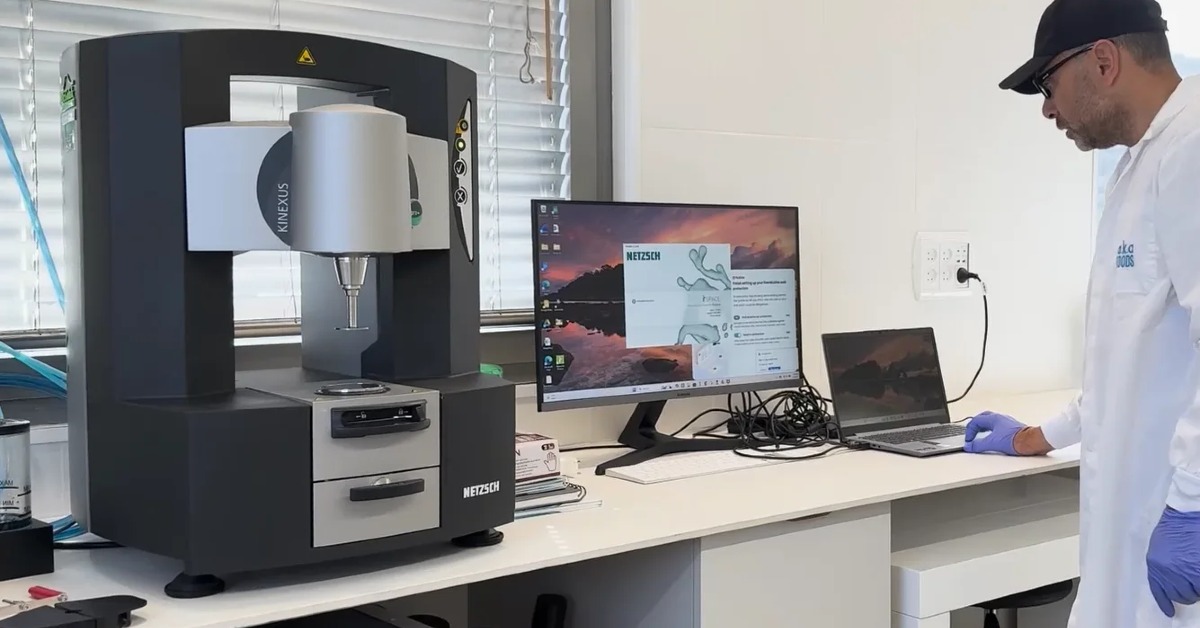
AKA Studio brings research, formulation work, and development activity into one structured base. The system organises internal knowledge and current R&D data and links them with measurements from sensory research centres, covering texture, aroma, and taste. AI tools then support formulation work and ongoing optimisation.
For R&D teams, the platform compresses development timelines by drawing together past experiments, current trials, ingredient data, sensory reports, and regulatory records into one connected system. For business leaders, the platform turns internal knowledge into trackable innovation assets that support output and financial performance. Investors view the system as a technical approach that joins AI with food science and sensory evaluation.
The company notes that formulation remains a hands-on scientific process. AKA Studio provides speed and decision support by connecting digital records with sensory data, helping organisations refine product formulas and release items with stronger nutritional and environmental profiles. The system also supports reformulation for clean-label goals, reduced sugar or fat, and supply-chain needs.
AKA Foods states that data protection remains a core component of the platform. AKA Studio runs as a SaaS system that gives each client a private data environment. Organisations with higher security needs can run the system on-premise in isolated networks under the same protection rules. Client data is not pooled, shared, or used to train models, and ownership remains with each client.
The company also noted that the sensory-AI framework behind AKA Studio may support future use in flavour, fragrance, cosmetics and pharmaceutical development, where sensory analysis and controlled formulation are central to product design and verification.
