

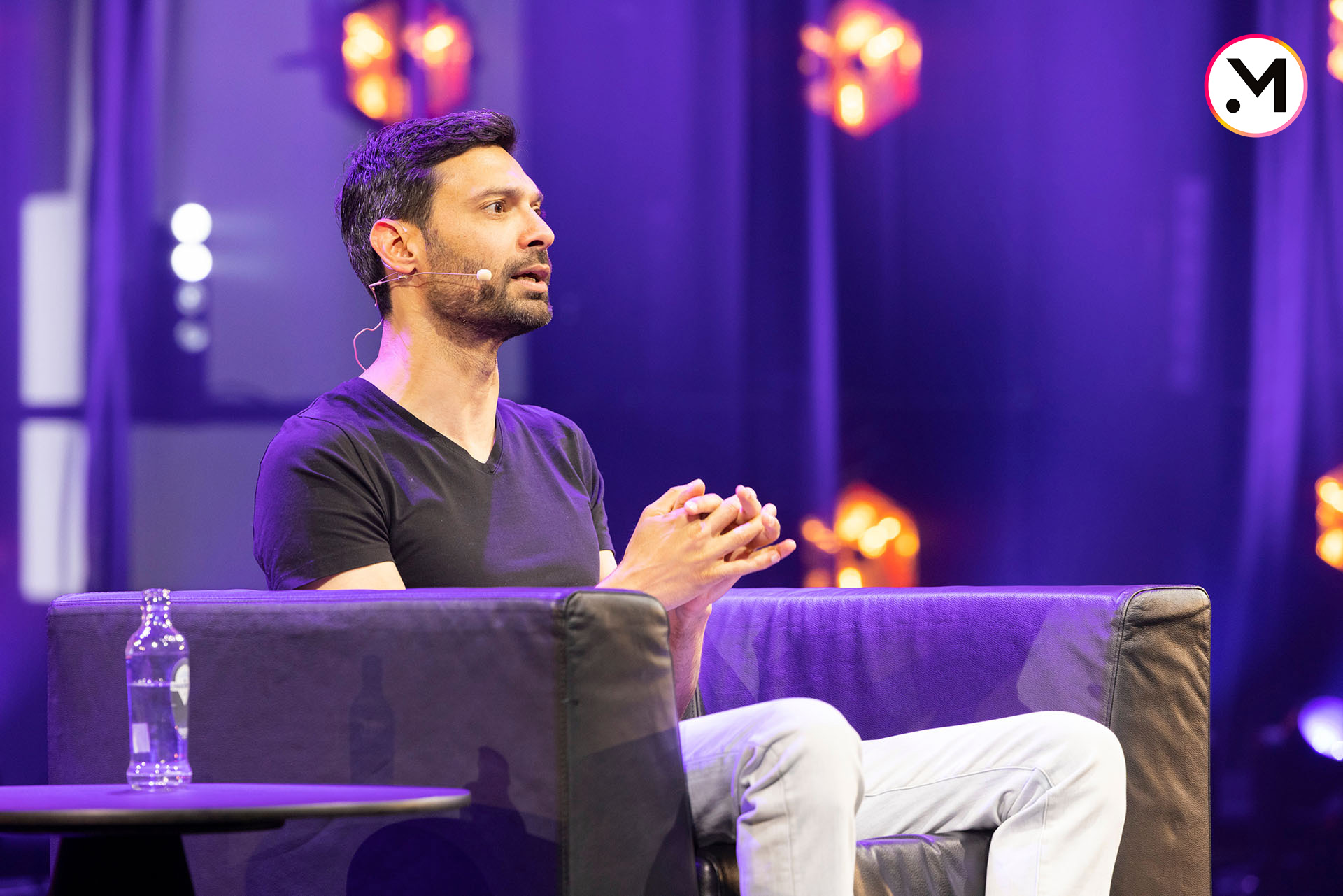
Ali Niknam yesterday hinted at a US Dollar stablecoin revolution for developing nations during Money 20/20 Europe panel in Amsterdam.
bunq’s founder and CEO Niknam believes US dollar stablecoins accessible through mobile phones will prove ‘transformational for large groups of people’ worldwide, particularly in countries suffering from currency instability and hyperinflation.
Niknam floated his ideas on how digital currencies could improve access to stable financial instruments for billions of people who are currently left out of traditional banking during a panel ‘The Neobanks Strike Back’.
It marked the closing day of the 2025 edition Money 20/20 Europe in Amsterdam.
The three-day fintech conference, held at RAI Amsterdam from June 3-5, brought together over 7,500 attendees including representatives from 200+ investors and 150+ banks, making it Europe’s most notable gathering for financial technology innovation and deal-making.
The stablecoin opportunity
Niknam’s comments were part of a wider discussion about the evolution of neobanking and digital finance. The Dutch serial entrepreneur, whose bank has done the rare thing of becoming profitable in the cut-throat neobanking space, explained on stage why he thinks stablecoins are the next step in the evolution of money systems.
Contentlockr
“Somewhere in the 70s, we let go of the gold standard, and now currencies are basically floating. The only reason why a dollar or a euro is worth what it’s worth is because of trust and perception,” Niknam stated. “Philosophically, it’s perfectly logical that we have found another abstraction layer by introducing stablecoin, which is not much else than a byte number that has a denomination currency as a backing asset that itself doesn’t have anything as a backing asset.”
The CEO of bunq questioned the prevailing belief though that stablecoins are helpful in developed markets, mentioning their transformative potential in regions where local currencies are in fact unstable.
“A few people may ask, ‘Why would we need a stablecoin? We have euros. I go get a coffee, pay with Apple Pay or cash.’ But there are many countries on this planet where the local currency is not stable,” he said. “If your country has an inflation rate of 30,000% like Zimbabwe, you would really love to use a different currency. The US dollar has been the currency of choice, but as a normal person, you cannot access the US dollar. A US dollar stablecoin that you can access by simply having a mobile phone – that’s going to be transformational for large groups of people.”
bunq’s AI-powered innovation

The panel also highlighted bunq’s ongoing technological innovation, particularly in artificial intelligence. The Amsterdam-based neobank recently announced upgrades to its AI assistant Finn, marking it the first bank to bring real-time speech-to-speech translation within its app.
According to Niknam, a two-time-unicorn founder with a net worth of €2.5 billion, “At bunq, we have always used technology to make life easy, and this update takes that to a new level. We’re excited to break down language barriers and simplifying tedious tasks, making bunq more accessible (and fun) to users all over the world.”
The enhanced AI assistant can now instantly translate both user speech and support agent responses in real-time, processes visual information including receipt uploads and document verification, and makes the bunq app available in more than 30 languages.
Stocks and crypto
This followed the launch of Stocks, a new investment product tailored to digital nomads, two months earlier. A few months later announced a partnership integration with Kraken to offer crypto-trading within the banks proprietary consumer app.
bunq’s plans for UK and US
Besides Niknam’s emphasis on the power of user-centricity, and showcasing how innovative features like simple stock trading and multi-language support can democratise financial services, he teased more news to come.
At Money 20/20, he revealed his strategy, with a clear focus on what a user needs rather what investors expect. That leads him to expand systematically, with plans to perhaps one day enter the UK and US markets with bunq, too.
