

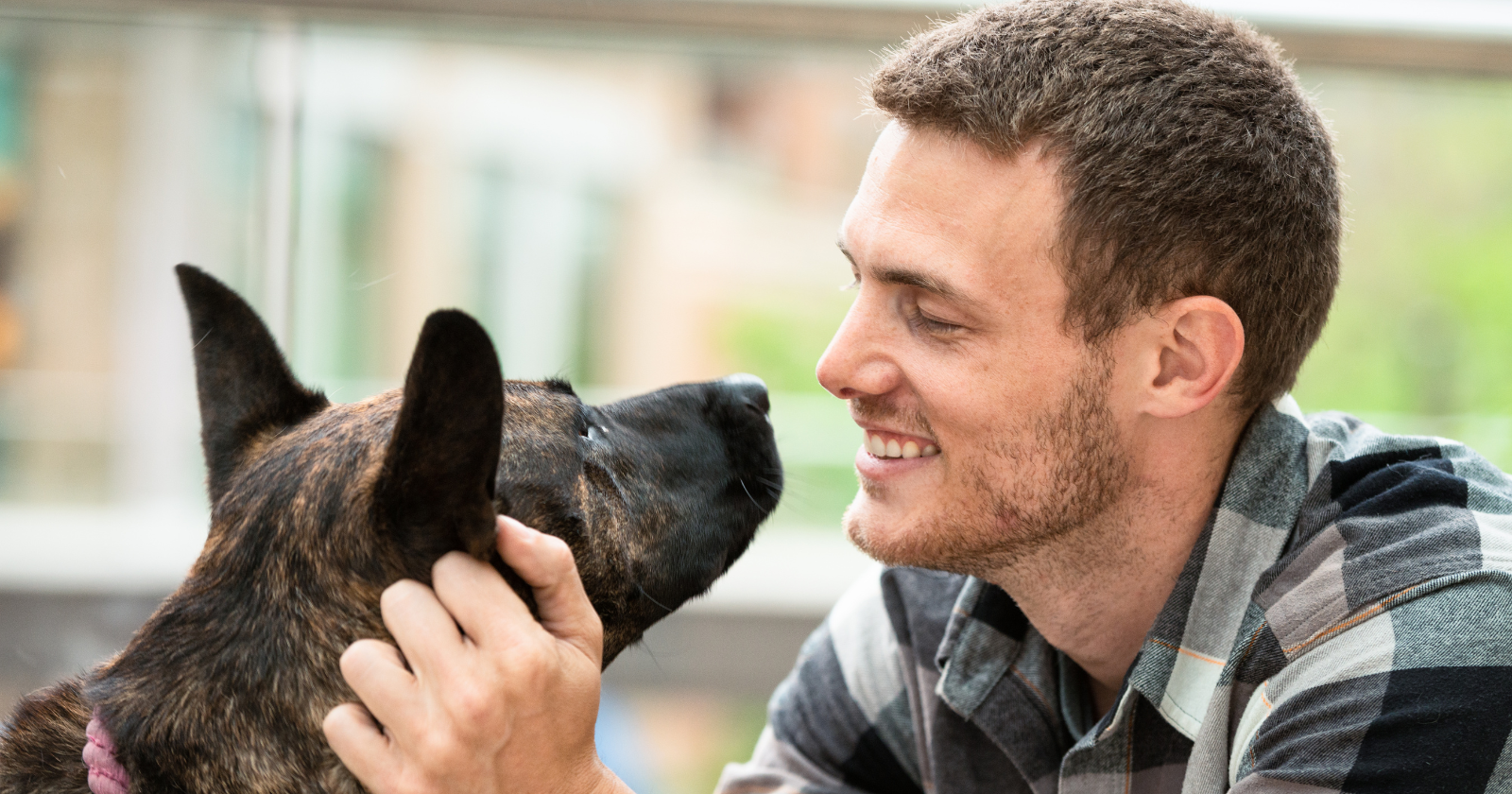
You come home, drop the keys, and start the debrief.
“You would not believe the day I’ve had. Don’t give me that look — I fed you this morning. Yes I did. We both know I did.”
The dog says nothing, obviously. The conversation continues anyway, sometimes for a while, sometimes with you doing both voices. And if anyone catches you at it, there’s a little flush of embarrassment, because somewhere along the way we all absorbed the idea that adults who chat with animals are a bit lonely, a bit soft in the head, or both.
The scientist who has spent his career studying this habit says we’ve got it exactly backwards.
The mind-reading machine
Nicholas Epley is a behavioral scientist at the University of Chicago and probably the world’s leading expert on anthropomorphism — the habit of treating non-human things as if they had human minds. Dogs, cats, cars, plants, the printer.
His argument is simple. Humans come equipped with a piece of mental machinery no other animal has: the ability to imagine what’s going on inside another mind. It’s how you know your friend’s “I’m fine” means she isn’t. It’s how you read a room, sense a mood, guess what your boss actually meant. Every social skill you have runs on it.
And here’s Epley’s point: that machine doesn’t come with an off switch. It looks for minds everywhere. When you talk to your dog, you’re not malfunctioning — you’re running the same psychological processes you use to recognize a mind in another person. As he puts it, seeing minds in animals has been treated for centuries as childish, when it’s really a natural byproduct of the tendency that makes humans uniquely smart on this planet.
In other words: the full conversation with the dog isn’t the mind-reading machine breaking down. It’s the machine idling — still running, even when the audience has four legs.
Why the dog gets the debrief
Look at what you’re actually doing during the kitchen conversation, because it’s more sophisticated than it feels.
You’re reading the dog — the ears, the tail, the look — and building a running story of what he thinks and wants. He’s sulking. He heard the cheese drawer. He’s pretending he wasn’t on the couch. That’s interpretation, prediction, and theory-of-mind, the exact toolkit you use on people, aimed at a furry target who happens to be terrible at hiding his feelings.
Which is why dog-talkers are so often the same people who are good with humans — the ones who notice the friend who’s gone quiet, who can tell when a colleague’s day has gone sideways. The habit and the skill are the same muscle. One’s just the gym version.
The honest bit
Now, a small correction to the internet, which loves to run this story as “talking to your pet means you have a high IQ.” That’s not quite what the science says, and even researchers who admire Epley’s work point it out: anthropomorphism is a sign of the intelligence of our species, not proof that any one pet-talker is a genius.
But notice what survives the correction, because it’s the part the title actually claims. Talking to your dog is not a warning sign. It isn’t drift, or decline, or a substitute for human contact. It’s normal, social, healthy machinery doing what it was built to do — connecting with whatever mind is in the room. The person narrating their day to a labrador is exercising the connecting instinct, not losing it.
The genuinely worrying picture is the opposite one: someone who’s stopped talking to anyone, the dog included. Silence is the red flag. Chat never was.
One more thing: the dog is holding up his end
Here’s the part that makes the whole habit even less silly. The conversation isn’t as one-sided as it looks.
Dogs have spent thousands of years being bred for exactly this job, and they’re good at it. They read our tone, our gestures, our faces. They know the difference between the voice you use for “walk” and the voice you use for the vet. Research has found dogs process the emotional tone of our speech, and every owner knows the practical version: the dog who appears from two rooms away because your voice cracked.
So when you’re mid-debrief and he tilts his head, he genuinely is doing his half — not understanding the words about your meeting, but reading you, closely, the way he’s been built to for centuries. Two social species, each running their mind-reading machinery on the other. That’s not loneliness.
That’s a conversation. Just not in one language.
Keep talking
So the next time someone catches you mid-argument with a beagle about who ate what, skip the sheepish laugh.
You’re not drifting anywhere. You’re doing the most human thing there is — looking at another creature and finding a mind in there — with a partner who’s been studying your face since before either of you was born.
Tell him about your day. He’s listening, in his way.
And you’re not crazy. You’re just wired to connect — and he’s the one who’s always home.
