

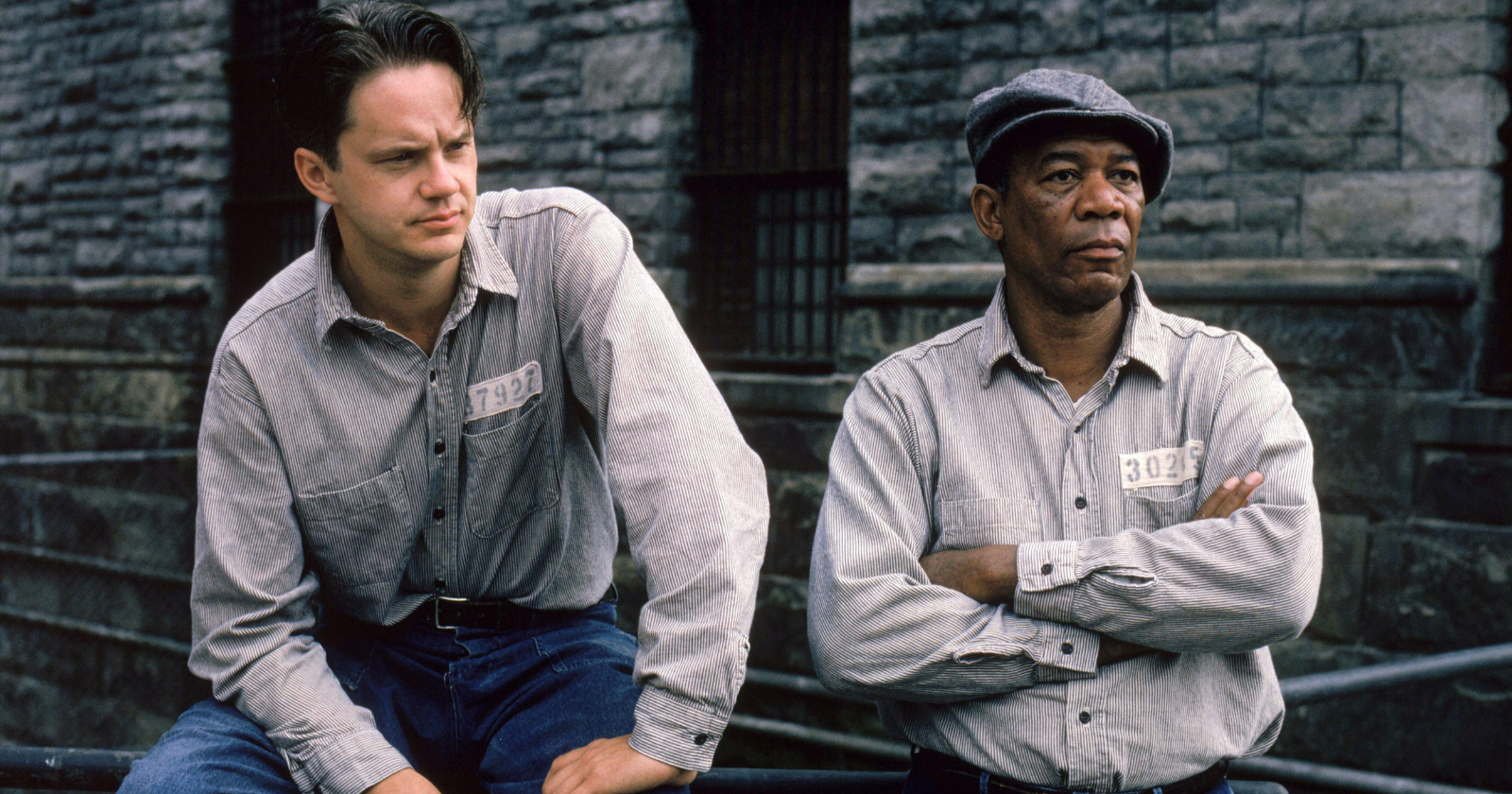
On its opening weekend in September 1994, the movie now ranked No. 1 by IMDb users couldn’t crack the top eight. The Shawshank Redemption opened at No. 9 — behind, among other things, a sex comedy called “Exit to Eden” that nobody on Earth has thought about since.
If you were alive in 1994 and didn’t see Shawshank in a theater, don’t feel bad. Almost nobody did.
The flop
The numbers were brutal. Against a $25 million budget, the film made about $16 million in its initial domestic run; an Oscar-season re-release helped take its domestic total to roughly $28 million — good for 51st place among 1994’s movies. Hollywood had a few theories about why. The title confused everyone (Morgan Freeman loved telling stories about the mangled versions people said to him). A somber prison drama with no women and no action was a hard sell. And 1994 was arguably the most stacked movie year of the decade — Forrest Gump and Pulp Fiction were inhaling every ticket in sight.
Then came Oscar night in March 1995, which should have been the redemption in the title. Seven nominations, including Best Picture, Best Actor for Freeman, and Best Adapted Screenplay. It won none of them. Forrest Gump ran the table, and Shawshank went home empty-handed — a flop at the box office and now, seemingly, an also-ran in history.
That’s usually where a movie’s story ends. Shawshank’s was just starting.
The 320,000 tapes
In 1995, Warner Bros. made a decision that looked like madness: it shipped 320,000 VHS rental copies of a film that had just publicly failed twice. That’s blockbuster-level volume for a movie most of America had skipped.
But something interesting happens when a movie meets people in their living rooms instead of a marquee. Nobody had to commit a Friday night and eight dollars to a gloomy-sounding prison drama — they just had to grab the box at Blockbuster because the shelves were full of it and a friend had said “trust me.” And the friends kept saying trust me. Word of mouth did what marketing couldn’t, and the film that finished 51st at the box office became the most-rented video in America in 1995.
Even Tim Robbins had sensed it might go this way, suggesting the theatrical run mattered less than the long life the film could have on video and cable. He turned out to be more right than anyone could have guessed.
The Ted Turner years
The final piece fell into place in 1997, when TNT picked up the broadcast rights — cheaply, precisely because the movie had bombed — and slotted it into the network’s “New Classics” lineup. Because the rights were cheap and the audiences kept showing up, TNT aired it constantly. And then kept airing it. For years. It became a Father’s Day fixture, a rainy-Sunday fixture, the movie you land on while channel surfing and then, somehow, watch to the end even though you’ve seen it eleven times. As late as 2013, it was still racking up 151 hours of cable airtime in a single year.
Millions of people who never bought a ticket absorbed the film two acts at a time on basic cable, and somewhere along the way a quiet consensus formed: this thing everyone ignored in 1994 might actually be a masterpiece. When IMDb users started ranking films, Shawshank climbed to No. 1 on the site’s Top 250 — above The Godfather, above Schindler’s List — and it has essentially never come down. Even Stephen King, famously prickly about adaptations of his work, counts this take on his novella among his favorites.
The movie that lived its own plot
Here’s the part that gets you. The Shawshank Redemption is a story about a man who is written off, buried by a system that got him wrong, and who simply waits — patiently, stubbornly, hopefully — until the day the truth gets out.
Then the movie went and did exactly that. Dismissed on arrival, buried by Gump, and vindicated one rental and one rerun at a time over thirty years, until the audience that ignored it crowned it the greatest film ever made.
Andy Dufresne had it right all along: get busy living, or get busy dying. Shawshank got busy living. It just needed a VHS player to do it.
