

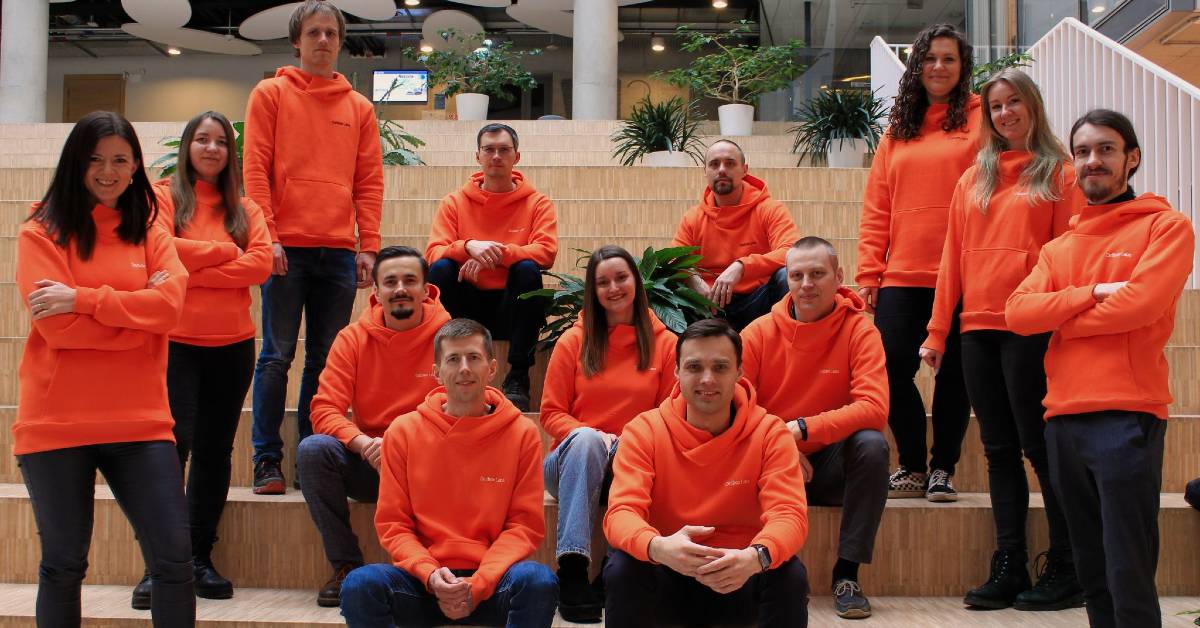
Riga-based Cellbox Labs, a company developing organs on a chip that are miniature organ replicas outside the human body, has secured €3.3M in non-dilutive funding to accelerate the development of its technology.
Part of the funding is provided through state aid under the Important Project of Common European Interest (IPCEI) in the healthcare sector, known as “Tech4Cure”, an initiative that supports healthcare sector capacity and integration within the Single Market.
Contentlockr
The funding roadmap follows recent regulatory changes, including the FDA’s plan to end animal testing requirements for certain drugs and the NIH’s mandate to include computer modeling, AI, and organ-on-chip technologies in funded research.
Developing organs on a chip
Founded by Gatis Mozoļevskis, Roberts Rimša and Artūrs Ābols, Cellbox Labs offers a dynamic organ-on-a-chip platform designed with a vertically stacked channel system that separates endothelial and epithelial layers using a permeable membrane.
This micro-engineered setup supports the development of multiple organ models, including the kidney, gut, lung, blood-brain barrier, and pancreas.
The platform is optimised for drug discovery using non-absorbing materials, enables experiments under controlled gas conditions for hypoxia, and is produced with high reproducibility through mass manufacturing.
An integrated automated system allows for flexible experiment design, reduced manual work, and scalable throughput from 8 to 24 chips using a modular manifold.
Capital utilisation
The funding will support Cellbox Labs’ key initiatives, in collaboration with Altis Biosystems, which focus on scaling an automated, primary cell-based gut-on-chip model for pharmaceutical use. It also advances personalised models using iPSCs and patient-derived microbiota to predict individual responses to drugs, food, and probiotics. This work supports platform benchmarking and validation for industry applications.
In parallel, the company will implement integrated oxygen and pH sensors across all organ-on-chip assays. These embedded readouts will generate live experimental data without requiring external hardware, supporting the growing industry need for high-throughput data generation in AI-enabled drug discovery workflows.
In a parallel initiative, Cellbox Labs will evaluate the efficacy of GLP-1 generic compounds using pancreatic islet organ-on-chip systems under dynamic flow conditions. This will be compared with data from static cultures and animal studies to improve the relevance and accuracy of in vitro biosimilar testing.
In collaboration with ESQlabs and MPSlabs, the company will also develop digital twin models of its in vitro systems. These high-fidelity models will simulate drug absorption, distribution, and response, and will be integrated with physiologically based human models to support in vitro–in vivo translation (IVIVE).
