

UK-based CoMind secures €87.8M to develop technology to monitor and treat the brain without invasive procedures.
Contentlockr
London-based CoMind, a company transforming brain healthcare with its non-invasive technology, has secured $102.5M (nearly €87.88M) in funding.
The company plans to complete clinical trials, pursue regulatory approval in the US, and expand its team.
The funding round was led by Plural, with participation from Angelini Ventures, LocalGlobe, Octopus Ventures, Crane Venture Partners, BACKED VC, and Entrepreneurs First.
As part of the deal, Plural partner Taavet Hinrikus will join CoMind’s board alongside Julia Hawkins of LocalGlobe, healthcare executive Michael Tarnoff, MD, FACS, Chair of the Board Frank Fischer, and James Dacombe, CoMind’s founder and CEO.
Redefine the way the brain is measured and treated
Doctors treating critically ill patients have faced a choice when monitoring the brain: use invasive procedures that require drilling into a patient’s skull or rely on non-invasive monitoring that may affect treatment decisions. This is where CoMind is looking to make a difference.
Founded in 2018, CoMind is developing technology for monitoring and treating the brain without invasive procedures. The company’s system, CoMind One, measures cerebral blood flow, cerebral autoregulation, and intracranial pressure at the patient’s bedside.
The system uses light to capture multiple aspects of brain activity. CoMind’s platform, CoVision, applies artificial intelligence to generate predictive insights for clinicians. These insights are intended to inform treatment decisions and anticipate potential complications.
CoMind’s technology is designed for use in intensive care units, surgeries, and emergency rooms. The company aims to provide tools that support the monitoring and management of patients with brain conditions.
The technology!
CoMind’s system to monitor the brain is designed to provide clinicians with neurophysiological data in real time from a single measurement. This data includes the balance between blood flow and nutrient supply to the brain and the brain’s metabolic demand.
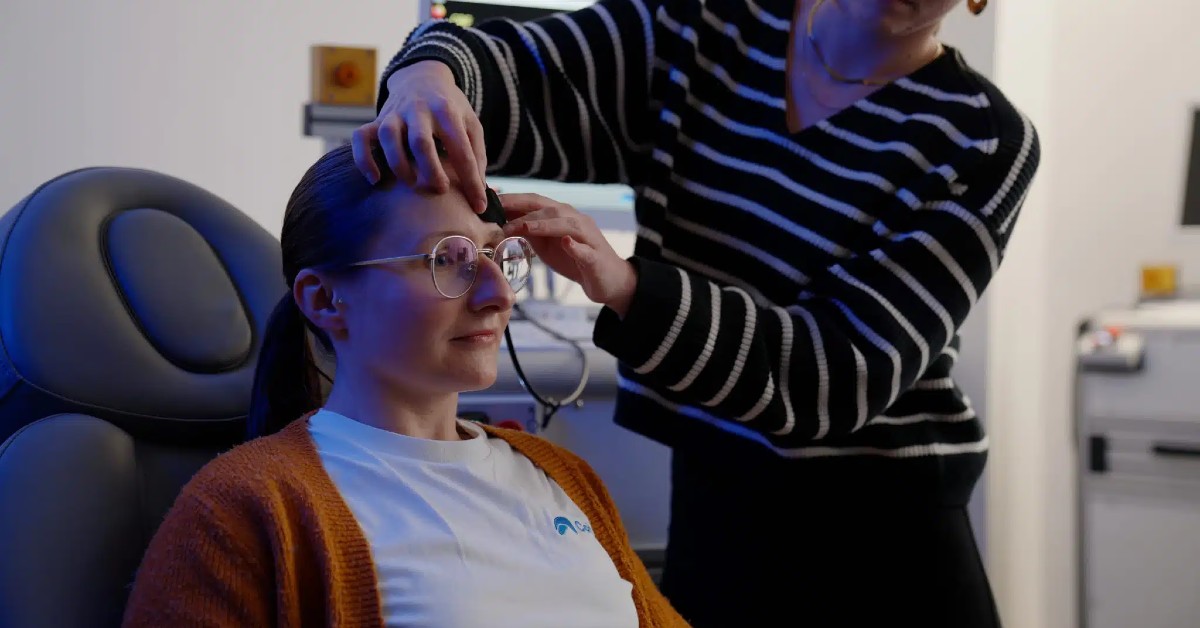
The technology uses laser light transmitted through the tissues of the head. Light from a wavelength-modulated laser source is split into two paths: a reference arm and a sample arm. Light from the sample arm is directed to a sensor placed on the patient’s forehead. The light travels through the tissues of the head, with some returning to the surface for collection.
The collected light is combined with light from the reference arm to create an interference pattern. The time it takes for the collected light to travel through the tissues, known as the time-of-flight, is encoded in this pattern. Time-of-flight provides depth information and encodes the optical properties of the tissues. This allows measurement of parameters such as brain oxygen levels.
The interference pattern is measured hundreds of thousands of times per second. These measurements capture fluctuations in light caused by the flow of red blood cells. The data generated can be used to measure neurophysiological parameters that are currently unavailable or only measurable through invasive methods.
Parameters under development include cerebral blood flow, intracranial pressure, cerebral autoregulation, brain tissue oxygen levels, and cerebral metabolism.
