

Cylib, a German battery recycling company, has received funding to build a lithium-ion battery recycling facility in North Rhine-Westphalia.
Contentlockr
Aachen-based Cylib, a German sustainable end-to-end battery recycling company, has received €26.1M in funding.
The investment came from the European Union ERDF/JTF programme in North Rhine-Westphalia (NRW) to construct a lithium-ion battery recycling facility at CHEMPARK Dormagen.
The funding, provided through the “Produktives.NRW” programme, follows an initial announcement made in November 2024 and will cover the first phase of the facility.
Dr Lilian Schwich, co-founder and co-CEO of Cylib, says, “We are deeply grateful to the state of North Rhine-Westphalia and the European Union for funding this project and supporting our mission to produce advanced materials for sustainable batteries and resilient European value chains.”
“This validates our superior technology and advanced engineering capabilities, whilst recognising our team’s achievements to date.”
Scaling battery recycling to meet Europe’s material demand
Cylib is a battery recycling company founded in 2022 by Dr. Lilian Schwich, Paul Sabarny, and Dr. Gideon Schwich.
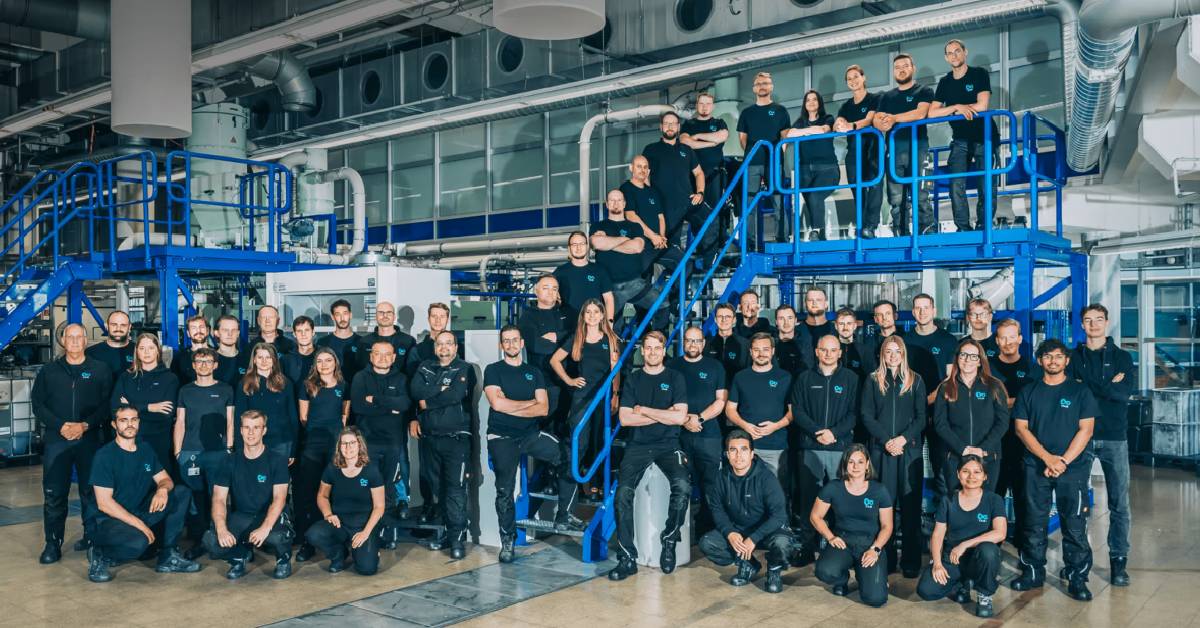
The company develops materials for batteries and supports European battery supply chains. It grew from research at RWTH Aachen University and employs over 120 people.
Cylib developed the water-based OLiC (Optimised Lithium & Graphite Recovery) process, which recovers raw materials from battery packs, black mass, and production scraps. The process recovers over 90 per cent of lithium, graphite, nickel, cobalt, and manganese while producing 80 per cent lower carbon emissions compared with primary extraction, supporting a circular economy.
The company is backed by investors including Porsche Ventures and Bosch Ventures, raised €55M in its Series A funding round—the largest financing round in European battery recycling to date—and secured more than €27M in grants.
The OLiC process will be scaled from Cylib’s Aachen pilot line to full industrial implementation. At full build-out, the facility, scheduled to begin operations in 2027, will process up to 140,000 electric vehicle batteries annually, equivalent to 60,000 tonnes of end-of-life batteries or 20,000 tonnes of black mass.
With the global shift to electric vehicles, including one in four new cars sold being electric, Europe faces increasing demand for battery materials. The facility aims to reduce dependence on primary mining and strengthen European supply chain independence.
