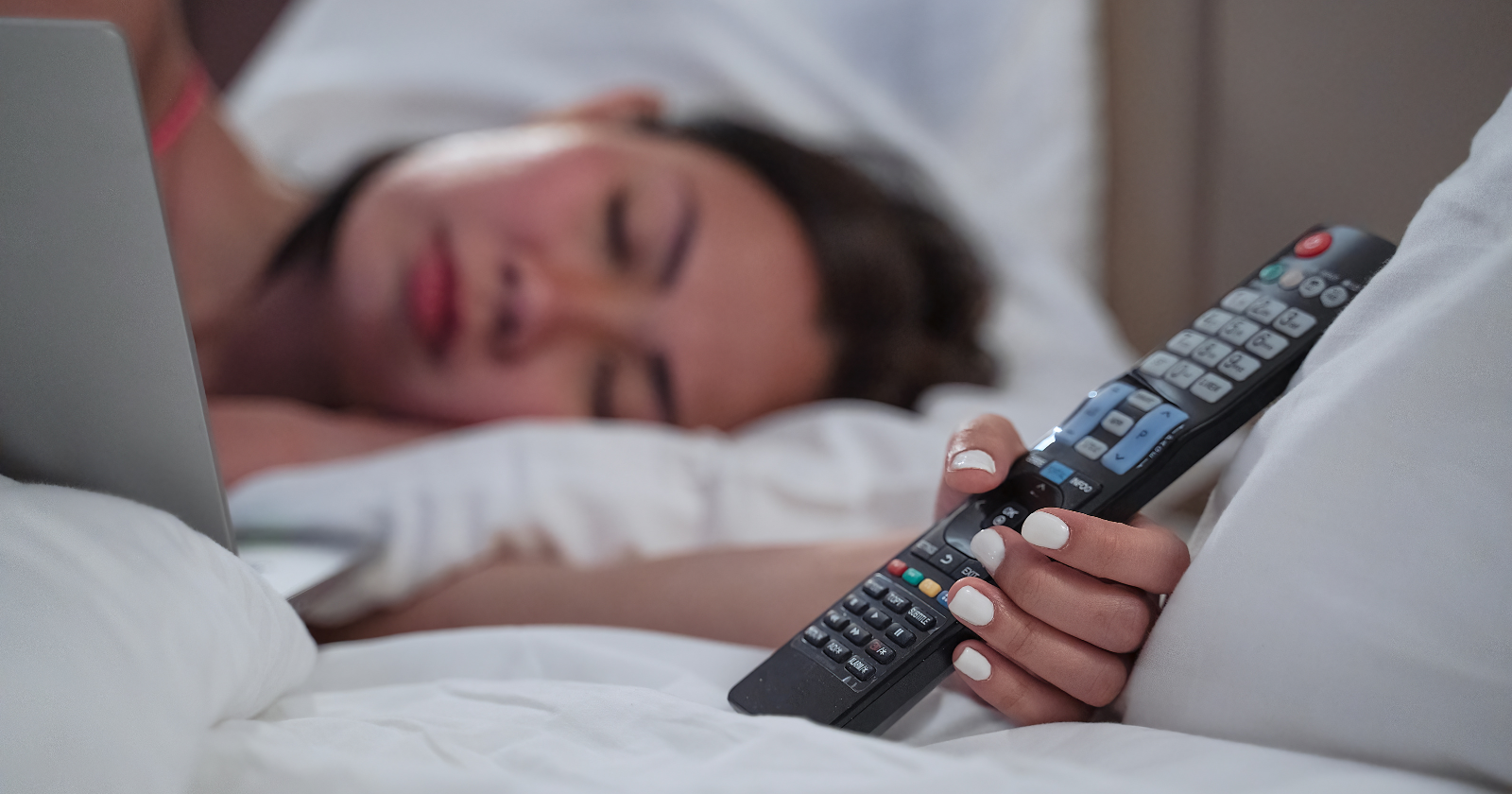
There is a moment, usually somewhere around 4am, when the sleep timer has long since expired and you surface into a room that has gone completely quiet.
For about ninety seconds you lie there and everything you have been avoiding since Tuesday arrives at once, in order, like a queue that has been waiting patiently outside a locked door.
Then you find the phone, restart the episode you have heard forty times, and go back under.
I did this for years and told myself I simply liked the show.
The show is not the point
Here is the tell.
You cannot summarise the last twenty minutes of anything you have fallen asleep to. Not one plot point. If this were genuinely about content, something new would work better. It doesn’t. New is a disaster.
Try a fresh episode of something gripping and you will be wide awake at half past one, invested.
What you need is something with no surprises in it whatsoever that still occupies the exact frequency your own inner voice uses.
Podcast listening research bears this out in a slightly funny way.
Acast found that most people who use podcasts to fall asleep do not switch to calming sleep content at all. They stay on their normal daytime diet, heavy on comedy and true crime. They also take around ten minutes longer to drop off than people who use nothing.
Which tells you the audio’s job is occupation, not sedation.
The quiet is where the day catches up
Sleep researchers have a term for the busy pre-bed mind: pre-sleep cognitive arousal. In plain English, it is your brain still doing paperwork long after the office has shut.
It matters more than most people realise.
In a large study following adolescents over several years, cognitive and emotional arousal before bed was the most consistent predictor of how their sleep problems developed. Worry and rumination, not caffeine, not screens, not the mattress.
The detail that stopped me short is what happens on the other side. When researchers ask good sleepers what was going through their minds as they drifted off, they mostly report nothing in particular. People with insomnia, meanwhile, report rehearsal and planning. What happened today. What I have on tomorrow.
I ran restaurants for a decade and closed most nights myself. You count the float, you lock up, you walk out at two in the morning, and somewhere between the door and the taxi your head starts replaying a row with a supplier that finished eleven hours earlier. Nobody teaches you how to stop that. The television (specifically Game Of Thrones or true crime) did it for me, and I never once questioned the arrangement.
Give your thoughts an appointment
The fix is less romantic than you would hope. You do not need to conquer the thoughts. You need to book them in somewhere that is not your bed at midnight.
Therapists call this worry postponement, and it goes back to a 1983 study by Thomas Borkovec that treated worry as a habit attached to a place and a time rather than an unstoppable force. Pick fifteen minutes. Same slot daily. Not the bedroom, not the hour before sleep. Six in the evening at the kitchen table works.
During that window you worry properly, on paper, with full commitment. Outside it, when something surfaces, you note it and tell it the appointment is tomorrow.
It feels absurd for about four days. Then it starts working, largely because a worry examined at six in the evening turns out to be considerably less impressive than the same worry at one in the morning.
Write the list, not the diary
There is a small, elegant piece of research I recommend constantly.
Scientists at Baylor University put 57 people in a sleep lab wired to proper brain-wave monitoring and gave half of them five minutes to write a to-do list for the coming days. The other half wrote about what they had already finished.
The list writers fell asleep in about sixteen minutes. The other group took roughly twenty-five. More specific lists worked better than vague ones.
Direction is everything here. Looking backwards did nothing. Getting tomorrow out of your head and onto paper did.
Keep the podcast, change its job
I am not going to tell you to embrace silence like some sort of monk. The audio is a reasonable tool and I still use it on bad weeks.
Change what it is for. Sleep timer at twenty or thirty minutes so it is not still muttering at you through the night. Old episodes only. Deliberately boring is the whole point.
Sleep specialists told CNN the test is simply whether the thing is winding you down or waking you up, and you already know which one yours is doing.
Then, maybe once a week, try the quiet on purpose, purely out of curiosity.
Lie there and see what turns up in that first ninety seconds, because whatever arrives is the actual information. The podcast was never the problem. It was the receipt.