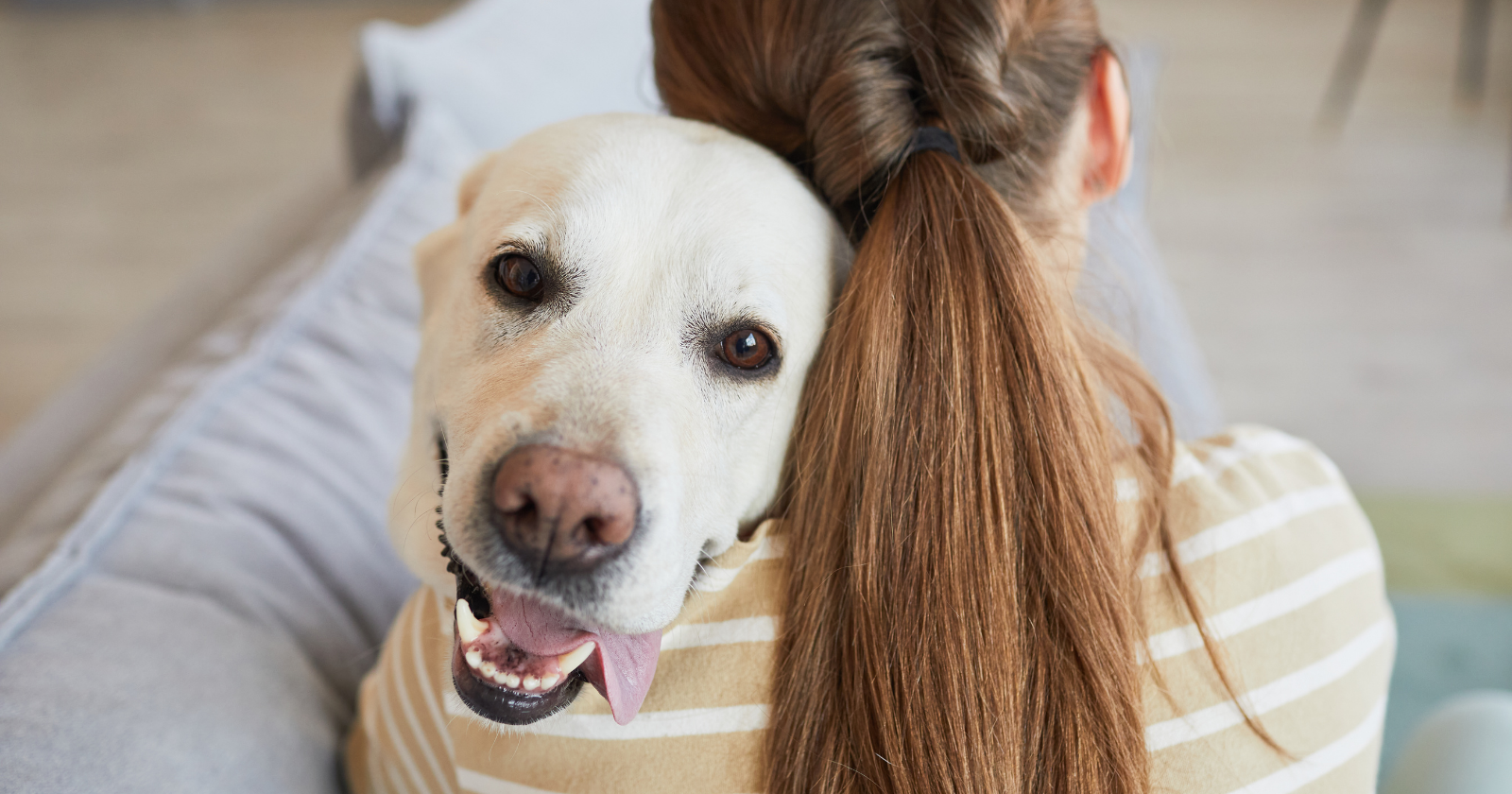
Somewhere right now, a grown adult is standing in a kitchen addressing a nine-kilo mongrel as Sir Wigglebottom, in a voice roughly two octaves above their normal one. The dog’s legal name is Max. Nobody has called him Max since 2019.
Most people would file that under having lost the plot a little. Too attached. Probably needs more human friends. The research points somewhere duller and more interesting: this is bog-standard intimacy behaviour, aimed at a dog.
Couples do the exact same thing
In 1987, three researchers asked 100 romantically involved couples to list every word, phrase or gesture that carried a meaning only the two of them understood. The couples came up with 647 of them. Nicknames were among the most common categories, alongside teasing insults.
Do the maths and that lands at roughly six or seven private terms per couple. And the more of these a couple had going, the higher they scored on measures of love, commitment and closeness.
Worth being careful here, because that is a correlation rather than proof that inventing nicknames manufactures affection. It still reframes the pet situation. Six or seven names for one beagle sits comfortably inside the going rate for any close relationship.
Baby talk is not the red flag it sounds like
The voice is usually what gets someone judged. High pitch, stretched vowels, rhetorical questions put to an animal that will never answer them.
A 1996 study looked at adults who used baby talk with romantic partners and close friends, and found they tended to be more securely attached and less avoidant in general. Whatever the squeaky voice signals, emotional fragility does not appear to be on the list.
The dog is getting something out of it
In 2018, a team at the University of York tested how dogs respond to different ways of being spoken to. Dogs paid more attention to a person using naturalistic dog-directed speech, and were warmer towards them too. That is the sing-song delivery combined with words a dog actually cares about.
Things got interesting when the researchers pulled those two halves apart. Sing-song delivery attached to irrelevant content, or dog-relevant words said flatly, and the preference vanished. Both elements had to be present.
So a rotating cast of nicknames delivered in that silly voice reads to the dog as a familiar signal that something good is coming. This is one study run at one boarding kennel in York, so nobody should carve it in stone. It does suggest the dog knows exactly what’s coming.
Where the worry has a point
The stereotype did not appear from nowhere. A 2007 theory of why people treat non-human things as human identifies three drivers. Two are ordinary machinery. We know an enormous amount about human minds, so we reach for that knowledge first. We also badly want to predict what an unpredictable creature will do next. Driver number three is a desire for social contact. People who feel cut off from other humans do anthropomorphise more.
The “go and make some friends” jibe therefore has a thread of evidence behind it. That thread covers one factor out of three, and the other two are simply how a social brain runs by default.
The useful question has nothing to do with how many names the dog has collected. Ask instead whether the naming sits alongside a full life or quietly stands in for one.
What the names are actually doing
Private language draws a border. A word that only two parties can decode marks off a relationship as its own small territory, closed to everyone else. That is why couples do it, why families do it, and why two old friends will still use a nickname from a night out in 2004 that means nothing to anybody in the room.
A dog cannot hold up its end of that conversation, but it can be the second party in a private language all the same. The evidence suggests it picks up the register even when the vocabulary sails past.
Max is fine. So, in all likelihood, is whoever keeps calling him Sir Wigglebottom.