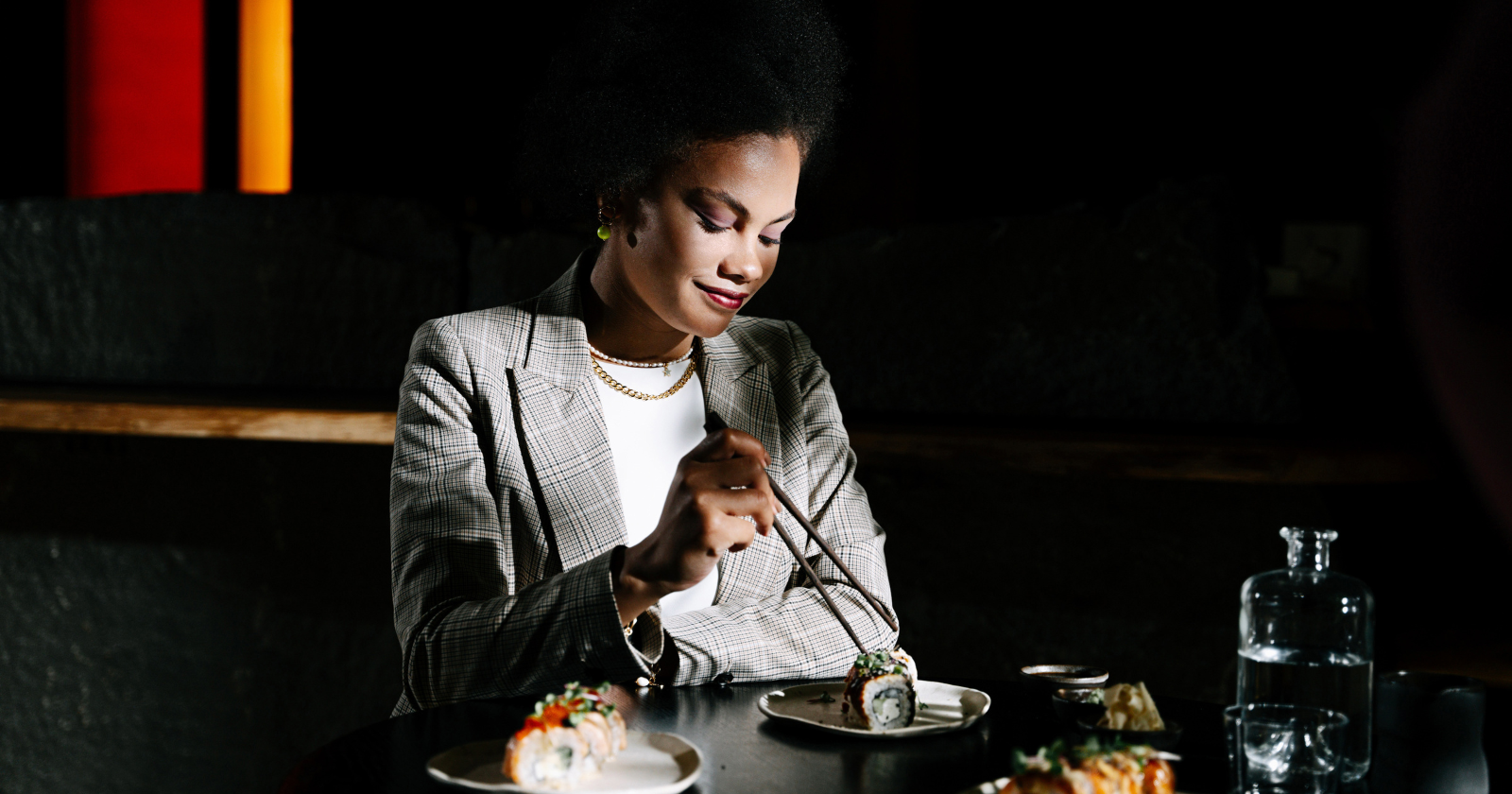
“Table seven, one cover.” That was the line that used to make my floor staff sigh. One cover means a single diner. Somebody eating dinner with nobody across from them.
We treated it as a tiny logistics problem, which tells you plenty about how the world reads a person who shows up to a nice meal alone. Not “here is someone who knows what they want.” Closer to “here is someone we should tuck near the kitchen so the room doesn’t have to feel awkward for them.”
I ran a small chain of restaurants for years before I sold up. I have watched thousands of people eat. And the ones eating alone were almost never the sad ones. Most of the time they were the most relaxed people in the building. It took me an embarrassingly long while to work out why.
What we get wrong about being alone
Most of the trouble starts with treating “alone” as a single thing. It hides two completely different experiences, and telling them apart is basically the whole trick.
Loneliness is a gap. It is the distance between the connection you want and the connection you have, and it lives entirely in your head. Most people miss that. You can be lonely inside a marriage, lonely at a loud party, lonely in a group chat that never stops pinging. It is a quality problem, not a headcount problem. Researchers who study this, including the late John Cacioppo, found that chronic loneliness behaves like a physical stressor, measurably rough on your body over time.
Solitude is the other passenger under that word. Solitude is time alone that you chose, and it tops you up instead of draining you. Same fact on paper, no one else in the room, opposite feeling entirely.
Here is the part that matters. The border between the two is not fixed. The same empty evening can be solitude or loneliness depending mostly on whether you picked it. So sitting on the good side of that border is a learnable skill. Most people take about three decades to notice the border is even there.
Nobody is watching you eat
Let me answer the obvious protest first. “Daniel, I would love to eat alone, but everyone stares.”
They do not. I promise you they do not.
There is a well-documented glitch in the human wiring called the spotlight effect. Psychologist Thomas Gilovich and his colleagues ran the classic version in 2000. They made students wear a deeply uncool Barry Manilow t-shirt into a room full of people, then asked how many strangers had noticed. The wearers guessed about half. The real figure was a small fraction of that. We walk around lit up by a spotlight that exists only for us, because everyone else is busy squinting into their own.
I can vouch for this from behind the pass. When a table of four spotted the solo diner in the corner, they would clock him for half a second and go straight back to bickering about their holiday plans. Nobody was writing a biography of the lonely man with the steak. They had forgotten he was there before the bread landed.
What the research found
This is not just me being kind to you over a coffee. There is proper evidence.
Two researchers, Rebecca Ratner and Rebecca Hamilton, published a study in 2015 with the wonderful title “Inhibited from Bowling Alone.” They dug into why people avoid doing enjoyable things such as films, galleries and restaurants on their own. The reason: we assume onlookers will file us under friendless and sad. We flinch at a judgment that has not even happened yet, and the flinch is enough to keep us home.
Two findings have stuck with me for years.
First, they sent real people to an art gallery, some solo, some in pairs, and the solo visitors enjoyed it every bit as much as the pairs. The dread was genuine. The miserable time it promised never turned up.
Second, this pattern crosses borders. When they compared people in the United States, China and India, the same reluctance to go it alone showed up in all three. So if a table for one makes you sweat, nothing is wrong with you. You are running standard-issue human software. The software is simply wrong about this.
Why the solo diners were the calmest people in the room
Back to my dining rooms.
Once I started paying attention, the regulars who ate alone shared a set of tells. They ordered without dithering. They did not bury themselves in their phones, and the phone-burial was almost always an anxiety move, table of one or table of six. They tasted their food properly. They scanned the room the way you check the sky, mildly curious, nothing riding on the result.
They had settled the solitude-versus-loneliness question for themselves. Dinner alone was just a Tuesday for them, and a decent one.
That is the real signal. Being fine with solo dining has almost nothing to do with being antisocial. Plenty of those regulars had big, warm, crowded lives. It comes down to having a self that makes reasonable company. Once you like your own company, an hour alone with a good plate stops being an ordeal and turns into a small treat.
And nobody puts this on a poster: it makes you better with other people. If the only reason you are ever surrounded is that you cannot bear to be by yourself, that is not connection. That is outsourcing your escape from your own head.
How to have your first dinner for one
No five-step framework here, because you do not need one. You need one dinner. A few things make the first one easier.
Start with lunch if dinner feels like leaping off a cliff. Lower stakes, more solo diners around you anyway, and nobody blinks at one person and a sandwich in the middle of the day.
Take the bar or the counter if the empty chair opposite you is the thing that stings. Counters were built for ones.
Keep the phone in your pocket for at least part of the meal. I know, I know. The phone is a decoy, and the decoy is exactly what stops you noticing that you are completely fine. Finding out you are fine is the entire point.
Order something you actually want. Skip the quick option and the cheap option. You came out for your own sake, so feed yourself properly.
And when the intrusive little voice pipes up, the one insisting the whole room is watching, picture the Barry Manilow shirt. They are not watching. They could not care less, and that is the good news, not the bad.
I sold the restaurants during the stretch of recent history we have all agreed to stop describing. Strange side effect: I eat out alone far more now than I did when I owned the places. Bangkok makes it painless. There is always a good bowl of something and a stool with room for exactly one.
These days nobody seats me by the kitchen. And if they did, I would not clock it. I would be too busy eating.
Watch next
The first video by our friends at Diagnostic by DMNews, an exploration why many people feel like they’re never good enough according to society’s standards.