

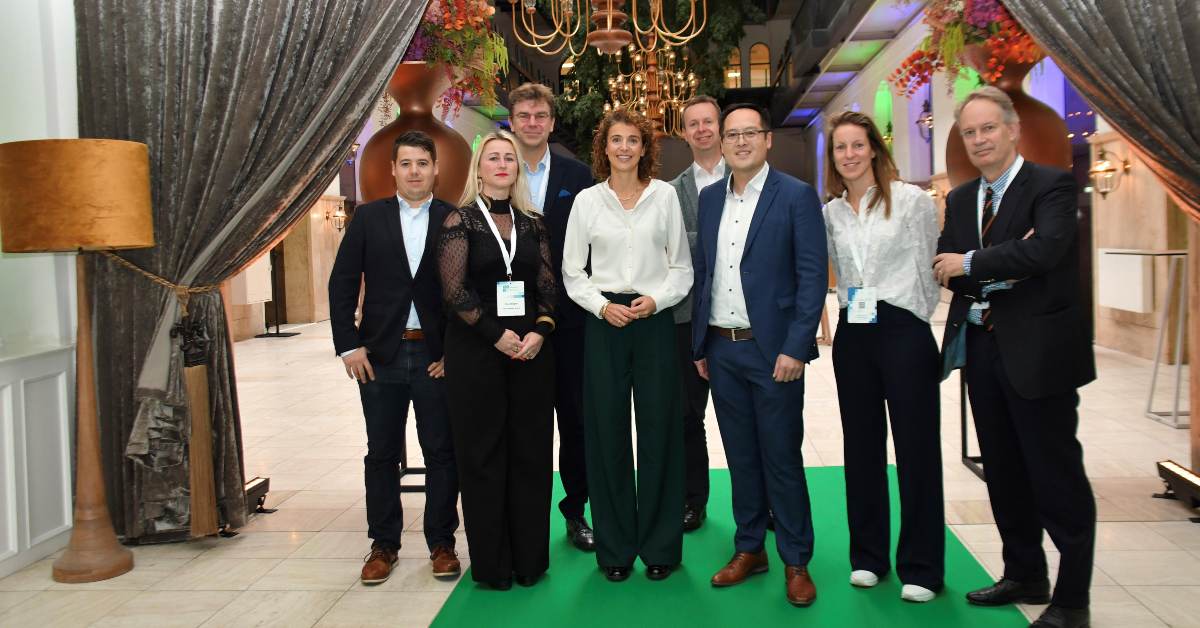
A Dutch consortium secures major support to develop sustainable long-duration battery systems, boosting renewable energy storage and national energy resilience.
Contentlockr
A large R&D initiative focused on battery technology for the long-term storage of renewable electricity has been announced in the Netherlands.
The SLDBatt project has received over €20M in subsidies from RvO, bringing the total budget to more than €30M.
This project is described as the largest of its kind in the country and is part of the Growth Fund Material Independence & Circular Batteries.
The initiative seeks to improve the Dutch manufacturing industry’s role in the global battery supply chain while addressing issues of sustainability, resource independence, and circularity.
Guido Mul, main applicant, University of Twente, says, “The SLDBatt consortium is an important driver for the development and upscaling of cost-efficient and socially responsible technology for the storage of sustainably generated electricity. With this grant, the consortium can take important steps in the further development and improvement of various technologies. Moreover, this grant makes it possible to determine the best implementation scenario for each technology, for example to prevent grid congestion, or to make Dutch industry more sustainable.”
In the past decade, the cost reductions of renewable technologies such as wind and solar have significantly increased clean electricity generation.
To sustain this growth, innovative battery technologies must also reduce costs and gain wider acceptance. The investment from the “Nationaal Groeifonds” aims to accelerate the development of affordable batteries made in the Netherlands.
This effort is expected to enhance energy security and solidify the country’s position in the renewable energy landscape.
Bringing Dutch knowledge institutions and companies under one roof
The project involves a consortium of Dutch knowledge institutions and companies, including startups like AQUABATTERY, Elestor, and Exergy Storage, as well as established companies like Nobian and international energy firms like RWE.
Hylke van Bennekom, CEO Elestor says, “This is a unique collaboration between knowledge institutes and market parties which enables the accelerated development of disruptive battery technologies for commercial use, which is crucial for addressing key challenges such as grid congestion and energy security. We cannot wait to kickstart the project with the consortium partners and in fact accelerate technology development.”
The collaboration aims to lower the costs of renewable electricity storage and increase production of next-generation battery technologies that require fewer rare materials.
Jiajun Cen, CEO of AQUABATTERY, says, “This project builds the knowledge, technology, and demonstrators needed for the commercialisation of long-duration battery systems and positions the Netherlands as a leader in sustainable energy storage for Europe and beyond. It also reflects the Dutch and European strategy for energy security and resilience through circular and independent material development for a critical energy technology class. We are excited to be part of this innovative collaboration to accelerate market readiness of our sustainable battery technology and contribute to a vital, new industry through the centre of expertise.”
Project coordination will be managed by the Battery Competence Cluster NL (BCC-NL), which will facilitate connections, knowledge sharing, and acceleration across the battery value chain.
SLDBatt stands: Developing long-lasting battery system
SLDBatt stands for Sustainable Long Duration Battery Technology. This group was formed in response to the Growth Fund for Material Independence & Circular Batteries, led by the Battery Competence Cluster NL (BCC-NL).
The aim is to create a national program that looks at new battery materials, components, production technologies, and recycling methods.
SLDBatt includes three technical universities, a university of applied sciences, three technology development companies, and two international energy and chemical firms.
The project’s goal is to develop battery systems capable of storing renewable energy for 8 to 100 hours.
