


Self-reliance is the most socially rewarded trauma response in modern culture. We build entire personality archetypes around it: the person who never asks for help, who figures things out alone, who handles everything without complaint. We call them capable. We call them leaders. We promote them. And almost none of us stop to ask what broke inside them to make that level of independence feel necessary.
The conventional wisdom frames this as a virtue. Parents who told their children to figure it out on their own believe they were building resilience, and managers who prize employees who simply handle things without complaint believe they’re identifying talent. The entire boomer ethos of work — show up, endure, don’t complain — rests on the assumption that self-sufficiency is strength and that emotional need is weakness. Most people accept this framing without interrogation.
I think the framing is wrong, and I think the generational friction we’re seeing around work, boundaries, and emotional expression is actually a slow-motion collision between people who built locked doors and people who are asking why the doors exist at all.
The Contract That Taught a Generation to Stop Asking
A recent breakdown by Psychology Says traces six psychological reasons behind boomer work culture, and the first one lands hardest: boomers entered the workforce with an unspoken contract. Show up, work hard, stay loyal, and the system takes care of you. Pensions existed. A single income bought a house. Loyalty was rewarded with job security.
That contract did something beyond providing economic stability. It provided psychological scaffolding. If the rules are clear and the rewards are predictable, you don’t need to negotiate your emotional needs and you don’t need to ask whether the work is meaningful or whether your boss respects you as a person. The system itself was the caretaker. You just had to endure.
When that contract held, the emotional suppression required to fulfill it looked like maturity.
Decades later, the contract is gone and wages stagnated and pensions evaporated and companies cut workers without hesitation, but the emotional suppression remains. The people who internalized the need to figure things out independently as a core operating principle didn’t just lose economic security: they lost the only framework that made their silence feel rational. And this is the point where self-reliance stops being a skill and starts functioning as an identity, because the pride that emerged from this arrangement is specific and recognizable. You see it in the person who won’t call in sick unless they physically cannot stand, in the parent who dismisses their child’s anxiety by saying they didn’t have time for such concerns, in the colleague who works through a family crisis and expects everyone else to do the same. The pride isn’t arrogance. It’s a load-bearing wall. Remove it and the entire structure of how they understand themselves collapses.
When Suffering Becomes the Point
The video names something psychologists call effort justification: the cognitive mechanism by which your brain increases the value of anything you’ve sacrificed heavily to obtain. If you endured terrible bosses, skipped your kids’ recitals, worked through illness, and swallowed your frustration for thirty years, your brain needs that suffering to have been worth it. Otherwise, you’re staring at wasted decades.
This is where the pride calcifies into something defensive. When a younger worker sets a boundary and refuses to answer emails at midnight, takes a mental health day, leaves a job that doesn’t fulfill them, the person shaped by effort justification doesn’t just disagree. They feel personally insulted. The boundary is an implicit accusation: your suffering was optional.
The accusation lands so hard because, in many cases, the suffering was optional, and the system just never presented it that way. I don’t think both readings of this deserve equal weight. The suffering was real, but the belief that it was necessary is the part that deserves challenge, because that realization, if fully processed, would require grieving something enormous: not just the lost time, but the identity built on top of it, and the promotion structures and parenting philosophies and entire organizational cultures that were designed to reward people for never flinching.
Writers on this site have explored how the silence people mistake for peace can become a kind of prison for the people around them. The pride of the self-reliant person radiates outward and shapes marriages, parenting styles, and workplace cultures, often in ways the person generating it never intended and cannot see.
The Attachment Patterns Nobody Chose
Childhood attachment research makes this mechanism painfully clear. When a child learns early that their emotional needs won’t be met, whether through neglect, dismissiveness, or the well-meaning instruction to toughen up and be strong, they develop attachment patterns organized around self-protection rather than connection. The child doesn’t stop needing comfort. They stop expecting it. And eventually, they stop recognizing the need at all, which connects back to that load-bearing wall from the generational contract: the scaffolding that once made silence rational becomes, over time, the only architecture a person knows how to build.
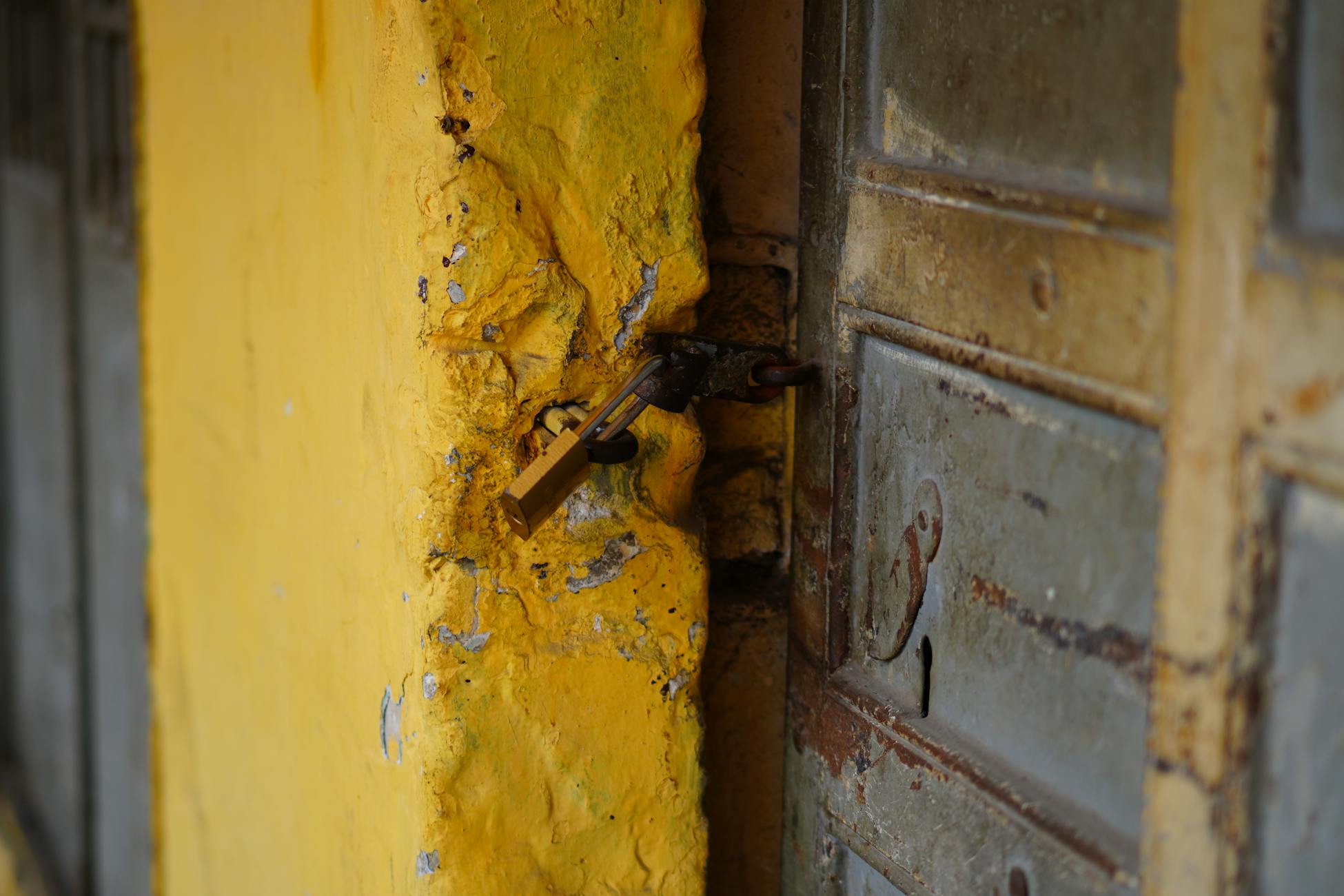
This is the locked door the title describes. Built by a child who had no other option and maintained by an adult who forgot it was ever a choice. The lock looks like competence and it looks like emotional stability and it looks like the kind of person you want running your department or coaching your team. From the inside, it feels like a constant low-grade isolation that the person has learned to call independence.
What makes this especially difficult to address is that many of the habits we associate with maturity — composure under pressure, not needing reassurance, handling crises alone — are actually survival adaptations from childhoods where emotional expression was penalized or ignored. The culture rewards these adaptations so consistently that the person never receives the signal that something might be wrong.
The need to earn your place in every room you enter is a hallmark of this pattern. The self-reliant person doesn’t just handle things alone because they’re capable. They handle things alone because, at some foundational level, they believe that needing help is the thing that will cause people to leave.
Avoidance Dressed as Capability
Psychology Today’s work on avoidance as a coping mechanism maps almost exactly onto the psychology of compulsive self-reliance. Avoidance isn’t always obvious and it doesn’t always look like hiding or withdrawal. Sometimes it looks like volunteering for the hardest assignment and sometimes it looks like being the person everyone calls in a crisis. The avoidance is emotional, not behavioral: the person stays busy, stays useful, stays indispensable, because the alternative is sitting still long enough to feel something they learned decades ago to shut down.
I’ve spent a lot of time thinking about this pattern because I’ve managed teams across multiple countries, and I can identify it within weeks. The person who never pushes back. The person who takes on extra work without being asked. The person whose competence is so consistent it becomes invisible. These are often the people closest to breaking, and they’re the last ones anyone checks on, because their locked door is so well-built that it passes for a wall.
The Psychology Says video makes a point that landed with me: when boomers tell younger workers to push through difficulties, they’re often giving the only coping strategy they were ever taught. The distinction between wisdom and survival is critical here. Wisdom is knowledge refined by reflection and survival is knowledge calcified by repetition. The boomer who insists that’s just how things work isn’t offering wisdom. They’re describing the only operating system they were ever given.
The full video breaks down six psychological drivers behind boomer work culture, including effort justification, emotional suppression, and the fear of irrelevance, and does it with more nuance than most generational analyses manage:

The Fear Underneath the Lectures
The video’s final point is the one that deserves the most attention: boomers fear irrelevance more than they’ll admit. When your entire identity is organized around work, what sociologists call work centrality, the stakes of becoming obsolete aren’t professional. They’re existential. The person who spent forty years defining themselves by their job title doesn’t just lose a career when they retire or get restructured out. They lose the architecture of their selfhood.
This is where the pride becomes most visible and most brittle. The lectures about work ethic, the dismissiveness toward boundaries, the insistence that younger generations are soft: these are, in part, defense mechanisms against identity threat. If the new rules work, then the old rules were unnecessary. And if the old rules were unnecessary, then the suffering was pointless. And if the suffering was pointless, then who exactly did they become through all that endurance?
The locked door protects against this question. As long as the pride holds, the question doesn’t need an answer.
But the question exists. You can hear it in the way a retired father bristles when his adult child describes a four-day work week and you can hear it when a mother who sacrificed her career for her family responds to her daughter’s professional ambitions with quiet disapproval. The friction sounds like judgment. Underneath, it’s grief that hasn’t found language yet.
What Unlocking Actually Requires
Research on attachment-based therapeutic approaches suggests that recovery from compulsive self-reliance requires something counterintuitive: the person has to let themselves be helped before they believe they deserve help. The sequence is backwards from how most people expect healing to work. You don’t first realize you need connection and then seek it. You practice connection, awkwardly, reluctantly, with enormous internal resistance, and the realization follows.
This is extraordinarily difficult for someone whose entire identity was built on not needing anything from anyone. The person who grew up being told to figure it out didn’t just learn a skill. They learned a theology. Self-reliance became their moral framework, their proof of worth, their answer to every emotional challenge. Asking for help doesn’t just feel uncomfortable. It feels like apostasy.
I’ve watched this play out in people I’ve worked with closely. The highest-performing team members are often the hardest to support because they’ve made their competence into a boundary. They’ll solve a problem at 2 a.m. before they’ll send a message saying they’re struggling. And when you finally get through and they finally admit they’re overwhelmed, the relief that crosses their face tells you everything about how long they’ve been holding the door shut.
The generational dimension matters here, but it’s also a distraction if taken too far. Compulsive self-reliance doesn’t belong to boomers alone. Gen X inherited it. Millennials who grew up as latchkey kids carry it. Even Gen Z members raised by emotionally unavailable parents reproduce the pattern, sometimes while simultaneously advocating for the boundaries they can’t apply to themselves.
What shifts the pattern is recognizing that the pride was never actually pride. It was a grief response dressed in competence. The child who was told to figure it out didn’t feel empowered. They felt abandoned. And they built a door so well they forgot it was a door at all and thought it was just who they were.
The way out isn’t demolishing the door, because the skills of self-reliance are real and genuinely valuable and I don’t think anyone serious is arguing otherwise. But the harder truth is that a locked door with a lost key is not a character trait and it is not architecture and it is not identity: it is a trauma response that outlived its usefulness, maintained by someone who organized their entire sense of self around never needing to ask the question the door was built to prevent. The environment that required it is gone, and the people who built it deserve to know that, not as judgment but as information that arrives decades late. The problem was never the strength. The problem is that the strength became the entire self, and there is no version of a full life that fits inside a room you can’t leave.
