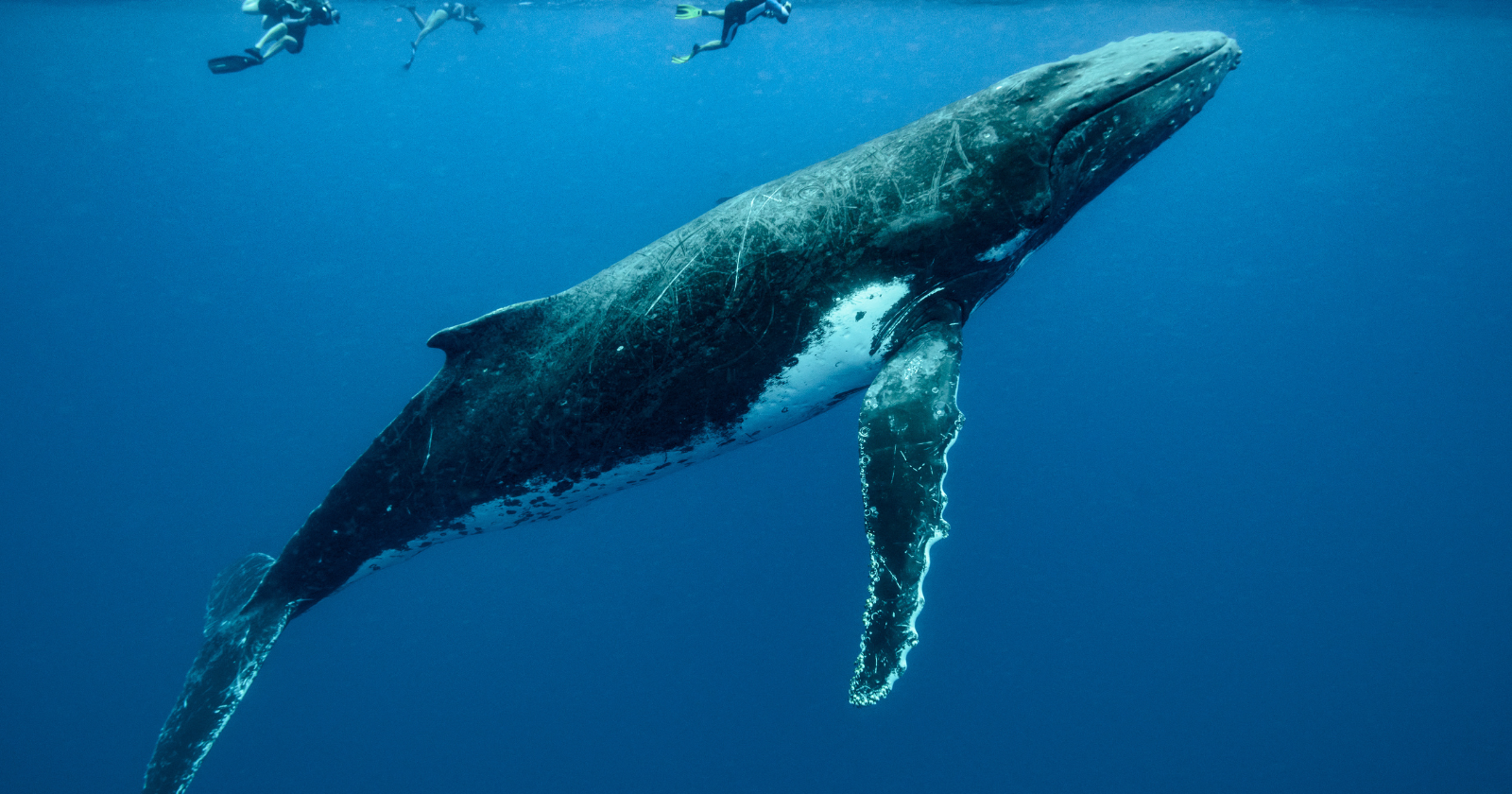
Somewhere in the vertebrate zoology collections of the Natural History Museum in London and the Smithsonian in Washington, several hundred waxy cylinders sit in wax-preserving conditions inside carefully labelled drawers. Most of them were removed from the carcasses of baleen whales killed during the industrial whaling operations of the twentieth century. They’re the ear canal plugs of blue whales, fin whales, and humpbacks, catalogued as ordinary anatomical specimens back when nobody thought they were particularly interesting. It turns out they’re one of the most complete retrospective ecological datasets in the world, and until 2013 nobody knew it.
Why baleen whales have earplugs at all
The ear canal of a baleen whale is sealed against seawater for the animal’s entire life. Wax builds up inside it continuously, produced by glands lining the canal, and it never gets cleared out. Over the decades of a whale’s lifetime, the accumulated wax hardens into a solid cylindrical plug that can reach 25 centimetres in length in older adults. On the surface, the wax forms alternating light and dark bands. Each pair of one light band and one dark band corresponds to roughly six months of the animal’s life, or a full year for the pair combined. Marine biologists have been counting the bands to age dead whales since the 1960s, in the same basic way that dendrochronologists count tree rings.
The world of whales is fascinating, and we came across this video that reveals something even more interesting about how whales contribute to the ecosystem:
The breakthrough
What nobody had thought to check was whether the wax laminae also archived the chemistry of the animal’s body and environment as they were being laid down. In 2013 a team at Baylor University in Texas checked. Stephen Trumble, a marine biologist, and Sascha Usenko, an environmental chemist, took a single 24-centimetre earplug from a 12-year-old male blue whale that had been killed in a ship strike off Santa Barbara in 2007 and started dissecting it lamina by lamina. They ran each individual layer through chromatography and enzyme-linked immunoassay techniques designed to isolate hormones and organic contaminants at trace concentrations. The results came back positive across the board.
What’s in each layer
Cortisol showed up, tracking the whale’s lifetime stress response. Testosterone showed up, tracking its reproductive development. Mercury showed up. Sixteen of forty-two tested persistent organic pollutants showed up, including several DDT metabolites, multiple PCB congeners, and polybrominated flame retardants that had entered the ocean during the whale’s lifetime. Each measurement came out of a specific six-month lamina and could be plotted onto the whale’s lifetime timeline. What the earplug produced, in effect, was a chronological chemical portrait of everything the whale had absorbed from the surrounding ocean from birth to death, at six-month resolution, from a specimen that had died six years earlier and had been sitting in a freezer ever since.
The 146-year record
Since then the Baylor team has scaled the technique up. According to their November 2018 paper in Nature Communications, co-authored with researchers from the Smithsonian and the Natural History Museum in London, twenty earplugs from museum collections and recent strandings have now been processed. The resulting dataset covers 1,084 individual laminae across 146 years, from 1870 to 2016. Cortisol levels across the twentieth century track industrial whaling harvest counts with a correlation of 0.78. They peak in the 1960s (68 per cent above baseline) when 150,000 whales a year were being hunted, and drop sharply after the international whaling moratoriums of the 1970s. During the Second World War, when whaling paused across the Northern Hemisphere, cortisol rose 10 per cent above baseline anyway, which the team attributes to underwater detonation, naval battles, and dramatically increased vessel traffic across the Atlantic and Pacific. Post-1980 cortisol is climbing again despite essentially zero whaling, correlated at 0.46 with sea surface temperature anomalies. The whales are effectively acting as physiological recording devices for the state of the ocean around them.
What’s still in the museum drawers
According to Baylor’s November 2018 press release announcing the Nature Communications paper, more than a hundred additional earplugs are currently queued for processing, and further museum partnerships are being negotiated. Each fully analysed earplug represents somewhere between 20 and 50 years of six-month-resolution chemical exposure history for one individual whale. Across the world’s natural history museum inventories, the specimen bank represents several decades of future analytical work. The retrospective record of what the twentieth century actually did to baleen whale physiology has been sitting there all along, catalogued and waiting, in institutions that mostly hadn’t understood what they were storing. The 2013 breakthrough just gave researchers the tools to read it.
Why it matters
What the earplug archive is starting to show is that industrial whaling stopped the direct killing but didn’t stop the stress response. Modern shipping, sonar, warming oceans, and the ambient noise environment of contemporary industrial marine activity are producing physiological signatures in living baleen whales comparable to what the harpoon era produced fifty years ago. The animals are chronically stressed. Their reproductive parameters may be affected. And unlike the 1960s, there’s now a two-hundred-year archive of what a healthier baseline looked like, sitting in museum drawers, quietly waiting for the next lamina to be sliced open.