

In a bustling Groningen startup office, MIT undergraduate Sharmi Shah is revolutionising IV infusion therapy safety for critically ill preterm infants. Meanwhile, across the Netherlands, her fellow MIT student Dheepthi is developing AI algorithms to detect microbial contamination in vaccines and gene therapies. These aren’t just summer internships, but launchpads for global tech careers, made possible through MIT’s International Science and Technology Initiatives (MISTI) program.
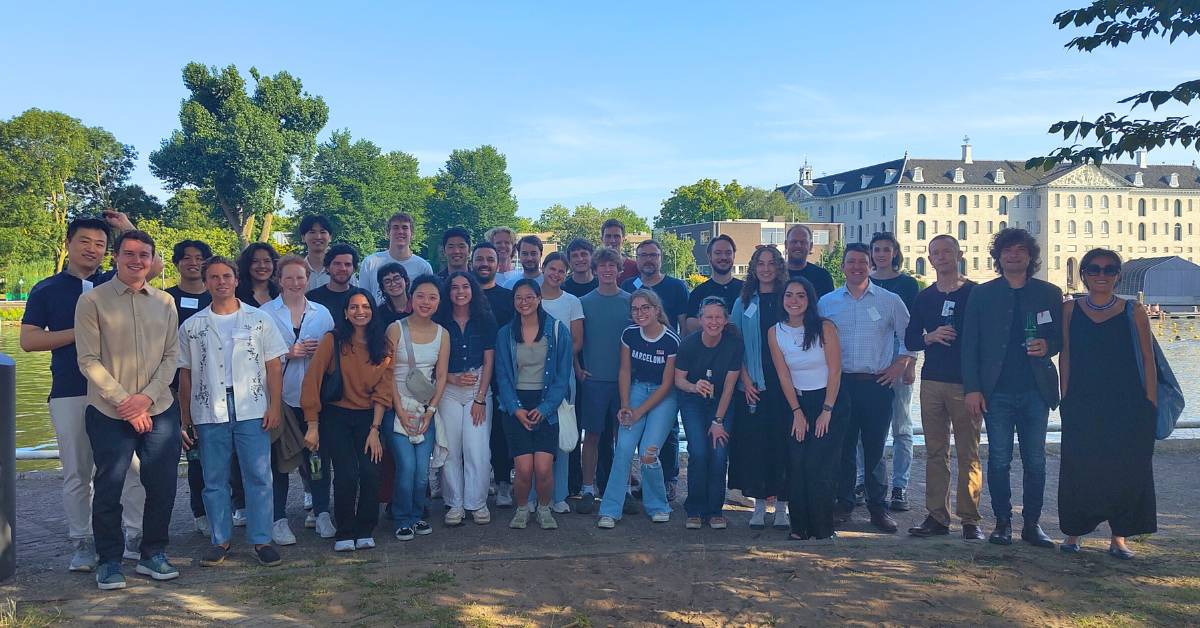
What began over four decades ago as the MIT Japan program has evolved into a global network, placing approximately 1,200 students annually across more than 40 countries. Today, the Netherlands has emerged as a particularly compelling destination, hosting 26 MIT students this summer across a diverse ecosystem of startups, scaleups, SMEs, and research institutions.
From Boston to the Netherlands: A Strategic Partnership

The origin of the MIT MISTI program began with country-specific programs designed to provide students with firsthand industry experience and bring them closer to MIT’s motto of “Mind and Hand.” However, around two decades ago, MISTI was created to oversee all the different country programs and bring MIT’s approach to hands-on problem-solving to companies around the world.
“This focus on innovation, the focus on high-tech, things like the energy sector, sustainability, all the life sciences activity, the Dutch economy just maps so well onto MIT students’ interests,” explains Stephen Barnes, Managing Director of the MIT-Netherlands program at MISTI. This alignment, combined with the Netherlands’ English-speaking work environment, has made it an increasingly popular destination for students studying in the US seeking international experience.
The program’s success in the Netherlands isn’t accidental. It’s built on strategic partnerships, particularly with the Netherlands Point of Entry (in assignment of the Ministry of Economic Affairs), which helps with connecting students with startups, scaleups and SMEs and helps to promote MIT MISTI Netherlands. This collaborative approach has created a pipeline that benefits both sides of the Atlantic.
Barnes notes that most students participate in three-month summer placements, though some extend their stays to six months or even a year, particularly those taking leaves of absence or recent graduates. The shorter timeframe might seem limiting, but the intensive nature of these placements often yields remarkable results.
The 26 MIT students currently in the Netherlands represent the program’s diversity and reach. They’re working at cutting-edge companies like The Ocean Cleanup, which tackles ocean pollution; Skytree, focused on carbon capture; and various AI startups pushing technological boundaries. Some are at research institutions like TU Delft, while others are embedded in Amsterdam’s thriving startup ecosystem.
This variety reflects the Netherlands’ position as a European innovation hub. From Rotterdam‘s port technology to Amsterdam‘s fintech scene, Dutch companies are addressing global challenges with innovative solutions, exactly the kind of environment where MIT students thrive.
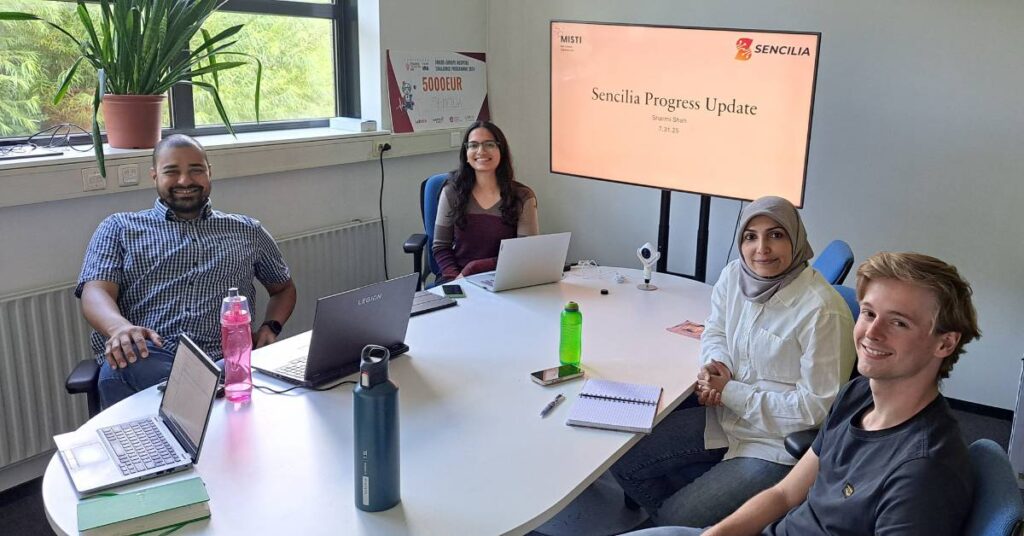
At Sencilia, a MedTech startup developing sensor technology for IV infusion therapy, founder and CEO Dr. Amar Kamat has witnessed firsthand what MIT students bring to the table. “Shah showed great work ethic, is intelligent, hit the ground running from day one, requires little supervision, and is eager to help out on non-project-related tasks,” Kamat explains.
Technical skills meet cultural exchange
Barnes says what sets MIT students apart in the Dutch ecosystem isn’t just technical prowess, it’s mindset. He recalls feedback from a Dutch company that highlighted a key difference: MIT students can take on a task, complete it independently, determine the next steps, and work with confidence and autonomy. This contrasts with what some employers describe as a more conservative approach among local talent.
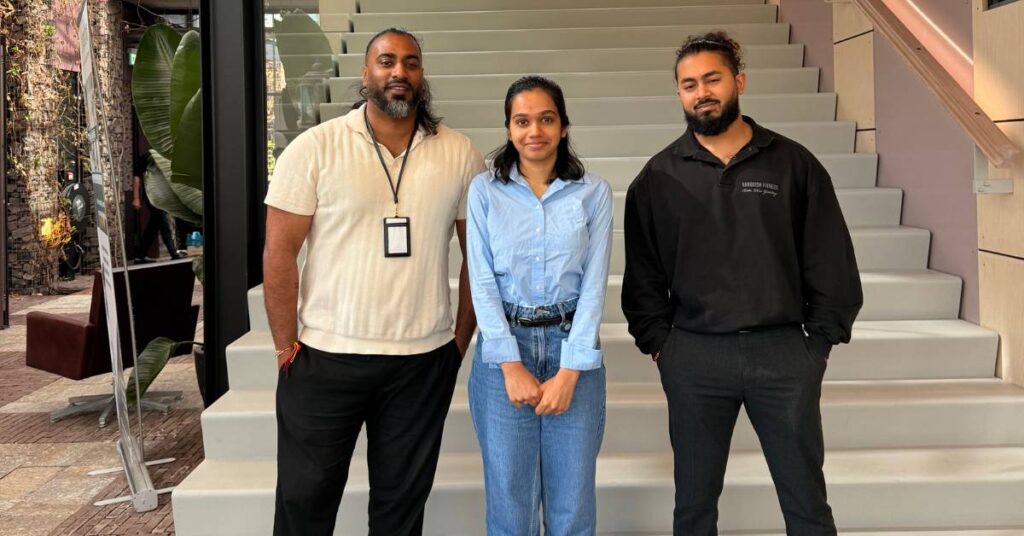
Krishna Sheombar Sing, founder of biotactical, echoes this sentiment: “I have experience with multiple interns, and each one is different. Yet, I have to conclude that the US-based interns have more drive, skills and can work independently.” His MIT intern, Dheepthi, evolved from project member to project lead, demonstrating the entrepreneurial spirit that American students often bring to European startups.
This entrepreneurial mindset, fostered from a young age in American educational culture and amplified at MIT, provides exactly what many Dutch startups need: talent that can move fast, think independently, and drive innovation forward.
While technical contributions are valuable, the cultural exchange proves equally important. MIT students return to Boston with newfound appreciation for Dutch work-life balance, collaborative workplace cultures, and different approaches to problem-solving. They experience how sustainability, healthcare, and public transportation are woven into the societal fabric differently than in the United States.
Dheepthi’s experience at biotactical exemplifies this broader learning: “Coming from the US, what has surprised me the most about the Dutch tech ecosystem is the work-life balance and the focus on solving problems over hierarchy. These aspects respectively avert burnout and encourage rapid and candid communication between all employees, from interns to owners, regardless of title.”
For Shah, the experience working at Sencilia has opened new career possibilities: “The experience with the MISTI program has provided me with the opportunity to get involved with the health tech field. I think working in this field is something I would enjoy in my future career.”
The Future of Global Talent Exchange
The three-month timeframe, while intensive, creates lasting relationships that extend far beyond the internship period. Barnes reports that students frequently maintain connections with their host companies for years, sometimes returning for full-time positions or advanced degrees in the Netherlands. Others leverage their Dutch networks throughout their careers.
These connections work both ways. Dutch startups gain access to MIT’s broader ecosystem, including potential collaborations with professors, research partnerships, and even connections to Boston’s investor network. Sencilia’s Kamat sees particular value in connecting with MIT’s Hood Paediatric Innovation Hub, given his company’s focus on paediatric healthcare solutions.
As artificial intelligence reshapes industries and remote work becomes normal, programs like MISTI face questions about their continued relevance. Barnes believes they’re more important than ever: “With AI, with how work is evolving and the pace of change, the importance of working in teams, the importance of communicating across cultures, the people skills, is probably going to become even more important.”
This perspective aligns with broader trends in the Dutch ecosystem, where technical innovation is increasingly paired with a strong emphasis on collaboration, sustainability, and human-centred design. The Netherlands’ approach to innovation, combining cutting-edge technology with societal benefit, provides an ideal training ground for the next generation of global tech leaders.
Kamat and Sing express enthusiasm for hosting more MIT students, though they believe longer program durations would be more beneficial for host startups as well as students. Kamat wishes for “at least 12 weeks,” while Sing recommends that other startups “prepare the needed documentation and make sure to visit the institution to get a general overview.”
The success metrics speak for themselves. Students gain international experience, technical skills, and global networks. While only 17 students came to the Netherlands for a summer internship in 2022, the number has grown to 26 this year, showing the broader appeal of a country like the Netherlands.
Startups access top-tier talent and fresh perspectives. The broader Dutch ecosystem benefits from the injection of entrepreneurial energy and the American innovation mindset.
As Barnes reflects on the program’s evolution, he emphasises its unique value: “There aren’t many other universities that have this model where they’re focused on providing students and companies with these very intensive 3-month internship experiences abroad and the kind of deep focus in specific countries.”
Creating Tomorrow’s Innovation Leaders
Barnes sees the MIT MISTI program in the Netherlands as more than a student exchange. It serves as a blueprint for building global innovation networks. By connecting America’s most promising technical talent with Europe’s most dynamic startup ecosystem, it creates lasting relationships that drive innovation on both sides of the Atlantic.
As Shah continues developing algorithms for life-saving medical devices and Dheepthi builds AI systems for pharmaceutical safety, they’re not just completing internships but are building the foundation for careers that span continents and industries. In an increasingly connected world, these experiences provide exactly the kind of cross-cultural, hands-on problem-solving skills that tomorrow’s innovation leaders will need.
The success of MIT MISTI in the Netherlands proves that the best way to build global tech careers isn’t just through classroom learning or local internships. It’s through immersive experiences that combine technical challenge with cultural exchange, creating professionals ready to tackle humanity’s greatest challenges from anywhere in the world.
