

The Netherlands Institute for Sound and Vision has launched the News Wisdom Manifesto, the first manifesto in the Netherlands that promotes a collaborative approach to handling news and information.
Contentlockr
A healthy democracy depends on independent and diverse news. But with social media, AI, growing inequality, and political division, navigating information is harder than ever. News literacy is part of the solution, but it only works if journalists, educators, scientists, policymakers, and civil society work together.
The News Wisdom Manifesto was created to bring these groups into one shared effort to build a better-informed society.
This initiative is a collaboration between the Netherlands Institute for Sound and Vision and the DichterBijNieuws project, an initiative of the Media Literacy Network.
Improving news literacy in the Netherlands
The Netherlands Institute for Sound and Vision has launched the News Wisdom Manifesto in response to concerns about the Dutch media landscape.
Trust in news has declined from 57 per cent in 2023 to 50 per cent in 2025, while interest in current affairs among young people is falling. Algorithms and AI play a growing role in shaping information, often without clarity about their operation, according to the Digital News Report 2025.
The manifesto invites stakeholders to develop a structured news guide for the Netherlands jointly.
The goal of improving news literacy in the Netherlands is to help people recognise reliable information, think critically about news, and use technology responsibly, strengthening society and democracy.
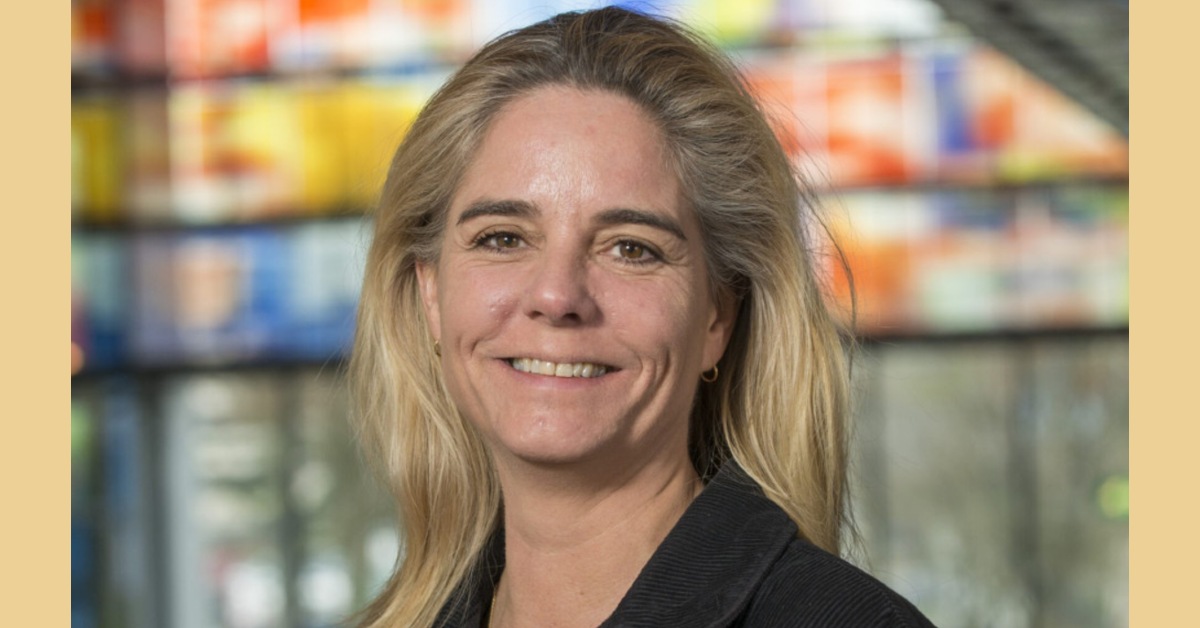
Patricia van Rijswijk, News Literacy specialist at Beeld & Geluid, says, “If we expect children and young people to contribute to our democracy as active citizens, this also includes learning news-savvy skills and behaviour.”
5 pillars for a stronger information ecosystem
The manifesto outlines five pillars that guide the development of a sustainable information ecosystem in the Netherlands.
The first pillar, Ecosystem News Wisdom, focuses on cooperation between sectors to create shared impact. Media Logic emphasises understanding how media function and how images and narratives are formed, enabling people to develop informed opinions.
Control over Technology highlights the importance of deploying technology in ways that safeguard public values and prevent manipulation. The Journalism & Democracy pillar underlines the need to maintain strong and diverse journalism as a cornerstone of democracy.
Finally, Education & Training calls for embedding news literacy into education and lifelong learning, ensuring that people are equipped to critically engage with news and information throughout their lives.
The News Literacy Manifesto, developed with input from professionals across multiple sectors and recent research, offers a framework to embed news literacy in policy, education, and practice.
Pieter van Boheemen, operational director of the Democracy Monitor, says, “Democracy is under pressure. It’s not just a feeling; it’s also measurable. Intimidation of journalists has doubled, and propaganda is spreading rapidly through social media. News should fuel public debate, not polarise it. When educational institutions, scientists, and journalists work together, they prove to have far more influence than they often realise.”
Brief about the Netherlands Institute for Sound and Vision
The Netherlands Institute for Sound & Vision manages more than 70 per cent of Dutch audiovisual heritage, including over one million hours of television, radio, music, and film. It functions as the business archive of national broadcasters and as a cultural heritage institute.
The institute provides online access to archive material for education and runs the Media Experience, which attracts about 200,000 visitors annually.
In 2007, it launched the seven-year Images for the Future programme, supported by €154M from the FES Fund, to digitise 17,500 hours of film, 124,000 hours of audio, 137,000 hours of video, and 1.2 million photos.
The material will be made available to (broadcast) professionals, education and the general public, with crowdsourcing methods being tested as part of the project.
