

Sharing data between companies should be simple; however, often it isn’t the case. Teams face challenges with identity, access, billing, and contracts across various tools.
As a result, it increases support tickets and compliance risks, along with too many logins for users.
Startups often try to fix this by linking various tools, but this can lead to a scattered and expensive setup, especially with every new product or pricing change.
Here’s where Beuningen, the Netherlands-based Veriam, comes into play! The Dutch company brings access control and subscription management together in one tool.
Contentlockr
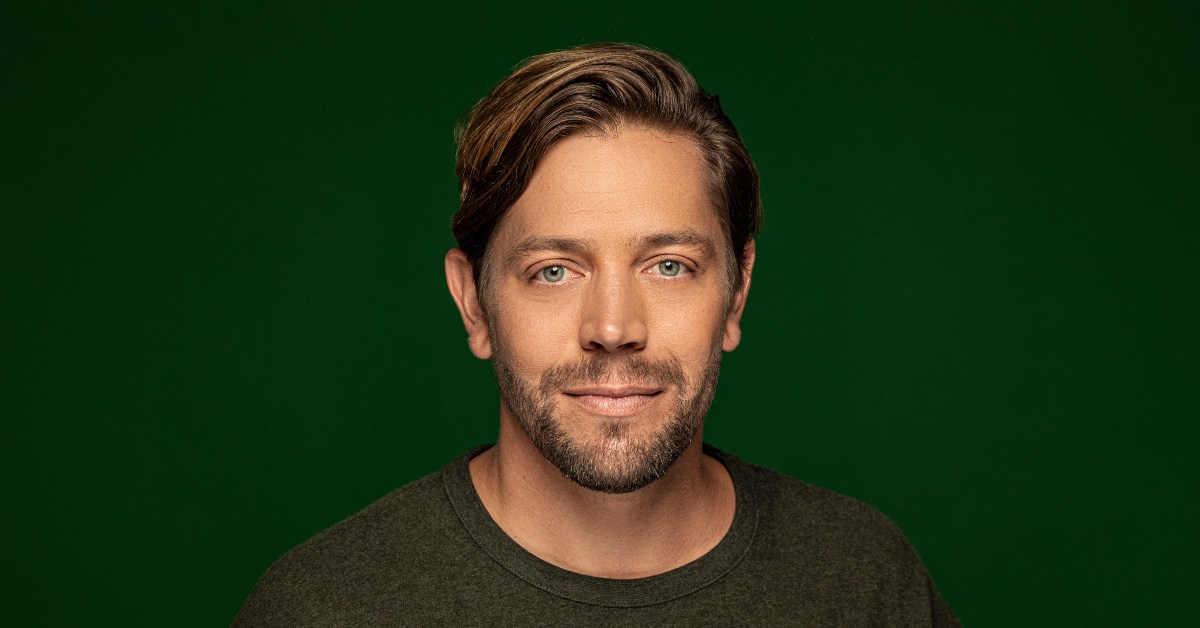
In this edition of “New Kid on the Block“, we spoke to Martijn Kaag, founder & co-CEO at Veriam, to know more about the company’s mission and vision, challenges in aligning ESG objectives, funding scenes, expansion plans and more.
Origin: Practical fix for ESG data sharing
Veriam started as a solution for ESG data sharing.
Organisations needed a secure way to share sensitive supply chain data, but existing tools were fragmented, expensive, or too complex.
“We realised the real challenge was managing access, knowing who can see what, under what conditions, and with which agreements. That problem isn’t limited to ESG data sharing. SaaS companies deal with the same issue, but with an added layer: access often depends on what the customer has paid for. That’s where subscription-based access control (or SBAC, as we call it) comes in,” says Martijn.
“We’re proud that the same infrastructure helping SaaS companies grow also supports positive societal impact. Veriam is majority-owned by a non-profit foundation, ensuring that long-term impact is built into how we operate,” he adds.
Mission: Trusted platform for secure & easy data exchange
Martijn believes that Veriam’s vision is to become the most trusted platform for secure, easy data exchange.
The company aims to help businesses grow while giving users a single account to access products, subscriptions, and data across companies.
“Our mission is to make it super simple to manage access and subscriptions, giving businesses everything they need to sell products and exchange data online. And, give users a single, secure account to quickly access their products, subscriptions, and data across different services and organisations,” says Martijn.
Taking cues from Connectics
Martijn’s journey with Connectis significantly influenced the creation of Veriam.
He believes that establishing Connectis and experiencing its growth and eventual exit taught him critical lessons about digital identity.
“I learned that without secure authentication and authorisation, large-scale, sensitive data exchange simply doesn’t work. That experience gave me both the conviction and the confidence to build solutions in highly regulated, high-trust environments,” he says.
At Connectis, Martijn took on a broad role but wanted to be more focused with Veriam — the technological side and in applying business insight into an actual product.
“Partnering with Jeroen, who has deep experience in security, sales, and scaling companies, gives me the space to fully apply my strengths while ensuring the company as a whole is robust,” he explains.
Rather than trying to replicate his previous entrepreneurial experience, Martijn aimed to apply the valuable lessons he learned in a new way, this time to serve B2B SaaS and ESG data exchange.
What does Veriam do?
Veriam brings access control and subscription management together in one tool. This helps SaaS companies scale faster, and organisations can share ESG data with trust and traceability across supply chains.
According to Martijn, businesses often use tools that don’t quite fit together. Identity and Access Management (IAM) systems can be complex and time-consuming for tech teams.
Subscription management, including billing, invoicing, payments, and renewals, sometimes needs additional tools or dev work to make access compliant. This adds friction, especially when users upgrade, cancel, or need different permissions.
“We’ve fixed all that by combining access, subscriptions, and agreements in one secure platform. Business operations become simpler, teams save time, and users get one account for all their products, subscriptions, and data from any company that uses Veriam,” he explains.
Challenges: Aligning ESG objectives & scaling ambition
Martijn says they have mainly faced two challenges. The first major challenge was aligning their ESG objective of enabling large-scale exchange of ESG supply chain data with a for-profit business model.
“We achieved this by integrating a comprehensive set of premium, but optional, services into our CIAM (Customer Identity and Access Management) platform in a way no one had done before. What began as a social mission that offered the authentication and authorisation layer for free has since evolved into the cornerstone of our growth engine. The result is a business model with the potential for significant financial return, structurally aligned with our mission,” he reveals.
Secondly, it was the scale of the ambition, since it’s not a single vertical tool.
“We’re not targeting a single vertical. Veriam’s value comes from integrating access, billing, and licensing across multiple verticals simultaneously, each of which has well-funded incumbents with hundreds of developers. Shipping the first MVP was a significant hurdle. It took time, capital, and technical depth,” says Martijn.
“Fortunately, following a €5M investment, we’ve been able to build and design for integration from day one, and because our features work together natively, some benefits are hard to replicate with separate tools,” he continues.
Built to scale with single integration
Veriam simplifies the process for businesses to sell products and exchange data online. It helps SaaS companies scale by reducing costs and saving time.
Martijn explains that many companies typically use multiple tools for identity and access management, billing, invoicing, payments, and contracting.
However, integrating these tools can be complex and costly, requiring slow setups and custom maintenance.
“By using Veriam, SaaS teams only need one integration to keep access and subscriptions in sync and compliant. Instead of integrating up to 6 tools and making them work together. Veriam streamlines this by allowing users to access everything with just one account, reducing the need for multiple passwords and apps,” he says.
Designed to be accessible
Martijn says, “We built Veriam to be accessible from day one. That’s why our core CIAM features are completely free.”
The platform’s Customer Identity and Access Management (CIAM) features are completely free.
Consequently, the organisations can use authentication, user onboarding, and fine-grained access control free of cost.
For larger teams or those in more complex environments, the Dutch company offers a premium package with hands-on support and implementation guidance.
“But there’s no pressure to upgrade. Our free tier is production-ready and built to scale,” he adds.
In terms of feedback, Martijn claims that the early users validated the core idea of managing access and subscriptions in one place.
“At the same time, we saw that our brand-new solution needs some explaining. Users aren’t used to seeing CIAM and subscriptions together, so part of our job is helping them understand the value of that integration. That insight is driving improvements to our onboarding, clearer guidance, and our overall user experience,” he says.
Funding scenes and non-profit ownership
Veriam is wholly owned by Metrics Matter Holding B.V., founded with over €5M in Seed funding.
“We’re now at a crossroads. On one hand, we have the option to continue independently. On the other hand, we’re actively exploring external investment to accelerate growth. We’re especially interested in partners with a focus on B2B infrastructure or sustainability, as they would best align with our mission and strategy,” he adds.
Martijn says that any additional funding would primarily be used to grow the platform capabilities and, more critically, to support global rollout.
“If we don’t find funding that aligns with our mission and needs, we will introduce a paid and white-labeled version of our platform to cover our burn rate. This path would reduce growth speed but allow us to sustain operations and continue delivering value,” he adds.
So far, the entire capital has come from the 2050 Foundation, a non-profit established to back ventures that align commercial growth with long-term societal impact.
Martijn explained that the nonprofit ownership of Veriam won’t impact long-term product and pricing decisions, aside from aiming for an exit within ten years.
He says this ownership ensures that most returns will fund impactful initiatives after the exit. At the same time, he also clarifies that Veriam operates as a for-profit company with clear goals and pricing discipline
“I personally remain incentivised alongside other shareholders to pursue growth and success. And, the foundation’s majority stake ensures that any eventual exit flows back into impact,” he adds.
Martijn manages the foundation’s investments to achieve significant returns, and an independent board oversees governance without interfering in daily operations.
“My inspiration to found Veriam is inherently in providing the infrastructure for large-scale ESG data exchange, which is by design impact-aligned. But, we’re only going to be successful if we build a multipurpose product that is not restricted to ESG alone. Success requires us to reach enormous scale and to attract for-profit investors who can fuel exponential growth,” he says.
Currently, the company employs around 12 people.
“Future team expansion will depend in part on our funding decisions. If we decide to pursue external capital, we’ll be in a position to scale faster, while maintaining the level of quality and control that our platform demands,” he states.
Donated €9M after exit
Martijn donated €9M following the exit from Connectis.
“The decision to donate wasn’t an impulse at the time of my exit. It was a principle I committed to when I started my first company in 2008, even writing it into the bylaws,” he says.
Martijn believes that his motivation stems from two core beliefs — a deep sense of justice regarding the unequal distribution of opportunities and the conviction that, beyond a certain point, accumulating wealth no longer adds meaning to life.
He says that making a significant impact requires metrics, discipline, and data, which influenced how he used his wealth, combining financial resources, skills, and entrepreneurial spirit to maximise outcomes.
Expansion plans
According to Martijn, Veriam’s expansion follows three interlocking tracks — ESG, supply chains, and SaaS. Each strengthens the others and serves the same users from different entry points, he believes.
“We’re entering the ESG space by offering a free, security- and compliance-first identity and access layer to support the secure exchange of supply chain data. This is critical for a sustainable society,” he says.
Commercially, the company’s focus is on B2B SaaS, where authorisation is not linear and policy-driven permissions matter.
“Because our platform is horizontal by design, we don’t need to expand vertically or build industry-specific variants. Instead, we scale by plugging into ecosystems and solving the foundational infrastructure problems others depend on,” he adds.
Advice for founders tackling messy systems
Martijn advises starting with structural pain, not with features. He claims that the opportunity lies in the friction between systems and teams.
“In our case, we realised that the real blocker for ESG progress wasn’t motivation or tooling, it was the lack of a secure trust infrastructure between companies,” he continues.
“Once you’ve identified the friction, don’t be afraid to go deep. Building true integration across domains is technically hard and not something you can fake with an MVP. It requires a willingness to invest upfront and the patience to build for the long term. Our experience shows that if you get the architecture right from the start, integration becomes a real differentiator,” concludes Martijn.
