

Why successful leaders so often lack self-awareness: power itself is the culprit
The climb to power blinds you to the impact you're having—and the higher you go, the fewer people will tell you the truth.

The human behaviour behind the work. Decision-making, attention, identity, performance, and the everyday observations that explain how people live and work inside the technology economy.
856 articles · Mind
The climb to power blinds you to the impact you're having—and the higher you go, the fewer people will tell you the truth.

In three studies with 896 American adults, a stranger described as deliberating before taking a political position was rated higher in moral character than one described as answering without deliberating, but the gain showed up among participants who disagreed with the position. Among participants who already agreed, deliberating made no measurable difference, because the same pause reads as thoughtfulness and as doubt at once, and in the two studies that measured it, the doubt only counted against a stranger the participant already thought was right. Moral character was the only outcome variable, and the third study's central test missed significance.

In recalled conversations, people who had stopped replying reported feeling worse than the people waiting on them predicted, guilt and sadness among it, and that gap was larger when the silence had not been deliberate. When the researchers staged a live version of the situation, with strangers who had talked for eight minutes, the headline comparison came back flat.

The fantasy of starting over isn't escapism—it's often the first honest conversation someone has had with themselves in years.

Vanity and longevity may be closer than we think: the people who age most gracefully didn't necessarily win the genetic lottery, but rather spent decades making choices that compound into radically different faces by sixty.
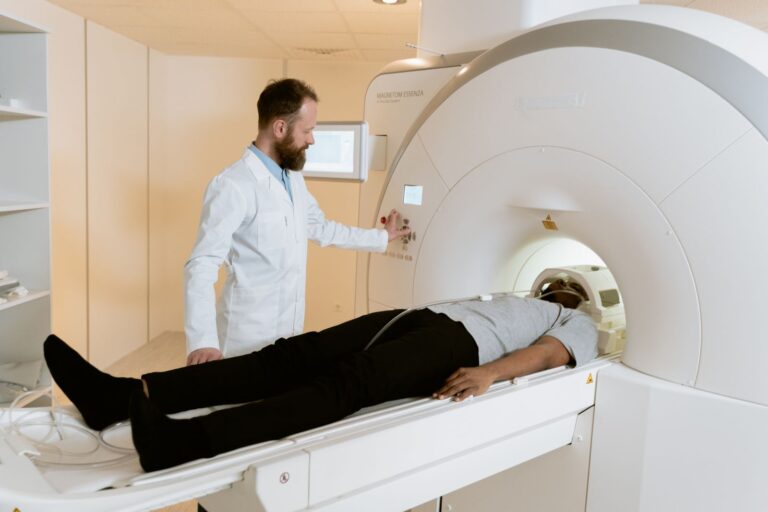
A 2,433-person analysis tied divergent thinking to flexible default-executive network dynamics, but the pooled relationship was small and mostly measured at rest.

The famous median is evidence for wide variation, not a countdown. Early rising also involves circadian timing that the landmark habit study never tested.

Sixty-five per cent of the American respondents and 62.1 per cent of the Chinese ones said people have become less considerate, helpful or cooperative over a sixty-year span reaching a few years into the future.
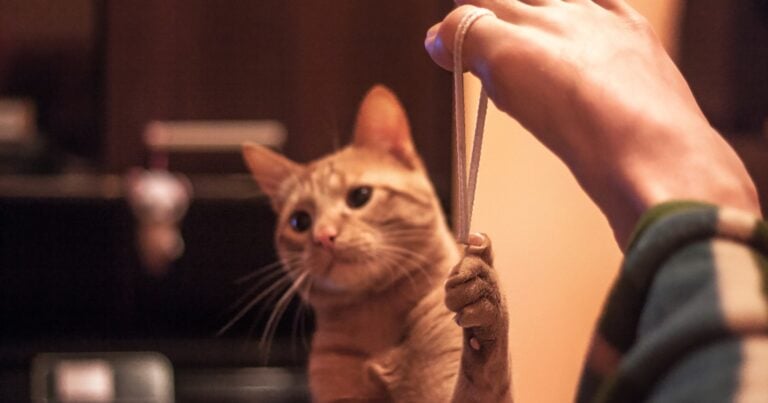
The mood lift showed up, and it was small. Under stress the two species come apart in the paper's own tables: on positive mood the dog coefficient points to a buffer, and on negative mood the cat coefficient sharpens the hit. The paper reports the cat half, concludes no buffering was found, and never discusses the dog one.

Three preregistered online experiments by Yale researchers, 300 US adults in each, timed how fast people read short stories about ordinary errands. In the first two studies, naming a job kept reading at its usual pace, and departing from what the job licenses slowed it down: its script in the first, its private knowledge in the second. In the third, replacing one job-holder with another read about the same as nobody being replaced at all, though the paper never tests those two conditions against each other. The limits are the authors' own: US participants, US jobs, and roles named in words rather than read off a uniform.

When your body instinctively shrinks under pressure, it's not a character flaw—it's a survival reflex millions of years old trying to make you invisible.

Our brains automatically shift into "baby talk" mode when addressing anyone—human or canine—who can't verbally respond, a feature that reveals something profound about how humans are wired to communicate.