Mach Industries, a Huntington Beach defense manufacturer that builds unmanned systems, said on June 2 that it had raised $300 million in a Series C round that values the company at $1.8 billion. The round was led by Infinite Capital and Ribbit Capital, with existing backers Bedrock Capital, Sequoia Capital and Khosla Ventures joining again.
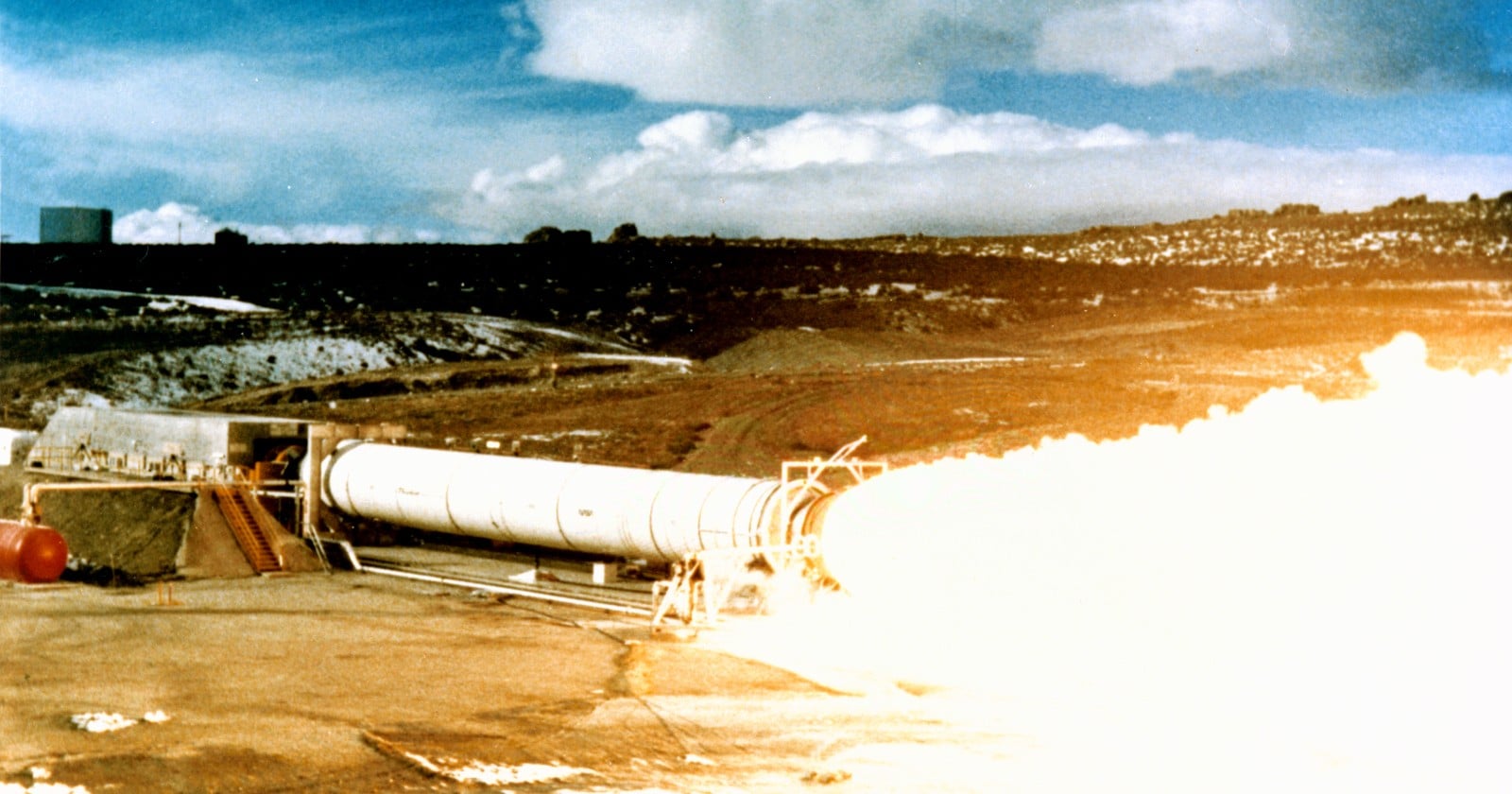
The number is large for a company founded in 2023. The more telling detail sits two weeks earlier. On May 19, Mach announced it had acquired Exquadrum, a California propulsion and energetics firm, and folded it in as a new division called Mach Energetics. Exquadrum’s specialty is solid rocket motor propulsion, and its acquisition statement named the gap it is meant to address directly: “the limited domestic supply of solid rocket motors and the constrained U.S. production capacity for these essential components.”
That is the part worth slowing down on.
Solid rocket motors propel most missiles and many of the munitions a drone-heavy force expects to fire in quantity, and the United States has a small number of suppliers for them. A young company built around low-cost unmanned systems moving to own that piece of its own supply chain is a more specific bet than the headline valuation suggests.
What the company says the money is for
Mach said the capital will accelerate work on existing government contracts, fund hiring and product development, and expand Forge, which it describes as its flexible manufacturing network. It also said the round would expand Mach Propulsion, advance second-generation systems, and deepen partnerships with what the company calls “U.S. Department of War” customers. That is a secondary title the Pentagon adopted by executive order in September 2025, though its legal name is still the Department of Defense. The announcement named the Army, Air Force and Special Operations Command.
The company now lists five vehicle programs: Viper, described as a jet-powered vertical-takeoff one-way aircraft; Glide, a high-altitude strike glider; Stratos, a surveillance platform; Dart, a low-cost counter-drone interceptor; and Pike, a long-range strike munition. Mach said production is “expected to begin on at least three systems this year.”
The valuation has climbed quickly. Mach raised roughly $100 million at about a $470 million valuation in June 2025, according to TechCrunch, which means the company’s paper value has roughly quadrupled in a year. Founder and chief executive Ethan Thornton, whom TechCrunch describes as 22, said in the announcement that the round lets Mach deliver systems “at the pace the threat environment demands.”
The investors framed the appeal around vertical integration. Micky Malka of Ribbit Capital said the team was “increasingly controlling their supply chain” rather than waiting for incumbents. The Exquadrum deal is the literal version of that pitch: Exquadrum brought solid-motor propulsion, launch capability, divert and attitude control systems, munitions work and test facilities, including a 70,000-square-foot site in Victorville. Its prior customers included the Air Force, the Missile Defense Agency and DARPA.
What this round settles, and what it doesn’t
A $1.8 billion valuation is a price a small group of investors agreed to pay, not a measure of revenue, deliveries or contract backlog, none of which Mach disclosed. The funding announcement is the company’s own document, and its forward-looking language is worth keeping intact: production is “expected to begin,” systems are “second-generation,” and the manufacturing network is being “expanded.” Those are plans, not shipped hardware. The solid-rocket-motor shortage Mach is pointing at is real and well documented across the U.S. defense base, but one acquisition does not resolve it. Exquadrum is a specialized supplier, not a mass producer, and expanding solid-motor production at scale is the same slow, capital-intensive problem the larger suppliers have not solved. Neither company disclosed a purchase price in its announcements, though TechCrunch reported the deal at about $50 million in cash and equity, small next to the $300 million round. And defense-technology valuations have risen sharply across the sector, which means a fast-quadrupling price tag reflects investor appetite for the category as much as any single company’s results.
What is concrete is the direction. Mach is spending to make more of its hardware itself, and the propulsion it chose to absorb is the piece the rest of the industry has found hardest to secure.