

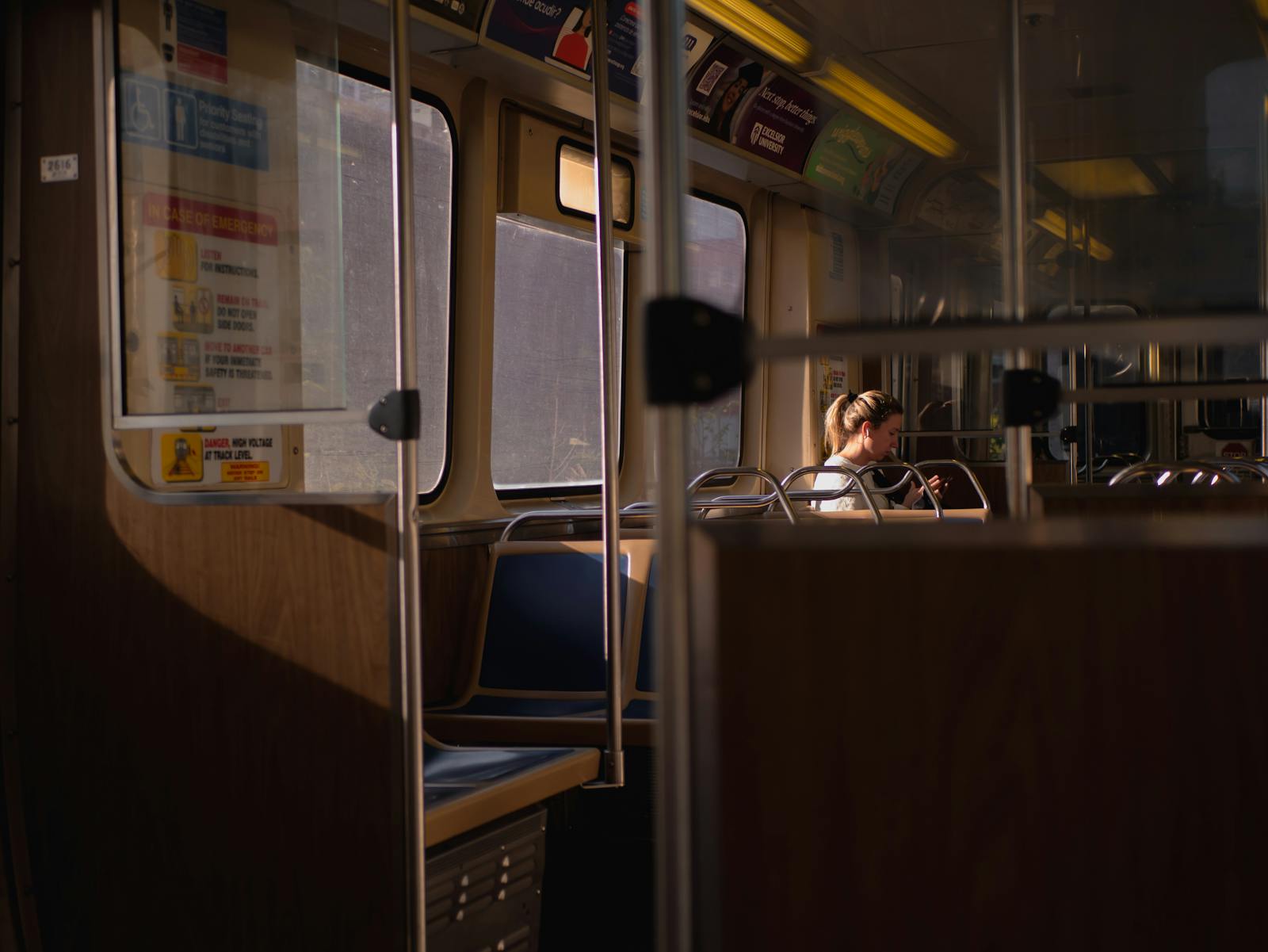
The blank Tuesday afternoon showed up on my calendar last month like a mistake. Two hours, no meetings, no calls, no edits due. I stared at it the way you might stare at a stranger sitting in your usual seat. Then I did what I have done for years without ever quite noticing: I filled it. A coffee I did not need. A call that could have been an email. A walk-and-talk with a colleague about something we had already decided.
Only later, walking back to my apartment in Singapore, did I clock what had happened. The empty slot had not felt restful. It had felt like an accusation. And I had answered it the only way I knew how, by burying it under activity before it could ask me anything I could not answer.
The conventional story about busyness is wrong
The standard line on overwork is that we are addicted to productivity, that hustle culture has hijacked our nervous systems, that we need to learn to rest. All of that is partly true. But it misses the actual mechanism for a lot of us, which is not love of busyness but fear of what stillness reveals.
A full calendar is not really a productivity strategy. It is a containment strategy. The to-do list is a wall built against a question.
The question, in my case, sounds something like: if you weren’t building, who would you be? And underneath that, a quieter one: is the life you have actually the life you want, or is it just the life you have momentum in?
What psychologists call this
I later read Alice Boyes’s work on what psychologists call avoidance coping, and a lot of things stopped feeling like personality and started feeling like a pattern. Avoidance coping is not just procrastination. It is the broader habit of structuring your life so you never have to sit with a feeling, a question, or a memory that might destabilise the version of yourself you have decided to be.
Boyes describes the tendency to avoid situations that might trigger feelings of inadequacy or self-criticism about one’s productivity. If your sense of worth is tied to being productive, an empty afternoon is not neutral time. It is a stress test you are afraid to fail.
The calendar becomes the avoidance. Every meeting is a small certificate that says: I am still the person I claim to be.
The Tuesday afternoon problem
Weekends are easier. Weekends are sanctioned. You can lie on a couch on Sunday and call it recovery, and the culture nods. But Tuesday at 2pm is different. Tuesday at 2pm is supposed to be when serious people are doing serious things.
So when I see a blank Tuesday afternoon, I do not see freedom. I see a hole in my identity that needs patching before anyone notices, including me. The fact that nobody is actually checking is irrelevant. The witness I am performing for is internal, and that one never takes a day off.
This is the part the productivity-shaming articles get wrong. They tell you to block time for deep work, to schedule whitespace, to honour your energy. As if the problem were a calendar app and not a self-concept.
Why this gets worse, not better, with success
I run a media business with my brothers. We have around 50 people across a portfolio of sites. By most external measures the last few years have gone well. And here is the thing nobody warned me about: the more legitimately busy you become, the easier it is to hide.
When you are scrambling to make rent, busyness is survival. When you are running something that runs whether you show up or not, busyness becomes a choice you keep pretending is a necessity. The calendar fills not because the work demands it but because you do.
I closed Ideapod at the end of 2024 after eleven years. The platform could not survive the AI shift in distribution. I have written about that closure as a business story. What I have written less about is what those first weeks felt like afterward, when a category of obligation that had structured my Tuesdays for a decade simply vanished.
I did not feel relieved. I felt exposed. The same hours were there. The same self was there. And the structure that had been answering the question of who I was on a Tuesday afternoon was gone.
The accusation in the empty hour
Here is what I think the empty Tuesday is actually accusing me of, when I let myself listen.
It is not accusing me of laziness. I know I am not lazy. It is accusing me of something more uncomfortable: that some of what I do, I do because doing it is easier than asking whether I still want to. That the next project is partly a way of not finishing the conversation with myself about the last one.
Psychological work on productivity culture suggests we have started squeezing identity, status, and meaning out of every hour, and reporting more anxiety as a result, not less. The optimisation that was supposed to free us has become another thing we have to live up to. The calendar that was meant to serve us has become the witness we cannot disappoint.
The accusation is not that you are doing too much. It is that you have outsourced the question of whether any of it still belongs to you to a scheduling app.
What I have noticed in the wealthy men I now sit next to
Singapore is a useful place to study this because the city runs on legible busyness. People here will tell you their schedule the way Americans tell you their feelings. People here will recite their schedules—Jakarta Wednesday, Hong Kong after, then back for a board meeting—as both apology and credential.
I have ended up in rooms with people who are very rich and, by my read, very rarely alone with themselves. One of them said something to me a while back that I have not been able to shake. He said when you are rich, your biggest expense is pretending everything’s fine. The calendar, for him, was not a tool. It was a costume.
I do not think this is a wealth problem. I think wealth just removes the financial alibi. When you genuinely cannot afford a quiet Tuesday, you have a clean reason for the noise. When you can, the noise has to justify itself, and most of us would rather make more noise than answer that question.
The thing the panic-pouch trend gets right and wrong
There is a Gen Z trend on TikTok at the moment of “panic pouches”: small kits with a fidget toy, sour candy, a grounding card, sometimes a sketchbook. The idea is that when anxiety hits, you reach into the pouch and use a sensory cue to come back to the present moment.
Therapists quoted in the coverage are mostly supportive but flag a real risk. Ryan Warner, a consulting psychologist in Houston, said that if the kit becomes the only coping strategy, it can reinforce avoidance rather than helping the person learn to tolerate anxiety. The pouch can become a safety object—something that soothes the symptom and quietly maintains the cycle.
My calendar is a panic pouch for adults. It is the safety object I reach for when an unstructured hour threatens to make me feel something I have not budgeted time to feel. It works. That is the problem. It works just well enough that I never have to ask what would happen if I let the feeling actually arrive.
What changed when I stopped filling the slot
I have been experimenting, badly, with leaving the slot empty. Not as a productivity hack. As an experiment in tolerating the accusation.
The first few times I did this, I did not have some grand insight. I felt restless. I checked my phone too much. I drafted three emails I did not send. I went for a walk and came back annoyed that the walk had not produced anything. The empty Tuesday is not romantic. It is mostly uncomfortable.
But somewhere around the fourth or fifth time, something shifted. I noticed I had been carrying a question about a piece of the business for weeks without ever giving it room to surface. The empty hour was not a void. It was the only time the question could speak without being immediately drowned out by the next meeting.
The question was not catastrophic. It was just inconvenient, which is why my calendar had been protecting me from it.
The continuity I keep finding
This pattern keeps showing up in different costumes. A few months ago I wrote about answering “how are you” with “busy” for two decades, and how the word was less a description than a deflection. The calendar is the structural version of the same move. “Busy” is the verbal answer; the full schedule is the architectural one.
Silicon Canals has run pieces in a similar register that have stayed with me, including one on collecting achievements to outrun a feeling that is hard to name and another on why retirement is hard not because of the empty hours but because the silence finally meets feelings work kept at bay. They describe different lives but the same machinery. Activity is not always the goal. Sometimes activity is the moat.
What the empty Tuesday is actually offering
Boyes’s framework suggests the way out of avoidance coping is not willpower but exposure. You sit in the situation that triggers the avoidance, in small doses, until your nervous system updates its assessment of how dangerous the situation actually is. The empty afternoon, it turns out, is not dangerous. It is just unfamiliar.
Psychology writing on self-improvement that rejects hustle culture makes a similar point in different language. The work is not adding more practices. The work is letting the practices you already have stop being a way to dodge the underlying question.
The empty Tuesday afternoon is not asking me to justify my life. It is offering me a chance to actually live a small piece of it, unsupervised, with nobody to perform for, including the version of me who has been performing the longest.
I am 44. I have spent a lot of years answering an accusation that, on closer inspection, was not actually being made. The slot was never the problem. The reflex to fill it was.
Last Tuesday I left two hours blank and went for a walk along the coast. I did not solve anything. I noticed, for the first time in a while, that I was not being chased.
Feature image by Bahadir Caya on Pexels
