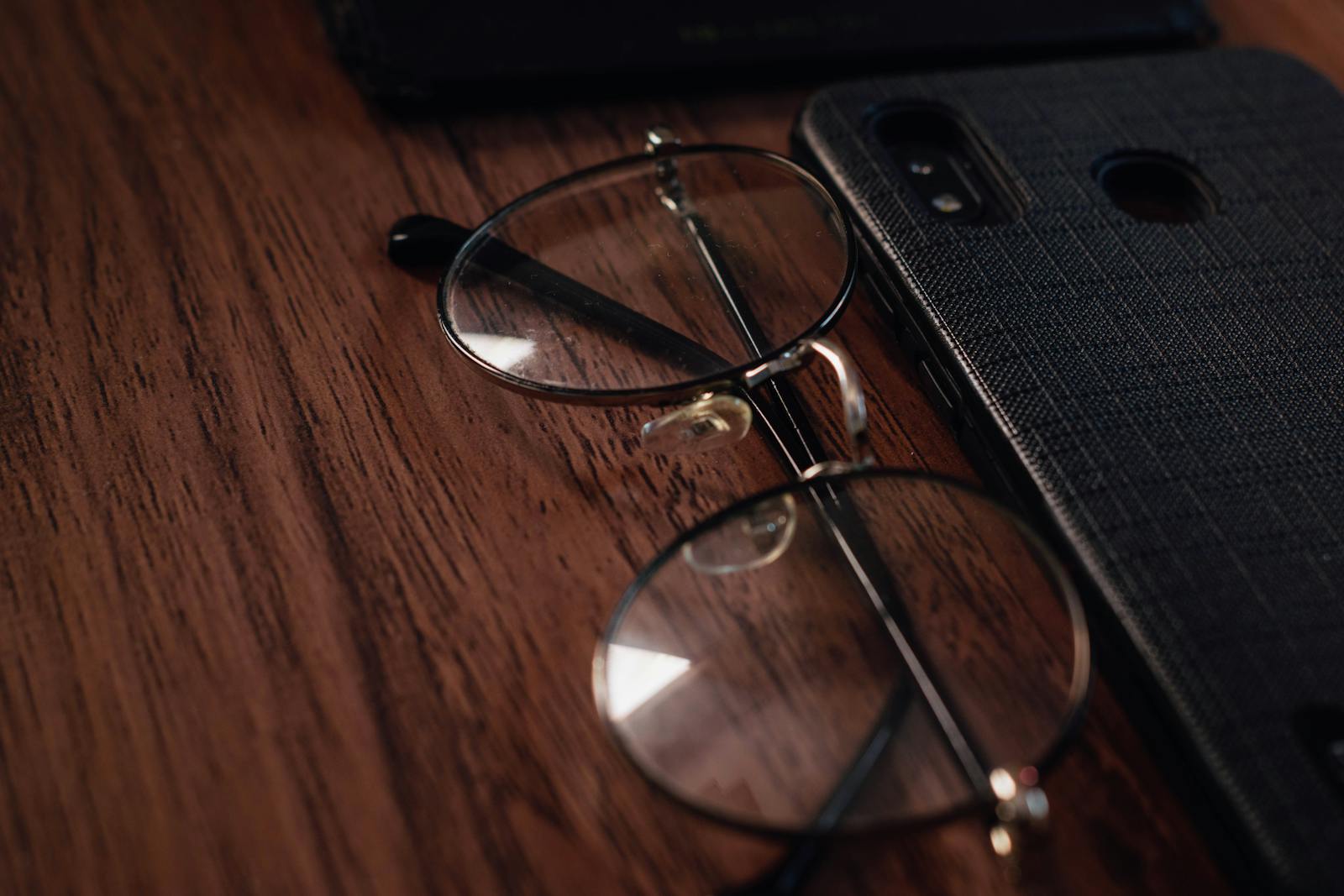
The phone goes face-down on the counter before I’ve even thought about it. Keys, wallet, phone screen-side to the marble, every time, with the small finality of someone setting down a tool they don’t want to hear use itself. I used to call this a habit. Last Sunday I realised it isn’t one. A habit is something you’ve trained. This is something that trained me.
The conventional wisdom about phone behaviour treats it as a willpower problem. You’re addicted to dopamine. You need an app blocker, a greyscale screen, a lockbox. The advice assumes the device is the cause and your nervous system is the victim. What I’ve come to think is closer to the opposite: the device is the receipt, and the nervous system is the contract you signed without reading.
The body remembers what the calendar forgot
For about twenty years, my phone has been a workplace. Not metaphorically. Investors in different time zones, journalists on deadline, contractors in three countries, brothers I run a company with, partners on platforms that broke at 2am because servers don’t respect Singapore office hours. The screen lighting up was almost never neutral information. It was almost always a small task delivered with an implied tempo: respond now, or watch the cost of not responding compound.
That’s not anxiety. That’s training data.
The body learns these things faster than the mind. The body builds maps of safety and threat from repeated exposure, and those maps run beneath conscious thought. When a phone has functioned as a workplace for two decades, a face-up screen is no longer a neutral object. It is a stimulus the body has classified, the way it classifies a doorbell at midnight or a parent’s footsteps in the hall.
Healthline’s clinical breakdown of the difference between acute and chronic stress is useful here. Acute stress is the sprint to the airport. Chronic stress is the airport never closing. The on-call worker, the founder, the parent of a teenager who hasn’t texted back, the freelancer whose next client could arrive at any minute, all live in chronic-stress conditions because the threat has no defined ending. The phone is the doorway through which the threat arrives. Of course the body learns to read it.
The face-down phone is the only contract I can sign with myself
I cannot tell my brain to stop being on-call. I have tried. Meditation, breathwork, walks long enough to be embarrassing, all of it useful, none of it sufficient. What I can do is remove the visual cue. Face-down means the screen cannot recruit me with a flash of bank notification or a Slack mention. It means my body, which is still scanning, gets nothing to scan. The cue is gone, so the conditioned response has nothing to fire on.
This is why the gesture feels disproportionately calming. It isn’t superstition. It’s the only boundary I can enforce without having to explain it to anyone, which is the entire point. You can’t negotiate with a workplace that has no walls. You can flip the phone.
How twenty years of pings became a Pavlovian fact
The polite story we tell about habits is that they take 21 days to form. Scientific American traced this idea back to a 1960 self-help book by plastic surgeon Maxwell Maltz, who noticed his patients took about three weeks to adjust to their new appearance after surgery. No experiment. No habit science. Just a doctor’s observation that became a piece of received wisdom because three weeks sounded reasonable.
The actual research, led by Phillippa Lally at University College London in a 2009 study, found habits formed across a range of 18 to 254 days, with an average around 66. A more recent analysis by the American Council on Science and Health reinforced that complexity matters: handwashing took weeks, exercise took roughly half a year. Healthline’s review of the same literature confirms that repetition and environmental cues are the load-bearing factors.
Now run the math on twenty years of phone notifications. Not 66 days. Not 254 days. Seven thousand. Each ping a tiny rep of conditioning, paired with a real consequence: a missed call that cost money, a delayed reply that lost a client, a server alert that went unanswered. The pairing of cue and consequence is what fuses neural pathways. By that logic, what I have isn’t a habit. It’s a reflex laid down deeper than most things I would call my personality.
Chronic stress doesn’t feel like stress after a while
The cruel part of long-term on-call work is that you stop noticing it. Psychology Today’s David Hanscom, an orthopedic spine surgeon who writes about chronic pain, has a useful piece on how chronic stress affects physiology and well-being, linking sustained exposure to threat to inflammation, immune dysfunction, and a long list of downstream conditions. The point that lands hardest for me is that the body, after long enough exposure, treats the elevated baseline as normal. You don’t feel stressed. You feel like yourself. The stress only becomes visible when you remove the stimulus and notice the silence is louder than you expected.
That’s what happened on Sunday. I was sitting at the kitchen counter with the phone face-down, and I noticed I felt fine. Not relaxed in some retreat-brochure way. Just fine. And the fact that fine felt unusual told me something about the rest of my week.
The founder version of this is its own diagnosis
I run a media company with my brothers. Our team is nearly fifty people across multiple time zones. The job is structurally never finished. There is always a story, a server, a deal, a draft, a partner. I moved to Singapore three years ago partly because the time zones made the work tractable, which is its own admission that the work was setting the perimeter of my life and I was rearranging the perimeter rather than the work.
I’ve written before about how I caught myself answering ‘how are you’ with ‘busy’ for twenty years, and the face-down phone is the somatic version of the same thing. Busy was the word my mouth used so nobody would ask a deeper question. Face-down is what my hand does so my body doesn’t have to keep answering the screen.
What being on-call actually does to a person
Three things, mostly.
First, it collapses the difference between work time and rest time. Once your body classifies the phone as a workplace, you don’t get to be off the clock just because the calendar says Sunday. The clock is wherever the device is.
Second, it teaches the body that responsiveness equals safety. If a fast reply has historically prevented a crisis, slow replies start to feel like risk, and silence starts to feel like a problem you haven’t solved yet. This is the mechanism that turns reasonable conscientiousness into something closer to vigilance.
Third, it borrows from your sleep, your relationships, and your capacity for boredom. Boredom, the kind that produces ideas, is impossible when a part of you is monitoring a device. The signal you’re listening for is small enough that it occupies a channel you didn’t know you had.
Why the gesture matters more than the rule
I’m wary of phone-management advice that asks for heroic willpower. Lock your phone in a drawer for four hours. Use a timer app that shames you. The trouble with all of it is that it treats the screen as an external enemy, and the body knows better. The screen is the cue for a response that the body considers protective. You can’t simply ban a protective response. You have to make it unnecessary.
Flipping the phone face-down is small enough that it bypasses the part of the brain that would argue with a bigger rule. It doesn’t require a calendar invite. It doesn’t require explanation to colleagues. It is the smallest enforceable unit of separation between role-self and self.
I think this is why the gesture has spread. It’s the version of a boundary that fits inside a job that doesn’t allow boundaries. People who do it aren’t being rude at dinner. They’re conducting a small private negotiation with their own nervous system, asking it to stand down for the length of one meal.