


A few weeks ago, I was reading two articles simultaneously. The first was about Sam Altman’s continued insistence that OpenAI is building “the most important technology in human history” and that safety is their core priority. The second was a feature in The New Yorker about Altman’s well-documented interest in doomsday preparation, including his arrangement with Peter Thiel to fly to Thiel’s New Zealand estate in the event of some kind of civilizational collapse.
I sat with both tabs open for a long time. Something about the juxtaposition wouldn’t let me go.
Here is a person who controls one of the most consequential AI companies on Earth, who gives speeches about ensuring AI benefits all of humanity, who simultaneously maintains a personal escape plan from the humanity he claims to be saving. And he is far from alone. The Venn diagram of people working on AI safety and people investing in bunkers, bolt-holes, and backup citizenships is practically a circle at the top of the tech wealth pyramid.
This is the billionaire bunker problem. And it reveals something much deeper than hypocrisy.
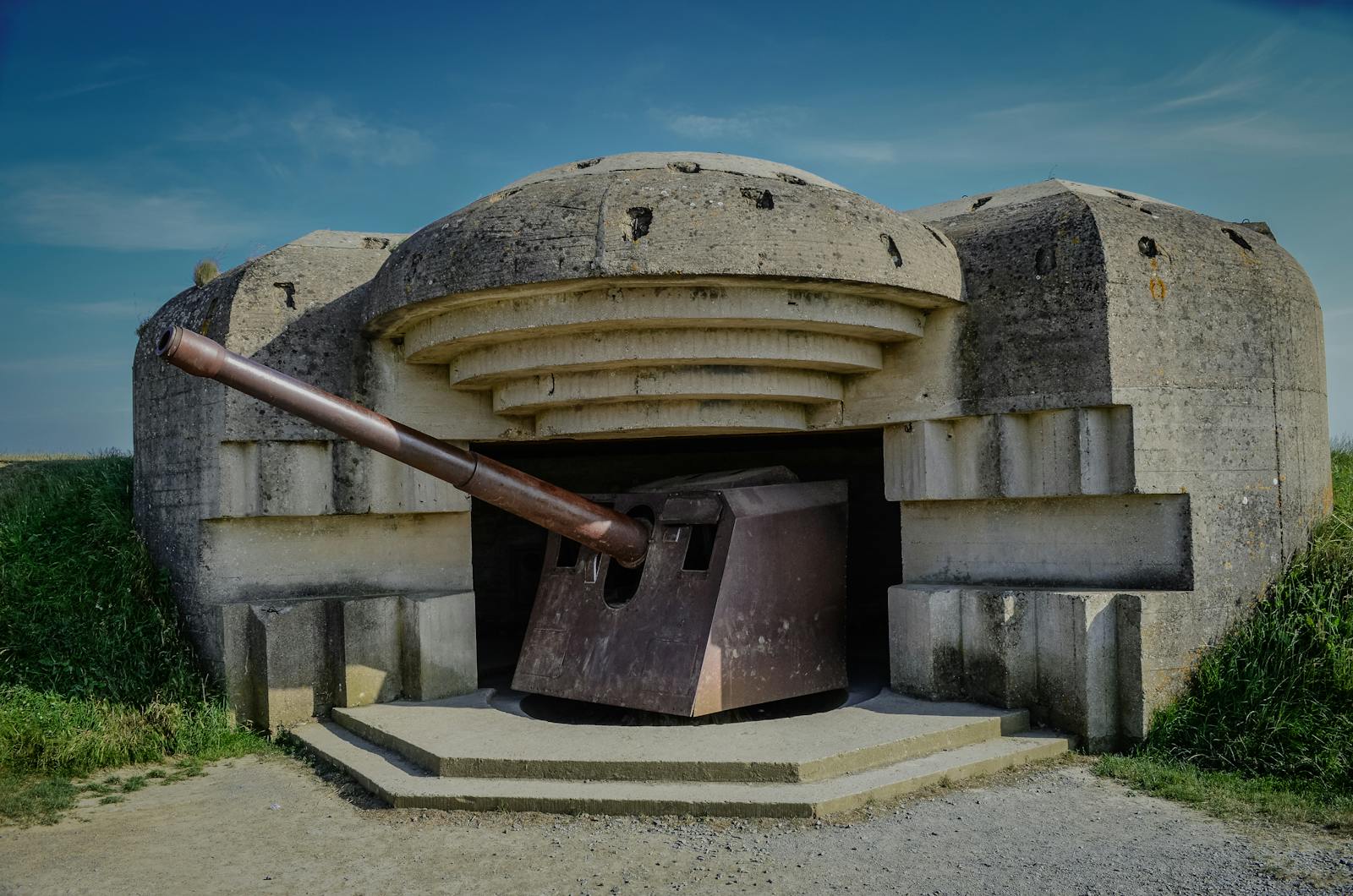
The geography of hedged bets
The escape industry has grown into a serious market. The New Yorker’s reporting on doomsday prep among the super-rich documented the trend years ago, but it has only accelerated. Reid Hoffman estimated that more than fifty percent of Silicon Valley billionaires had acquired some form of “apocalypse insurance.” That was in 2017. Since then, the AI boom has minted new fortunes and new anxieties in roughly equal measure.
New Zealand remains the preferred destination. Its geographic isolation, stable governance, and immigration policies (which, until recently, allowed wealthy foreigners to essentially buy residency) make it the ultimate hedge. But it’s far from the only one. There are hardened facilities in South Dakota, luxury survival condos in former missile silos in Kansas, and an entire subculture of ultra-wealthy individuals acquiring property in Tasmania, Patagonia, and the Scottish Highlands.
What fascinates me is the specificity of who is buying. These aren’t oil executives or hedge fund managers (though some of those are in the mix too). The most enthusiastic preppers are the people building the very systems they seem to be preparing to escape from: AI researchers, tech founders, venture capitalists who write lengthy blog posts about existential risk while simultaneously investing in both the risk and the exit.
I want to be careful here. I understand the argument that thinking seriously about catastrophic risk and preparing for it personally are logically consistent behaviors. If you genuinely believe there’s a non-trivial chance of civilizational disruption, preparing for it while trying to prevent it could be seen as rational. The problem is what this rationality reveals about the underlying power structure.
Safety as a class position
When we talk about AI safety, we tend to treat it as a technical discipline. Alignment research. Interpretability. Constitutional AI. Reinforcement learning from human feedback. These are real fields with real researchers doing genuinely important work. I don’t dismiss any of it.
But “safety” operates on two levels simultaneously. There’s the technical project of making AI systems behave as intended. And there’s the social reality that the people who get to define what “safe” means, who get to shape these systems, and who get to profit from them, are also the people with the most robust personal safety nets. Safety, at the highest levels of the AI industry, functions as a class position. The people deciding how much risk is acceptable for humanity are the people with the least personal exposure to that risk.
This dynamic shapes everything, often in invisible ways. It shapes which risks get prioritized (extinction-level scenarios that threaten everyone, including the wealthy, get far more funding and attention than displacement-level scenarios that primarily threaten workers). It shapes timelines (the urgency to ship products that generate revenue often quietly overrides the caution that safety teams recommend). And it shapes the political framing: AI safety becomes a technical challenge to be solved by brilliant engineers rather than a democratic question about who bears the costs of rapid technological change.
A recent study published in Science examining the governance of advanced AI systems found that there is essentially no democratic mechanism through which affected populations can meaningfully influence the development trajectory of these technologies. The decisions are made by a remarkably small number of people, most of whom share similar class backgrounds, educational pedigrees, and (crucially) similar access to exits.
The moral physics of having an exit
I think about this through a concept I’ve started calling the “exit distortion.” When you have an escape plan, it fundamentally changes your relationship to the systems you’re building. The calculus shifts. You can afford to take bigger risks with the collective because your personal downside is capped. You have a floor. Most people don’t.
This is visible throughout the history of powerful institutions. Generals who never visit the front lines make different decisions than those who do. Executives who can golden-parachute out of a failing company manage it differently than the workers whose pensions are tied to its survival. The existence of an exit doesn’t just provide comfort; it restructures incentives at a fundamental level.
In the AI industry, the exit distortion operates with particular force because the stakes are so explicitly existential. These aren’t people building a slightly better search engine. By their own account, they are building systems that could fundamentally reshape (or end) human civilization. And they are doing so while maintaining personal escape routes from that civilization. The sheer cognitive dissonance would be paralyzing for most people. For this particular class of builder, it seems to function as a kind of permission structure.
I should be honest about my own position here. I’m not writing from a place of purity. I run a media company from Singapore, a city-state that functions, in some ways, as its own kind of hedge: politically stable, economically resilient, geographically strategic. I chose to be here partly for those reasons. The difference, I think, is one of scale and intent. I’m not building systems that could destabilize the global order while quietly preparing for that destabilization. But the impulse to secure yourself while engaging with unstable systems is something I recognize in myself.

The Thiel doctrine and its children
Peter Thiel articulated something important years ago when he declared that he “no longer believe[d] that freedom and democracy are compatible.” Most people read that as a political statement. I think it was an operational one. It was a declaration that the democratic project of shared governance was an obstacle to the kind of radical technological transformation he wanted to see, and that the correct response was to build around it: seasteading, space colonization, New Zealand compounds, and technological systems that operate beyond the reach of democratic accountability.
This worldview has become the implicit operating philosophy of much of the AI industry, even among people who would never articulate it so bluntly. The practical effect is a class of people who build transformative systems, fund safety research into those systems, lobby governments about the regulation of those systems, and simultaneously prepare to exit the societies those systems will transform. Each of these actions is locally rational. Together, they describe a worldview in which the builder class sees itself as fundamentally separate from the built-upon class.
The bunker is the physical manifestation of this separation. It says: I will shape the world, but I will not fully inhabit it. I will take the upside of transformation (the wealth, the status, the sense of historical significance) while hedging the downside in ways unavailable to the people who will actually live with the consequences.
What real safety would look like
If the people building AI genuinely believed their own safety rhetoric, the observable behaviors would be different. You would see AI executives lobbying for robust public infrastructure, universal basic income, and distributed economic resilience, the kind of systemic safety that protects populations rather than individuals. You would see them investing in the social and political institutions that could absorb the shock of rapid technological change rather than building private alternatives to those institutions.
Some of this is happening at the margins. There are AI researchers who genuinely prioritize public benefit. There are smaller labs and open-source projects driven by a real ethic of shared development. But at the top of the industry, where the most powerful systems are being built and the most consequential decisions are being made, the dominant pattern is clear: invest in technical safety as a product differentiator and PR strategy, while investing in personal safety as a private insurance policy against the failure of those very efforts.
The stock prices of major AI companies reflect this tension. Investors are simultaneously betting on transformative success (the bull case for AI-driven productivity) and hedging against systemic disruption (the growing market for what might be called “civilizational insurance” products). The market, in its amoral way, has priced in both outcomes.
Real safety would require the people at the top to burn their escape plans. To make themselves as vulnerable to the consequences of their creations as the rest of us are. This would change their incentive structures immediately and profoundly. It would make them more cautious, more democratic, more genuinely invested in the resilience of existing social systems rather than private alternatives.
Of course, no one with the means to build a bunker is going to voluntarily dismantle it. This is why the bunker problem is ultimately a governance problem. The question of how we regulate AI development cannot be separated from the question of who has exit options and who doesn’t. Any serious regulatory framework needs to account for the fact that the people making the most consequential decisions are also the people with the least skin in the game, measured by personal exposure to downside risk.
The world we’re left holding
I keep coming back to the two-tab problem I started with. The speech about saving humanity and the escape plan from humanity, open at the same time on the same screen. The dissonance isn’t accidental. It’s structural. It’s what happens when transformative power is concentrated in the hands of people who can externalize the risks of that power onto everyone else.
The billionaire bunker problem isn’t ultimately about bunkers. It’s about the distribution of consequence. It’s about a system in which a very small number of people get to make very large bets with civilizational stakes, and those same people are the only ones with a hedge if the bet goes wrong. The rest of us are the unhedged position.
I don’t have a clean solution to offer. The dynamics I’m describing are deeply embedded in how capital, technology, and power interact. But I think naming the problem clearly matters. Every time an AI executive talks about safety, we should ask: safety for whom? And every time someone builds an escape plan from the world they’re reshaping, we should understand that as information about how much they actually trust their own project.
The bunker tells the truth the keynote won’t.
Feature image by cottonbro studio on Pexels
