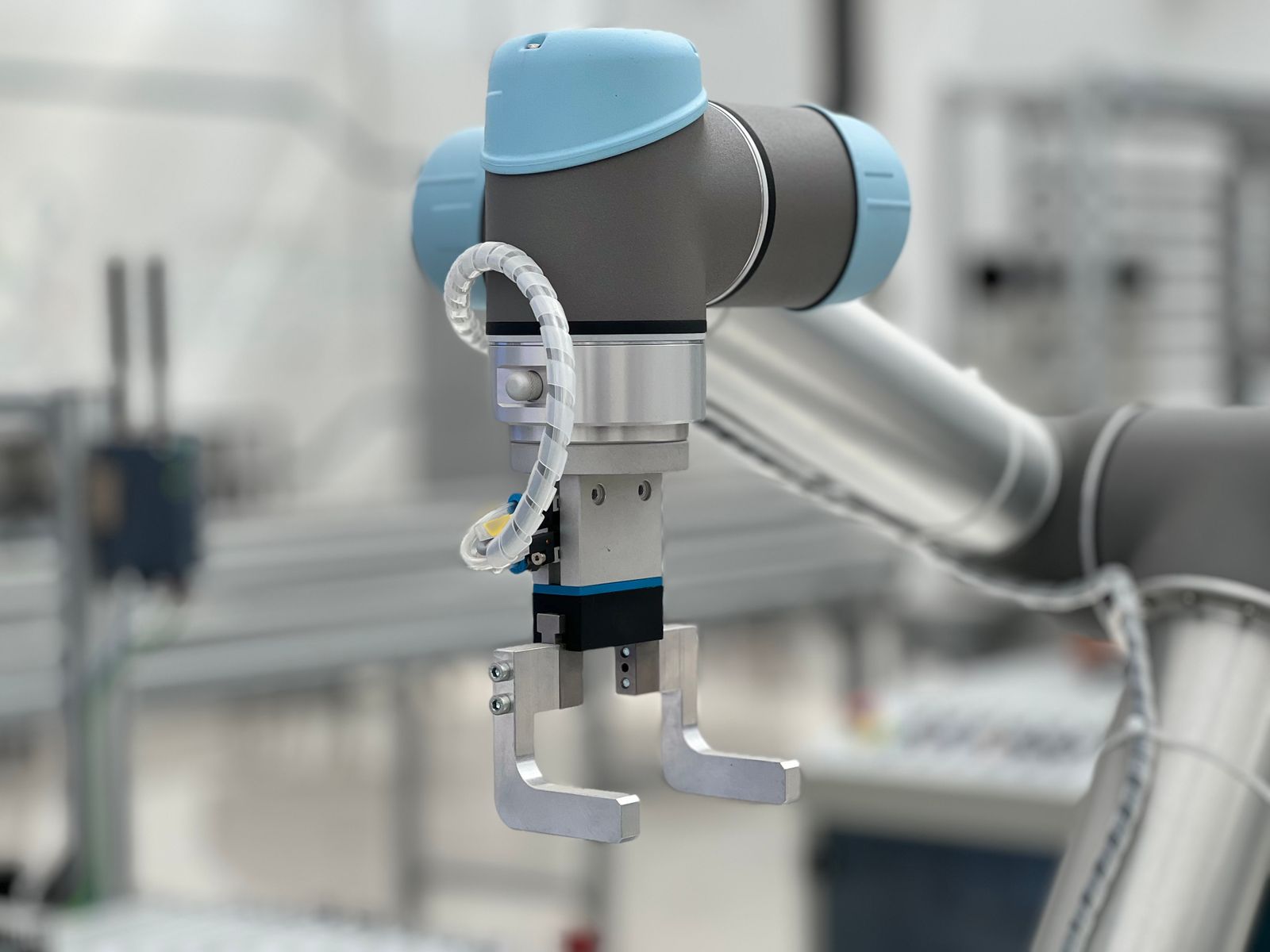
The man whose open-source code runs inside one of the most-installed pieces of consumer software in history is now building infrastructure for a different kind of fleet: robots, drones, and remote machines expected to come online over the next decade. Jean-Baptiste Kempf — lead developer of VLC Media Player — has raised a $5 million seed round for Kyber, a Paris-based startup building the protocol layer that connects operators and AI agents to physical machines in real time.
From video frames to control frames
Kyber’s pitch is structurally simple. The same engineering problem that makes a video stream feel smooth — synchronising audio, video, and timing data across unreliable networks with minimal latency — is the problem that will determine whether remote robotics, teleoperated vehicles, and drone fleets work at scale. Kempf began the project as a side effort while serving as CTO of cloud gaming startup Shadow, where streaming pipelines were already pushed to their limits.
The company’s core SDK synchronises video, audio, sensor data, and control inputs across distributed locations. Kyber is targeting three priority segments: robotics, drones, and remote IT access — the last of which Kempf frames as a challenge to incumbents like Citrix.

Why Lightspeed wrote the cheque
The round was led by Lightspeed Venture Partners, the same firm backing Anthropic and Mistral AI. In a LinkedIn post announcing the investment, Lightspeed framed the bet plainly: physical AI is only as good as the underlying systems running it. The deeper point is that real-world control cannot tolerate the latency that purely digital systems shrug off — a delay that goes unnoticed in a chatbot can put a robot’s action where the operator was, not where they are.
The capital allocation is revealing. Lightspeed’s portfolio now spans the model layer (Anthropic, Mistral) and the control layer (Kyber) — a bet that the bottleneck for embodied AI will not be intelligence but actuation. Kempf has emphasised the same idea from the engineering side: in real-world control systems, every millisecond counts.
The scale problem nobody has solved
Kempf argues that companies with the resources to build remote-control infrastructure have done so privately, for narrow use cases like remote driving. But those systems are sized for the present, not the projected future. Kempf argues that scaling to millions of devices presents fundamentally different challenges than managing smaller fleets.
That gap — between bespoke systems built by well-capitalised incumbents and a generalised layer available to everyone else — is the structural opening Kyber is moving into. It is also where the open-source playbook becomes strategically interesting. Kyber’s core is open; the productised enterprise version, plus forward-deployed engineers, is what generates revenue. The model echoes Palantir’s FDE approach more than it does a traditional SaaS rollout.
Defence, telco, and the customer mix
Kyber says it is already in commercial deployment with customers in defence, telecom, robotics, and AI. The 25-person team operates from Paris, San Francisco, and Singapore — a footprint that mirrors the geography of the physical-AI buyers it is courting. The defence inclusion is notable: as autonomous and semi-autonomous systems proliferate in military procurement, the infrastructure that synchronises sensor feeds with control inputs becomes dual-use by default.
This is the part of the AI build-out that gets less coverage than the model layer — and it is where a category of customer that rarely makes headlines is already spending. Defence operators, telecoms, and large-fleet owners are not waiting for the consumer robotics wave to arrive; they are buying the control layer now, because the machines they run already exist and already need to be operated from a distance.
The takeaway
The headline is a founder story. The structural story is about where the capital is flowing inside the physical-AI stack — and which categories of customer (defence, telco, large-fleet operators) are already paying for infrastructure that the rest of the market will need within a few years. According to the company’s recruiting materials, Kyber positions itself as building a generalisable solution to problems that other companies have addressed only through expensive, proprietary systems. If Kempf is right that hundreds of millions of machines are coming online, the layer that keeps them in sync will start mattering well before the robot fleets actually arrive.