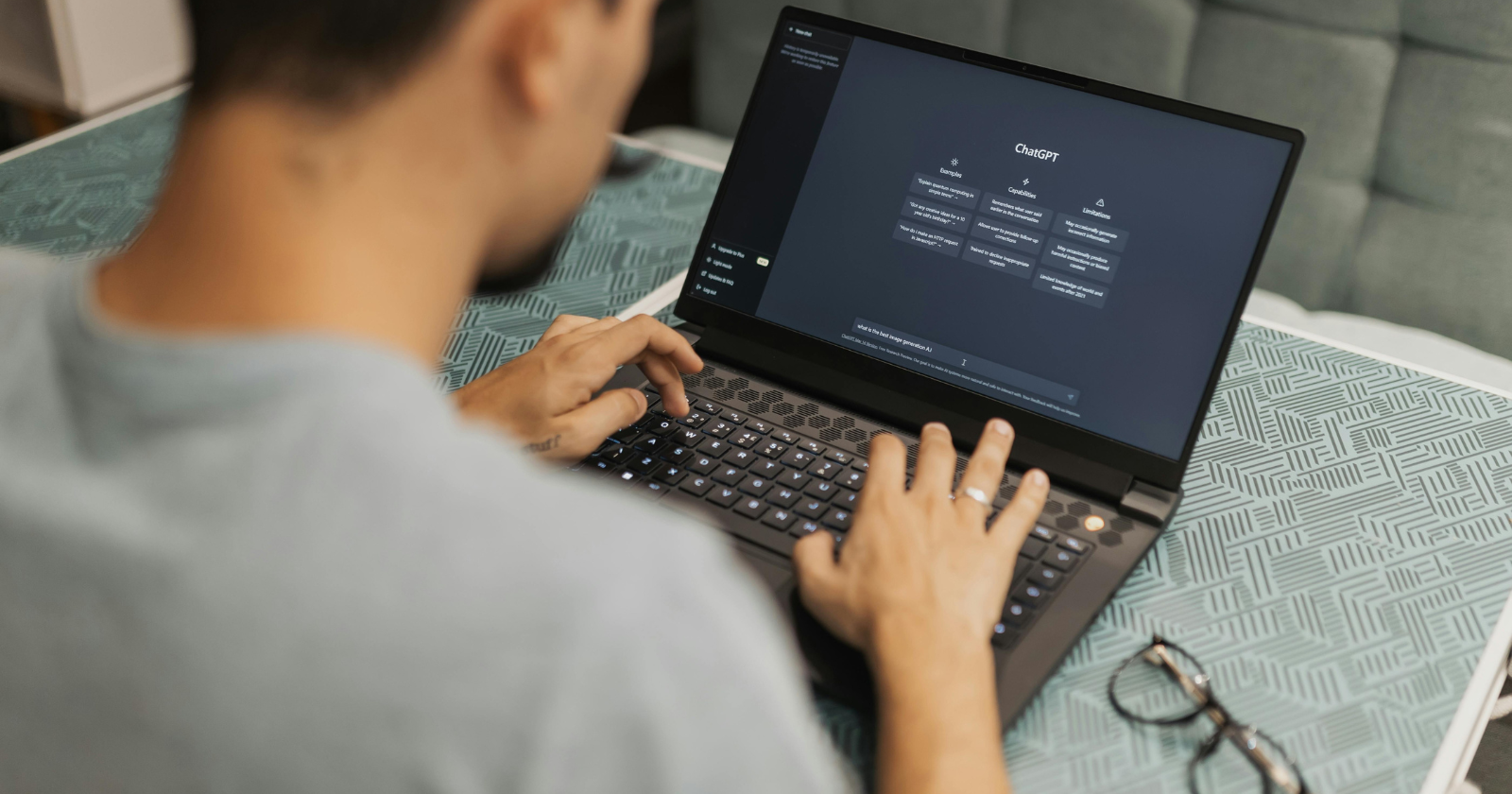
By eleven fifteen on the second day, the morning’s writing was done. Not done-for-now, will-come-back-when-I’m-braver. Actually done. The schedule the experiment had me on said to break, eat, walk, and not return to the desk for the producing kind of work.
I sat in that pause for longer than I should have. That was the moment the rest of the week started to make a different kind of sense.
I’d given ChatGPT a fair amount of context. I write freelance, I told it. I have control over my schedule. About three real hours of deep writing in me per day. The rest of the work is ideas, research, edits, admin, source-checking, titles. “Plan my workdays down to the minute for a week. Be detailed.”
What came back was specific in a way I hadn’t expected. Two morning deep-writing blocks, eight to nine thirty, then nine forty-five to eleven fifteen, with a short walk between. Admin batched once, mid-afternoon, never before the first writing block. Walks treated as transitions between locations rather than empty time (I had been doing this anyway). A hard stop at the end of the day.
Each block opened with a sentence written down beforehand. “By the end of this block, I will have…” And closed with a breadcrumb at the top of the doc, “Next move:…”, so the next start was easier. The logic underneath all of it was simple. Protect the best three hours. Batch the shallow work. Treat the rest as supporting, not equally valuable.
I tried to follow it as best I could. Some days closer than others. Wednesday afternoon broke open when a message landed and pulled me out for an hour. Friday morning’s first block started late because I’d checked my email getting coffee.
I’m not the kind of person who can run a schedule like a Swiss train. I knew that going in.
The output side was anticlimactic. Roughly the same as a normal week. Maybe slightly cleaner drafts because the morning blocks were genuinely uninterrupted. Nothing dramatic. If the experiment had ended there I would have written a paragraph in my head about it and forgotten by the weekend.
The shock was somewhere else.
For years I have been working roughly the same hours as I did in Irish finance, possibly a little more, on my own terms but in the same volume. About three of those hours per day are the producing kind. The rest are editing, sourcing, admin, ideas, the supporting work. That much I already knew. What the new schedule forced me to look at was the part I had not been honest about: the afternoon and early-evening hours where the screen was on, the tab said “research,” and the actual content of those hours was a kind of professional restlessness. Half of what I’d been calling research had been browsing. The “I’m still working” feeling those hours produced was not the same thing as work.
The bestselling writer Cal Newport has a name for this. “Pseudo-productivity,” a management philosophy, as he puts it, that “leverages visible activity as a crude proxy for useful effort.” His framing is about offices. Mine, sitting alone in a café, is perhaps the one-person freelance version. The audience for the visible activity was mostly me. Sitting past the three-hour ceiling because stopping at eleven fifteen with the writing actually done feels, and I should be honest about this, like I haven’t worked hard enough yet. Performing, in other words, the appearance of a full day for the person inside my head most invested in believing I’ve earned it.
There’s a piece of attention research that has lived rent-free in my head for years. At UC Irvine, Gloria Mark studies what interruption does to focus. The figure she’s best known for is this one: “it takes an average of 23 minutes and 15 seconds to get back to the task.” I read it years ago and built my desk habits around the warning. Phone in another room, all tabs closed, rain sounds on YouTube instead of music, time blocking. Those habits were doing their job. What the new schedule layered on top was the recognition that not all the hours I was protecting were earning their keep. Some of them were performance hours dressed up in the same uniform as the real ones.
I don’t think any of this is news, exactly. The shape of it, work expanding to fill the time available, has been described since the 1950s. What was new for me was watching it happen on a schedule I had not chosen. When somebody else’s plan said “stop,” I stopped, and then I had to sit with what that left over. The afternoons I would normally have filled with “research” became, when held to the plan, walks. Errands. Genuinely slower evenings. The world did not end. The output did not drop. The drafts were not worse. The hours I had been performing into were, it turned out, not load-bearing.
Why I had been keeping them on is its own honest answer. Some of it is the financial bargain of freelance work. More hours feel like a hedge. But the bigger driver, when I sit with it, is identity. Stopping early, even when the producing kind of work is clearly done, lands as failure. I don’t have an office to leave or a colleague putting their coat on as a cue. So I keep the screen on. I am probably not unusual in this; I think a lot of remote and freelance work has this shape.
I haven’t kept the schedule. I went back to my own shape the week after, which is closer to a single concentrated morning, a walk, a café switch, an afternoon that mixes edits and lighter work. What I have kept is one small practice from the ChatGPT plan: the breadcrumb at the top of the doc. “Next move:…” written before I close the laptop.
That sentence has become the cue I didn’t have. When I can write it honestly, the producing work for the day is done, and the screen goes off. When I can’t, I usually find I’ve been performing for an hour already. It’s not a Swiss train. But it’s a door I can actually close.