

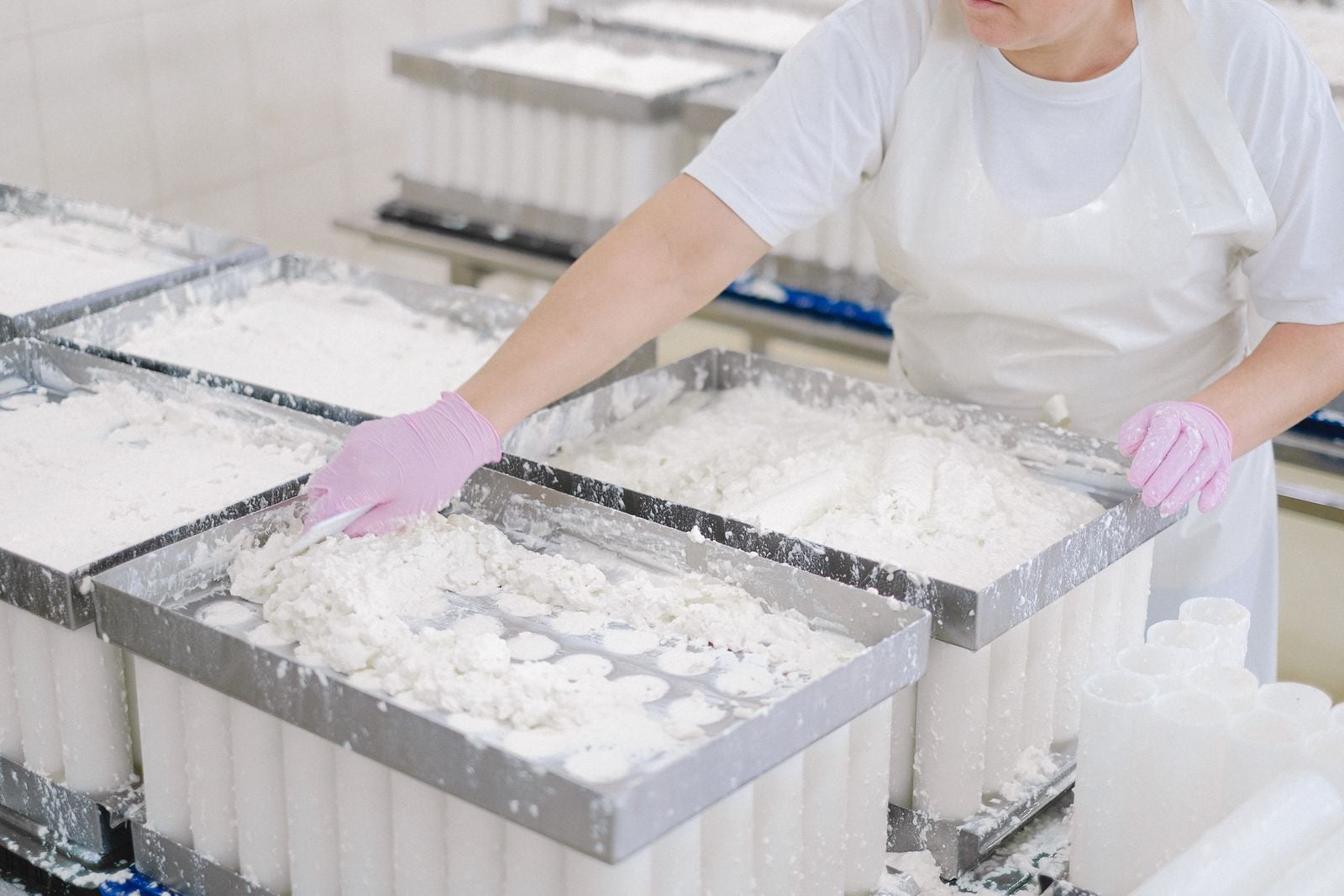
Open your refrigerator. If there is a block of cheddar, a wedge of parmesan, a bag of shredded mozzarella, or a container of cottage cheese inside, the enzyme that turned liquid milk into curd almost certainly came from a stainless steel fermentation tank in Denmark or the United States — not from the fourth stomach of a slaughtered calf. A large majority of the world’s cheese is now made this way, and the label on the package tells you almost nothing about it.
The enzyme is chymosin. For thousands of years, humans got it by killing young calves and scraping the lining of their abomasum, the fourth compartment of a ruminant’s stomach. That extract, called rennet, is what curdles milk into cheese. Then, in 1990, the US Food and Drug Administration approved a version of chymosin produced by genetically modified microbes. Within a decade, most of the global cheese industry had quietly switched over.
Nobody put a sticker on the wheel of brie.
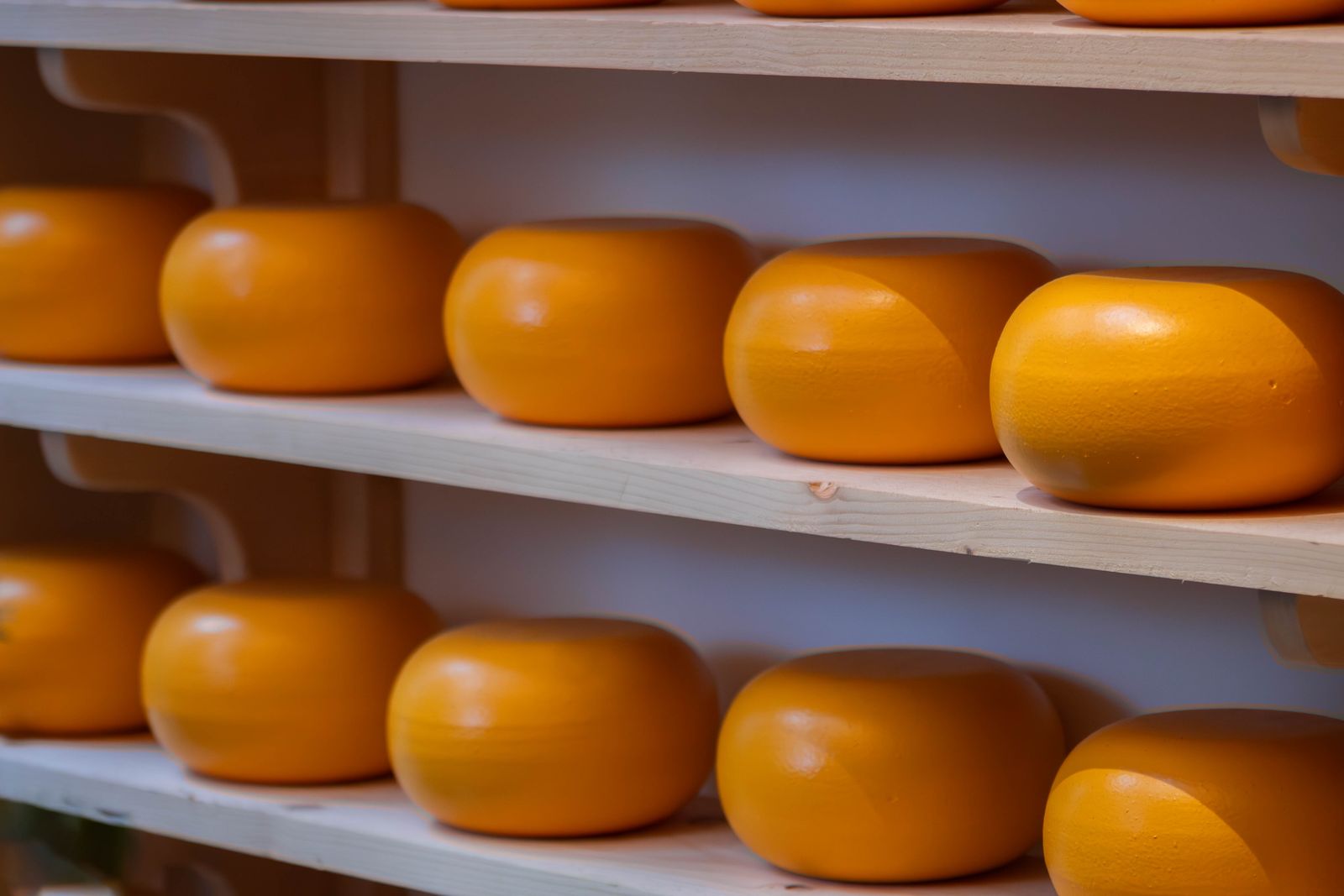
The calf shortage that rewired an ancient food
The switch was not driven by ethics or ideology. It was driven by arithmetic. Global cheese consumption climbed steadily through the second half of the 20th century, and the supply of calf stomachs — a byproduct of veal production — could not keep up. Traditional animal rennet became expensive, inconsistent, and in some regions almost impossible to source at scale. Cheesemakers began blending it with microbial alternatives derived from moulds and fungi, but those substitutes produced off-flavours and weaker curds.
Then Pfizer, and later the Danish enzyme giant Chr. Hansen, worked out how to insert the bovine gene that codes for chymosin into microbes — first E. coli, later the fungus Aspergillus niger and the yeast Kluyveromyces lactis. The organisms were grown in bioreactors. The enzyme they secreted was purified. The final product was molecularly identical to the chymosin found in a calf’s stomach. No cow tissue involved. No animal killed.
This was the first commercially successful genetically engineered enzyme in the human food supply. It arrived years before the GMO labelling debates that would consume the corn and soy sectors. And because chymosin acts as a processing aid — it triggers curdling and is then largely removed or denatured — most regulators, including in the European Union and the United States, did not require it to appear on the ingredient list at all.
What the label does and does not say
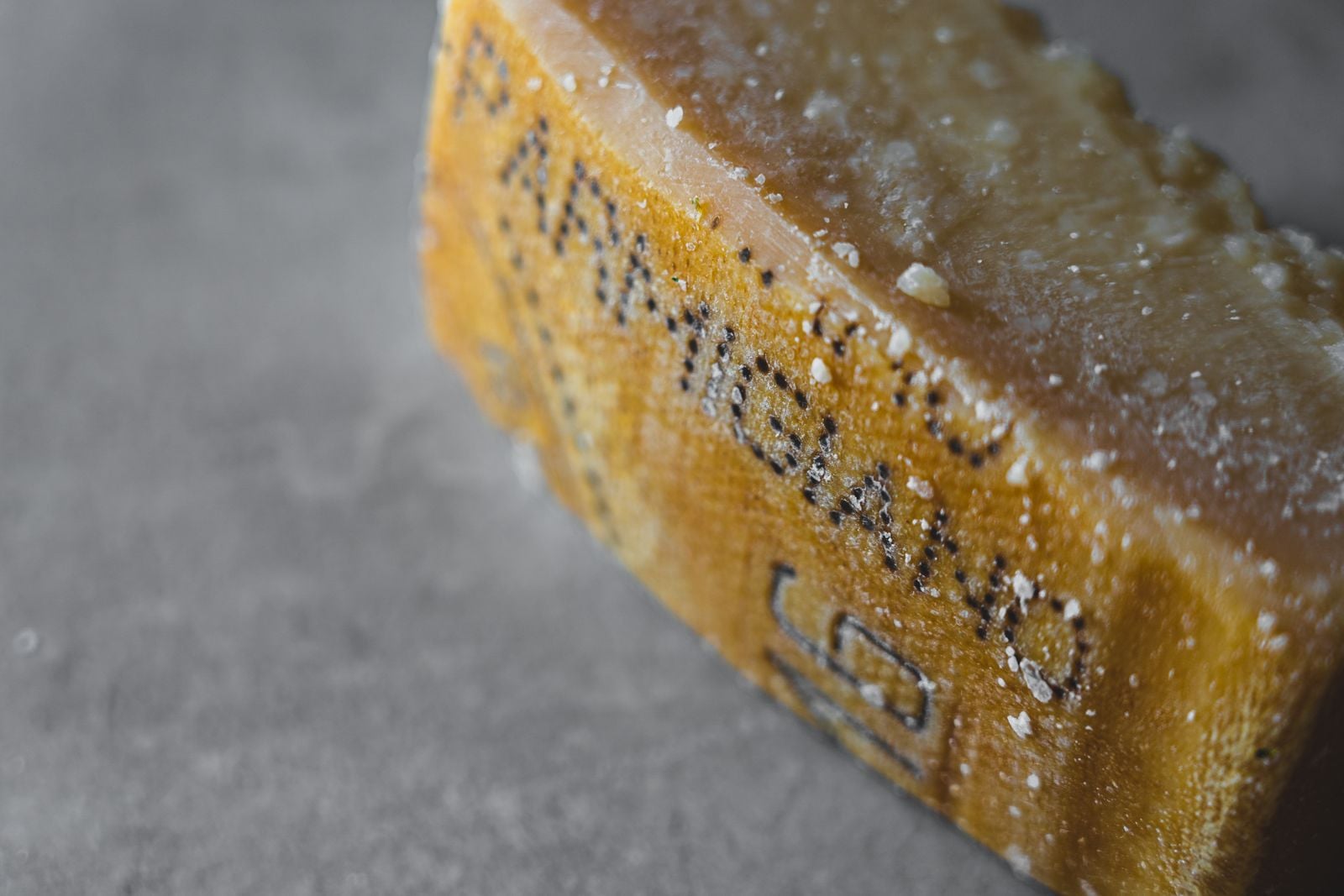
Walk down a cheese aisle in London, Chicago, Melbourne, or Mumbai and look at the back of the pack. In most cases the ingredient list will say “rennet,” “microbial rennet,” “vegetarian rennet,” or “enzymes.” None of these phrases tells the shopper that the enzyme was made by a genetically modified organism grown in an industrial fermenter. Only kosher and halal producers, and a handful of protected-origin European cheeses like Parmigiano Reggiano and Roquefort, are required by their own standards to specify traditional calf rennet.
The word “vegetarian” on a cheese package is doing quiet work here. It signals no calf was killed. It does not signal that the enzyme was produced by a genetically engineered fungus. For most consumers, the two ideas blur together into a vague sense that the product is somehow more natural. The opposite is closer to the truth on the technology side, and more humane on the animal side.
Research on food labelling published through Nature’s index on nutrition labelling and consumer behavior finds that shoppers rely heavily on front-of-pack cues and rarely parse the detailed ingredient panel. When information is absent or ambiguous, consumers default to whatever mental model they already carry. In the case of cheese, that model is a cow, a farmer, and a wheel of curd in a stone cellar — an image the industry has spent a century advertising and has no incentive to complicate.
Why nobody protested
The chymosin transition is remarkable partly because of what did not happen. There were no boycotts. No supermarket recalls. No documentaries. The same public that would later fight bitterly over Bt corn, glyphosate-tolerant soy, and salmon engineered to grow faster accepted a genetically engineered enzyme in a large portion of cheeses on the planet without a murmur.
Part of the reason is regulatory framing. Because chymosin is a processing aid rather than an ingredient in the finished product, it fell outside most GMO disclosure rules from the start. Part of it is timing. The approval landed in 1990, before consumer activism against biotechnology in food had organised into the movement that would erupt around Monsanto in the late 1990s. And part of it is that the switch benefited almost everyone in the value chain: cheesemakers got a cheaper, more consistent enzyme, vegetarians got a product they could eat, and calves — millions of them per year — were not slaughtered for their stomach linings.
Even the dominant advocacy group in the space treats the case as an exception. A recent Non-GMO Project survey reported by FoodNavigator found that 72% of US consumers are trying to avoid ultra-processed foods and are broadly suspicious of ingredients they cannot pronounce, yet awareness of fermentation-derived chymosin remains vanishingly low. The organisation itself certifies non-GMO cheeses, but the certification depends on producers actively choosing traditional rennet — a choice most industrial cheesemakers stopped making decades ago.
The transparency fight now catching up
Thirty-five years after chymosin quietly rewired the global cheese industry, the politics of food ingredient disclosure has finally caught up — and the cheese in the fridge is about to be caught in a much wider argument.
A new campaign backed by major food industry associations has emerged to push Congress and the Trump administration toward a single national standard on ingredient disclosure and to reform the “Generally Recognized as Safe,” or GRAS, pathway that has allowed thousands of substances into the US food supply with minimal FDA review.
Health and Human Services Secretary Robert F. Kennedy Jr. has called on the FDA to close what he described as a self-affirmed GRAS loophole. The Consumer Brands Association, meanwhile, responded in May 2025 by arguing that the industry has been practising radical transparency for decades — a claim the chymosin story complicates.
Fermentation-derived chymosin was approved under GRAS. So were many of the enzymes now used across baking, brewing, and dairy. If a future national standard requires disclosure of GMO-derived processing aids on the front of the package, the cheese aisle would have to be relabelled almost in its entirety. The Good Food Collective, a coalition of consumer brands pushing for stricter labelling voluntarily, has already begun to test what such disclosures look like in practice.
What the cheese case actually shows
The lesson of chymosin is not that genetically engineered ingredients are dangerous. Thirty-five years of consumption across billions of people has produced no credible evidence of harm from fermentation-derived chymosin, and the switch has spared an enormous number of animals. The lesson is about how quickly and quietly a fundamental change in food production can happen when the change is invisible on the shelf.
Research on front-of-pack labelling consistently shows that shoppers make decisions in seconds. If a piece of information is not on the front of the pack, and not in a form the eye can grab in passing, it does not enter the decision. The chymosin switch happened inside that blind spot. So did the shift to microbial enzymes in bread, beer, orange juice, and infant formula.
And a much larger shift is now moving through the same blind spot. Companies including Perfect Day in California and Remilk in Israel are using precision fermentation to produce whey and casein proteins — the actual milk proteins, not enzymes — from engineered microbes. A bottle of animal-free milk is already on shelves in Tel Aviv at a price competitive with soy. Ice cream, cream cheese, and protein powders made from fermentation-derived dairy proteins are on sale in US supermarkets. None of them require a cow.
The next quiet switch
The dairy industry currently keeps roughly 270 million cows alive to produce milk, of which about 3.3% by weight is the protein fraction that actually matters for cheese, yogurt, and whey products. If precision fermentation can produce that protein fraction directly, at scale, the economic logic that drove the chymosin switch in 1990 will repeat itself on a far larger canvas — and it will run into a labelling debate that no longer conveniently ignores processing aids.
Editorial coverage on Silicon Canals has traced how algorithms have quietly replaced institutions in intimate parts of daily life, and how small technical fixes at Cambridge have grown into infrastructure the public never voted on. Cheese belongs on that list. A single regulatory decision in 1990, taken far from any public referendum, changed how most of the world eats. The producers did not lie. The label just did not say.
Shoppers who assume they are buying a traditional product made the way their grandparents made it are, in the majority of cases, buying an industrially fermented biotechnology product filtered through a marketing vocabulary that predates the technology by centuries. Whether that matters is a question for each shopper. Whether they were given the chance to answer it is a question for regulators.
The block of cheddar in the fridge does not care. The cow that never had to be pregnant does not care. But the argument now building around GRAS reform, front-of-pack labelling, and the coming wave of animal-free dairy is going to force the question anyway. And this time, the industry may not get to switch quietly.
