

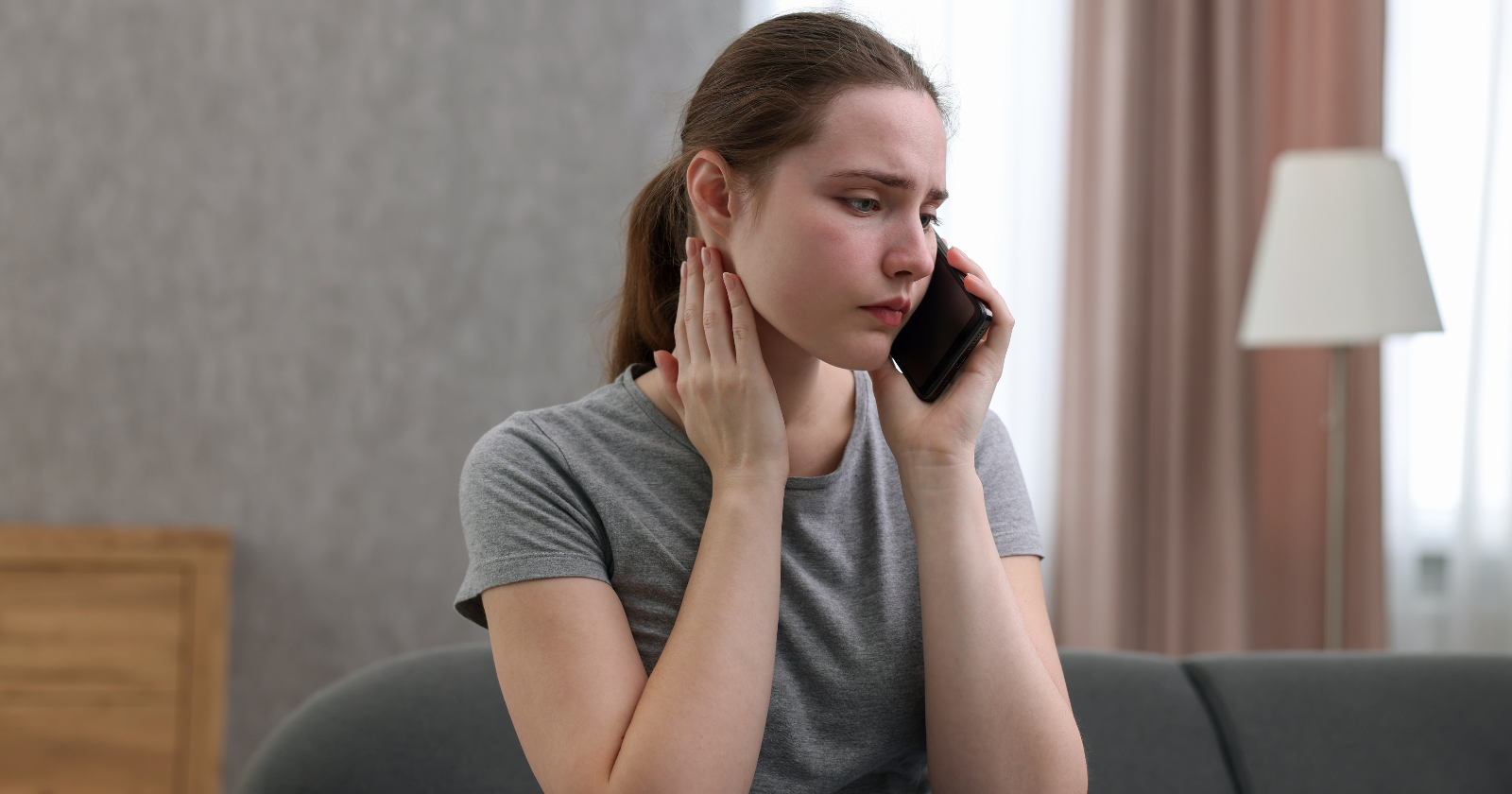
A face can be reassembled in the mind’s eye. A voice cannot. That single asymmetry explains why so many people who have lost a parent keep every voicemail, every accidental audio clip, every muffled recording from a birthday two decades ago — and why the impulse to hold onto those fragments is not the pathological hoarding it sometimes gets mistaken for.
Most people assume that any preserved trace of the dead works against healing, that letting go means clearing the phone, deleting the messages, moving on. But the research on how memory actually functions tells a different story. The bereaved are not clinging to the past when they refuse to delete a voicemail. They are protecting something the brain, on its own, is unusually bad at reconstructing.
The face returns. The voice does not.
Ask someone who has lost a parent to describe that parent’s face and, given a little time, they can usually do it. The shape of the jaw. The lines around the eyes. The specific angle of a smile. Visual memory is imperfect but stubborn, and it is scaffolded by every photograph on every shelf, every framed picture, every image in a phone gallery. The face is available.
Ask the same person to describe the voice — the exact pitch, the timing between words, the way certain vowels stretched — and something different happens. There is a pause. A frown. Then, often, a small panic. The voice is there, somewhere, but it will not come forward on command. It has to be triggered, and once triggered, it flickers and disappears.
There is a measurable asymmetry behind that difference. In a University of Iowa study published in PLOS ONE, memory for sounds fell off far more sharply over time than memory for images or textures, which held roughly steady. A later comparison of the two systems in Psychonomic Bulletin & Review put the reason more plainly: auditory memory tends to be coarse and gist-based, while visual memory keeps fine detail. In human terms, the mind hangs on to a rough impression of a sound but sheds exactly the grain that made a particular voice that voice. The people loved most deeply leave the deepest impressions, and the sound of them is the part most prone to erode. Losing access to it is a form of grief that rarely gets named, because the outside world cannot see it.
Why the brain cannot rebuild a voice from scratch
Voices are not stored the way faces are. Speech, as neuroscientists who study its production have long noted, is an extraordinarily complex sensorimotor act, involving auditory-motor integration, timing, prediction, and feedback across multiple brain regions. Producing and recognising a specific voice draws on layers of acoustic detail — fundamental frequency, formant structure, breath patterns, micro-pauses — that the conscious mind never explicitly catalogued. It absorbed them, but it did not file them in a way that allows deliberate retrieval.
This is why people can hum a song they have not heard in thirty years but cannot, on request, summon the exact sound of a father saying their name. Songs get rehearsed. A parent’s voice, in ordinary life, was never something anyone thought to rehearse. It was ambient. It was the medium, not the message.
When the voice stops arriving from the outside world, the brain has no template to run. It has fragments, associations, emotional residue. What it does not have is the audio file.
Memory as reconstruction, not playback
The intuition that memory works like a video recording is wrong, and it has been wrong for as long as memory has been studied. Memories are layered reconstructions, assembled anew each time from central events, overall structure, and peripheral details. A recent study in the Journal of Neuroscience, reported by the American Council on Science and Health, found that the hippocampus engages different networks depending on whether a memory is anchored in sensory detail or in conceptual meaning. Both routes can lead back to the same central event, but they leave different imprints.
The conceptual imprint of a parent — who they were, what they valued, how they made you feel — is durable. The mind rehearses it constantly, integrates it into identity, weaves it into every decision the bereaved person makes for the rest of their life. It does not need a voicemail to survive.
The perceptual imprint is different. The specific sound. The specific cadence. The precise way a laugh broke off at the end. These live in a more fragile part of the memory system, and they degrade in a way the conceptual layer does not. Faces get shored up by photographs. Voices, without recordings, have nothing to lean against.
The voicemail as anchor
A 30-second voicemail about a forgotten grocery item is not, in itself, meaningful. There is no wisdom in it. No last words. No revelation. It is often mundane to the point of being embarrassing — a parent complaining about traffic, asking whether milk is needed, saying they will call back later.
And yet these are the recordings people cannot bring themselves to delete, sometimes years or decades after the parent has died. The reason is not sentimentality. The reason is that this thirty seconds is doing work that no photograph, no letter, and no memory can do. It is holding the voice steady while the rest of the mind is allowed to grieve, adapt, and move forward.
Many bereaved people describe a distinct pattern: the fear of forgetting a sound often feels more acute than the fear of forgetting other aspects of a person. Some describe searching the house for a sound that no longer exists. Others describe the jolt of realising, months after a loss, that they can no longer summon a loved one’s exact voice from memory. The voicemail interrupts that moment. It says: the voice is still here. It has not been lost. You have not lost it.
Continuing bonds, not stuck grief
For a long time, grief was framed as a process of detachment — a series of stages that ended in letting go. That picture has been substantially revised. Contemporary grief research, building on the continuing bonds model set out by Klass, Silverman and Nickman in 1996, holds that keeping an ongoing connection to someone who has died is not a sign of stalled or unhealthy grief but a normal part of adapting to the loss. The key is incorporating the memory into a living life, rather than using it as a shelter from one.
A saved voicemail, on that framing, is not a problem to be solved. It is an anchor. It is the same category of object as a preserved letter, a favourite sweater still folded in a drawer, a birthday card kept in a shoebox for thirty years. These objects do not keep grief active. They keep the relationship articulable — retrievable in a form that the mind, alone, cannot generate.
The same instinct shows up across other kinds of keepsakes. People who keep every birthday card and childhood note are not hoarding for the sake of it either. They are building physical evidence of a bond that memory alone would not preserve with the same fidelity. The voicemail is that instinct, updated for the era of the smartphone.
What the recording protects
There is a specific reassurance that only a voice provides, and it becomes visible only after the voice is gone. It is the sound of being known. A parent saying a child’s name has an acoustic signature that no impersonation, no imagined replay, and no descriptive text can reproduce. It carries decades of intonation history — the way the name sounded when it meant various things: a call to come closer, a warning to be careful, an expression of pride, a query about location.
When that sound is gone from the world, the bereaved person is not only grieving the parent. They are grieving the particular version of themselves that only that voice ever addressed. Nobody else on earth said their name that way. Nobody else ever will.
A voicemail preserves that address. Even if the content is trivial — even if it is a voice asking whether the recycling was put out — it still contains the specific frequency at which someone was loved. That is not a small thing to keep in a phone.
The mistaken worry about dependence
People who keep old voicemails sometimes report feeling embarrassed about it, or worry that they are stuck. The worry is understandable and largely misplaced. There is a real difference between keepsakes that fit into an ongoing life and behaviours that block it. Listening to a voicemail once a year on an anniversary is one thing. Refusing to leave the house because the outside world no longer contains the voice is another.
The distinction is behavioural, not sentimental. The presence of the recording is neutral. What matters is how it is used, and for most people, saved voicemails go unlistened for months or years at a time. They are not being consumed compulsively. They are being kept as insurance — proof that the voice can be reached again if the mind stops being able to produce it unaided.
Something similar happens after any significant loss: the part of the mind that holds the facts and the part that holds the daily habits run on different clocks. The part that knows a parent is gone and the part that still half-expects to hear their voice do not update at the same speed. The recording bridges the gap.
What is actually being kept
The person who cannot delete a voicemail from a parent who died in 2011 is not refusing to accept the death. In most cases they accepted it long ago. They have grieved, adapted, rebuilt a life, and moved through years of birthdays, holidays, and ordinary Tuesdays without the parent present.
What they are refusing to accept is the second, quieter loss that would follow: the loss of the voice itself, the one thing they cannot rebuild in imagination once it fades. The mind will do a great deal of the work of remembering a parent on its own. It will hold the values, the mannerisms, the anecdotes, the face. It will not, without help, hold the sound.
So a small file sits on a phone. It is thirty-eight seconds long. It is about nothing. It is about a voice on a Wednesday afternoon in 2009 asking whether anyone remembered to bring the charger. And it stays there, year after year, because it is the last part of a person that the mind cannot make again from scratch — and because whoever kept it understood, without needing to be told, that some things are worth carrying forward exactly as they were.
