

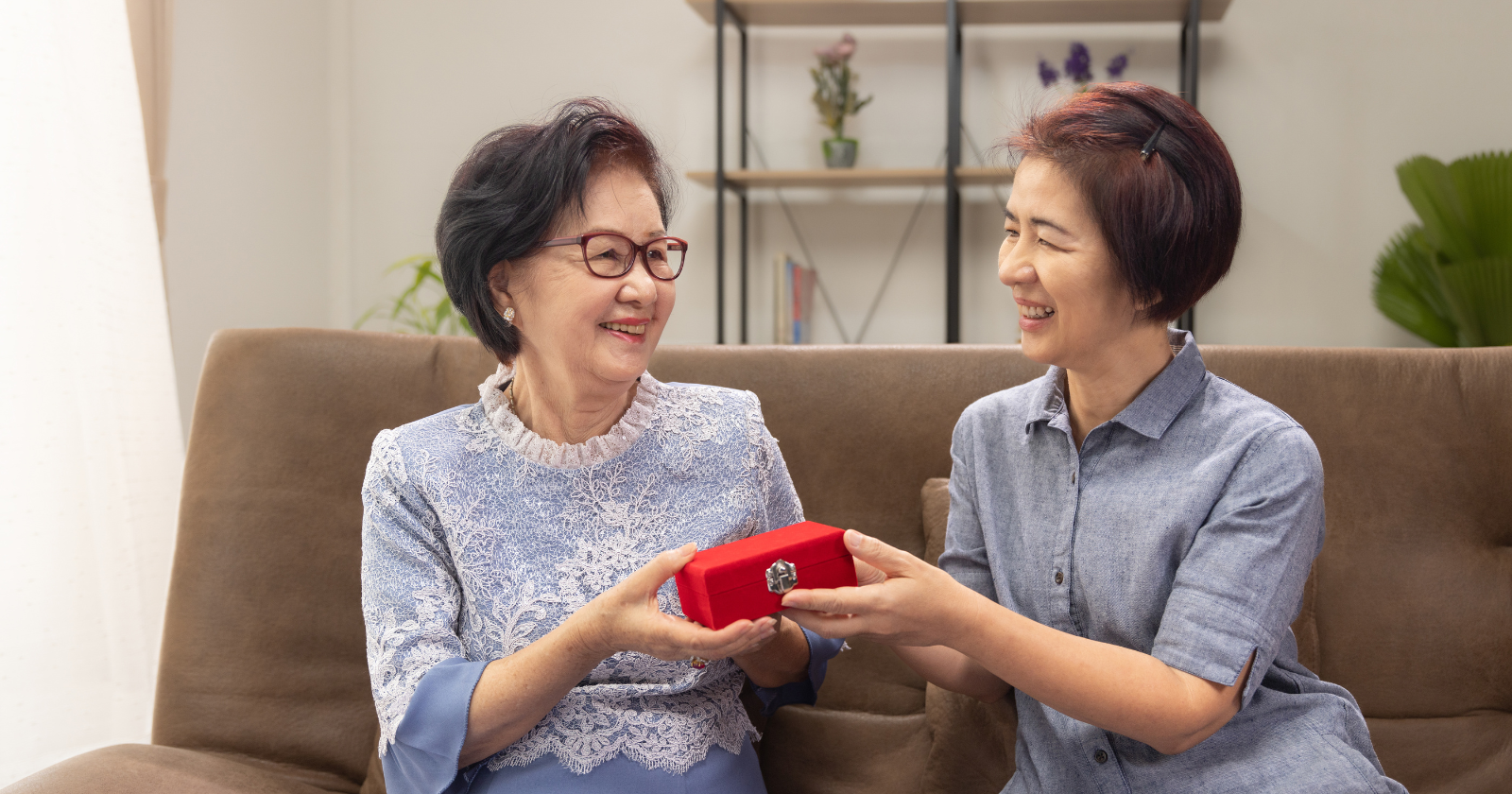
There is a difference between leaving someone a treasured object and giving it to them.
A will can transfer the watch, painting, recipe book or set of tools. It cannot transfer the moment in which the owner places it in another person’s hands, tells the story attached to it and sees whether the choice was right.
That is why some older adults begin giving away their most meaningful possessions while they are still living. The behaviour alone does not prove that they have become morbid or resigned. It can reflect a practical decision to remain present for the only part of inheritance that legal documents cannot administer: the response.
Not every late-life giveaway has the same meaning, and a sudden or pressured dispersal deserves a conversation. But a deliberate handover of particular objects can be an expression of agency rather than surrender.
The exchange includes a witness
In a will, the giver has complete control over the instruction and no access to the result. The recipient may be delighted, confused, burdened or indifferent. The person who chose them will never know.
A living gift closes that gap. The giver can watch a granddaughter try on the ring, hear a son ask about the old camera or see a friend place the vase in the room where it will now live. Appreciation is no longer imagined in advance. It becomes part of the exchange.
A 2004 study in The Journals of Gerontology: Series B examined what its authors called the “final gift exchange”. Jonathan Marx, Jennifer Crew Solomon and Lee Miller interviewed 54 people aged between 50 and 90 who were disposing of possessions while moving to smaller homes.
The researchers found that cherished objects were difficult to place when giver and family did not share the same understanding of their meaning. The desired return was not necessarily money or a favour. It was lasting appreciation, including confidence that the object and the part of the giver represented by it would be cared for.
The difference is reciprocity.
The giver also receives information. A recipient’s delight confirms that the object was understood, while questions reveal which parts of its history need explaining. Even hesitation has value because it prevents an imagined future from hardening into a poor decision. The exchange becomes something both people shape, rather than a final instruction delivered in one direction.
The object arrives with its biography
An heirloom is rarely important because of its physical materials alone. A plain kitchen table may contain forty years of family meals. A battered tool may matter because a parent used it to build the first home. Without that history, the same object can look like dated furniture or a duplicate screwdriver.
Research on the distribution of later-life possessions makes this distinction clearly. In a review of how older adults distribute personal property, gerontologist David Ekerdt and his colleagues wrote that an antique becomes an heirloom through genealogy. Its family history has to travel with it.
That history is difficult to reconstruct after a death. Labels and letters help, but they cannot answer the follow-up question that occurs once the object is physically present. Giving during life allows the recipient to ask why this item mattered, who owned it before and why they were chosen next.
The conversation may become more durable than the thing.
This helps explain why the most successful handovers are not always the objects with the highest market value. A handwritten cookbook, workbench drawer or inexpensive ornament may carry a more specific relationship than an expensive item chosen mainly because convention says it should remain in the family. Meaning is not reliably priced.
A living gift allows an honest no
This is the less sentimental part of the process, and perhaps the most respectful. The intended recipient may not want the object.
Homes are smaller, families live farther apart and younger relatives already have furniture and collections of their own. An ornate cabinet that embodies one person’s childhood can represent storage costs and a difficult staircase to somebody else. Affection does not create floor space.
The 2004 study found that refusals could hurt, especially when the giver assumed an object carried an agreed family meaning. It recommended asking about recipients’ preferences and sharing the stories attached to objects. That approach allows both people to discover whether the match is genuine.
A posthumous bequest can make refusal feel like disloyalty. A living conversation permits adjustment. The giver can choose a different person, donate the object to an institution that values it or accept that its emotional significance does not require permanent physical preservation.
Consent improves the gift.
The recipient becomes part of the object’s future
Older owners are not necessarily trying to freeze their possessions in the exact form and setting they knew. Often they want evidence that the object still has somewhere to go.
A qualitative study of later-life moves described this as the “safe passage” of possessions. Owners tried to find appreciative recipients and exchanged stories about an item’s past and plans for its future. The receiver did not merely accept custody. They explained what they might do with the thing.
That creates a small transfer of authorship. A sewing machine may become a granddaughter’s working tool rather than a display piece. A record collection may be divided among several listeners. A dining table may be refinished. The object continues, but not under the giver’s full control.
Watching that transformation can be more satisfying than demanding perfect conservation. It confirms that the possession has become useful to another life, rather than remaining a monument to the previous one.
Legacy is something people can practise
The popular language of “death cleaning” tends to emphasise reducing the work left for a family. That motive is real, and Silicon Canals has covered it elsewhere. Giving treasured objects early contains another motive: participation.
A 2023 study in The Gerontologist examined how older adults created what the authors called legacies of values. Participants wanted to connect past and future generations and leave lasting expressions of family history, principles and love. Physical gifts were one way to make those values tangible, but the story and intention around the gift mattered too.
This does not make every giveaway noble or every family exchange uncomplicated. Objects can expose old rivalries. A valuable gift can create questions about fairness. One recipient may hear trust where another hears exclusion. Clear conversations matter more than a neat theory.
Still, handing something over before death changes the giver’s role. They are no longer writing instructions for an absent future. They can explain, listen and witness what happens next.
They get to know.
