


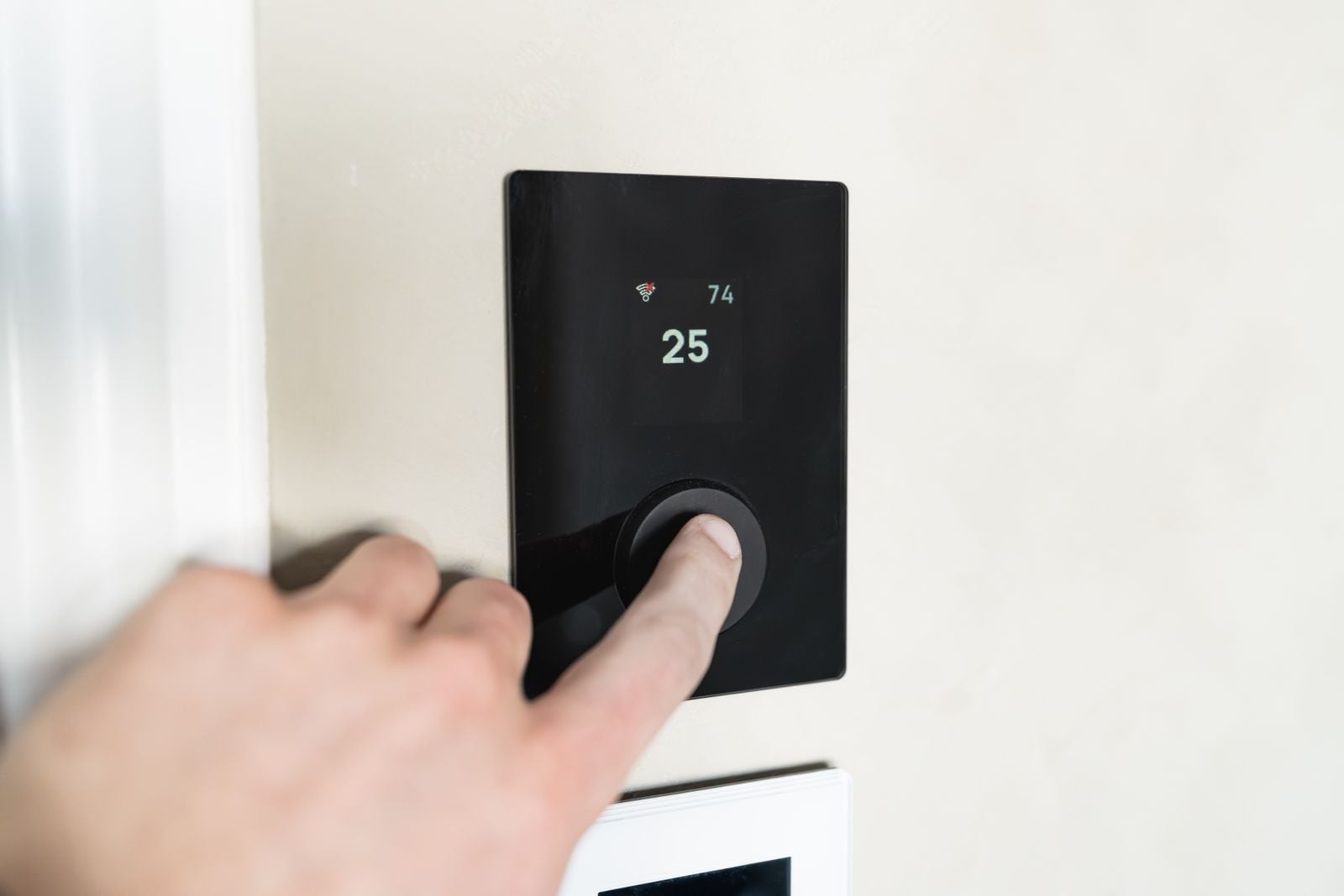
The dial reads 17 degrees. The person setting it would actually prefer 20. Both facts may have been true for years, yet the setting rarely changes.
This is not necessarily a story about heating bills. For some people, it is a story about what they have learned they are allowed to want.
The conventional explanation for a chilly house is usually straightforward. The person may be frugal, environmentally conscious, naturally warm, or more comfortable at a lower temperature. Sometimes that is genuinely all there is to it.
The more revealing pattern appears when the setting and the sensation do not match. The person is cold, would prefer a warmer room, can reasonably afford one, and still feels unable to turn the dial.
Comfort as something that had to be earned
In some households, warmth was treated as a resource that came with conditions. The heating went on after another jumper had been tried, after the chores were finished, or after someone had decided that the cold had become serious enough.
The decision was often visible. Someone checked the meter, mentioned the bill, sighed at the thermostat, or questioned whether another degree was really necessary.
A child in that house could absorb two lessons at once. Comfort existed, but it was watched. Wanting it was not always considered enough reason to receive it.
Years later, that child may have their own home, their own income, and complete authority over the dial. The circumstances have changed, but the old hesitation can remain.
The rule can outlive the reason
For some people, the original reason for keeping the house cold is no longer present. The household is different, the person now controls the budget, and nobody else is waiting to question the decision.
The habit can remain because practical rules often become personal rules through repetition. A person who repeatedly heard that warmth was wasteful may eventually stop experiencing the low setting as a choice. It simply feels like the responsible setting.
One related concept is the scarcity mindset. In a Psychology Today overview of scarcity thinking, psychologist Marisa T. Cohen describes how people can continue to feel that resources are insufficient even when those resources are available.
That concept does not prove why any individual keeps a thermostat low. It does, however, offer a useful lens for the person whose circumstances changed before their habits did.
Where the rule may come from
Sometimes the rule begins with real financial pressure. The heating bill was difficult to cover, every degree mattered, and the tension surrounding household expenses was impossible for a child to miss.
Warmth felt expensive because it was expensive.
In other homes, self-denial carried a moral value. Putting on another jumper was presented not only as sensible but as evidence of strength, restraint, or good character. Wanting the room warmer risked being interpreted as softness or entitlement.
There are also households in which ordinary physical preferences receive constant scrutiny. Being hungry, tired, cold, or uncomfortable is not accepted immediately. The person is expected to justify the feeling before anyone responds to it.
Silicon Canals has examined a closely related household pattern: how repeated arguments about heating can influence what warmth comes to mean long after the original argument has ended.
How household rules become adult defaults
The mechanism does not have to be mysterious. Repeated behaviour becomes familiar behaviour, and familiar behaviour often feels correct even after the surrounding conditions have changed.
A child who is regularly told to tolerate the cold may become skilled at ignoring it. The same can happen with hunger, tiredness, noise, or the need for rest.
The lesson is not necessarily that these sensations do not exist. It is that noticing them does not automatically justify doing anything about them.
By adulthood, the pause can be almost automatic. The person feels cold, considers raising the temperature, and then dismisses the idea before it becomes a decision.

The specific tell
A low temperature alone says very little. Plenty of people genuinely prefer a cool house. They sleep better, feel more alert, and become uncomfortable when a room is warmer.
The pattern described here is different. It is the gap between the setting and the person’s stated preference.
The person may sit under blankets, wear several layers, hold a hot drink mainly for the warmth, and openly admit that the room is colder than they would like. Even then, touching the thermostat feels strangely difficult.
That gap is not proof of a hidden childhood story. It is simply a reason to ask whether the temperature is being freely chosen or automatically obeyed.
Why a guest can change the picture
Guests can make the contradiction easier to notice. Some people who resist warming the room for themselves will raise the temperature as soon as someone else says they are cold.
The bill has not changed. The environmental considerations have not changed. What has changed is the person for whom the comfort is being requested.
That reaction may suggest that warmth itself is not forbidden. The restriction applies more narrowly to the person’s own claim on it.
Comfort offered to someone else can feel generous and appropriate. The same comfort offered to oneself can feel unnecessary, indulgent, or difficult to defend.
The question worth asking
A useful question is simple: what temperature would this person choose if nobody else could judge the decision?
Many people know the answer immediately. They know which setting would make the room comfortable, just as they often know when they would prefer to eat, sleep, replace a worn-out coat, or stop working for the evening.
The missing information is not always the preference. Sometimes it is the sense that a preference is sufficient grounds for action.
That is the quieter legacy of a household in which comfort had to be explained. The person learned what their body wanted, but also learned that wanting something did not settle the matter.
The 21-degree experiment
One way to examine the habit is to change the setting temporarily and observe the response. A person who normally stops at 17 might try 20 or 21 for several evenings, provided the cost and environmental impact are manageable for their household.
The purpose is not to prove that a warmer house is morally superior. It is to separate the actual consequences from the anticipated ones.
The heating cost may rise, and that increase may matter. The experiment simply makes it possible to compare the real cost with the discomfort, guilt, or resistance that appeared before the bill had even arrived.
The most useful observation may be the first thought that follows the adjustment. It might be relief. It might be worry. It might be an urge to justify the decision to somebody who is no longer present.
Whatever appears, the reaction offers more information than another winter spent automatically obeying the same number.
What this is not
Preferring a cool house is not evidence of a personal problem. Some people sleep better in cold rooms, dislike heavy indoor heat, or feel physically uncomfortable at temperatures other people enjoy.
Financial limits are also real. Heating costs can take a substantial share of a household budget, and many people keep the temperature low because they have no reasonable alternative.
Environmental concerns are equally legitimate. Using less energy can be a deliberate choice rather than an inherited restriction.
The pattern here is narrower. It concerns a person who is physically uncomfortable, has room to make a different choice, would prefer a warmer setting, and still feels that changing it requires a defence.
The wider pattern
A similar hesitation can sometimes appear in other ordinary decisions. The person buys the cheapest option automatically, delays replacing something that no longer works, keeps lights off in a room they are using, or apologises for requesting a basic accommodation.
Each choice can have a perfectly sensible explanation. The wider pattern becomes worth noticing when self-denial is consistently treated as the safest or most respectable option, regardless of the person’s actual circumstances.
Chosen simplicity is different. A person who freely prefers fewer possessions, lower spending, cooler rooms, or a smaller footprint often experiences those decisions as clear and satisfying.
An inherited rule feels less like freedom. It feels like an obligation that nobody remembers creating but everybody continues to follow.
Rewriting the rule
A rule learned through repetition can also be reconsidered through repetition. The change does not have to be dramatic.
A person might raise the thermostat by one degree and leave it there long enough to notice both the physical comfort and the thoughts that accompany it. They might check the actual energy use rather than relying on an old fear about what the adjustment must cost.
The aim is not permanent warmth at any particular number. It is a decision that belongs to the present household rather than one inherited unchanged from a previous one.
Over time, the person may discover that comfort can be weighed alongside cost, responsibility, and environmental impact instead of being excluded before the decision begins.
The dial is not the whole story. It is simply one place where an old household rule can become visible.
Once the rule is visible, the temperature can become a choice again.
