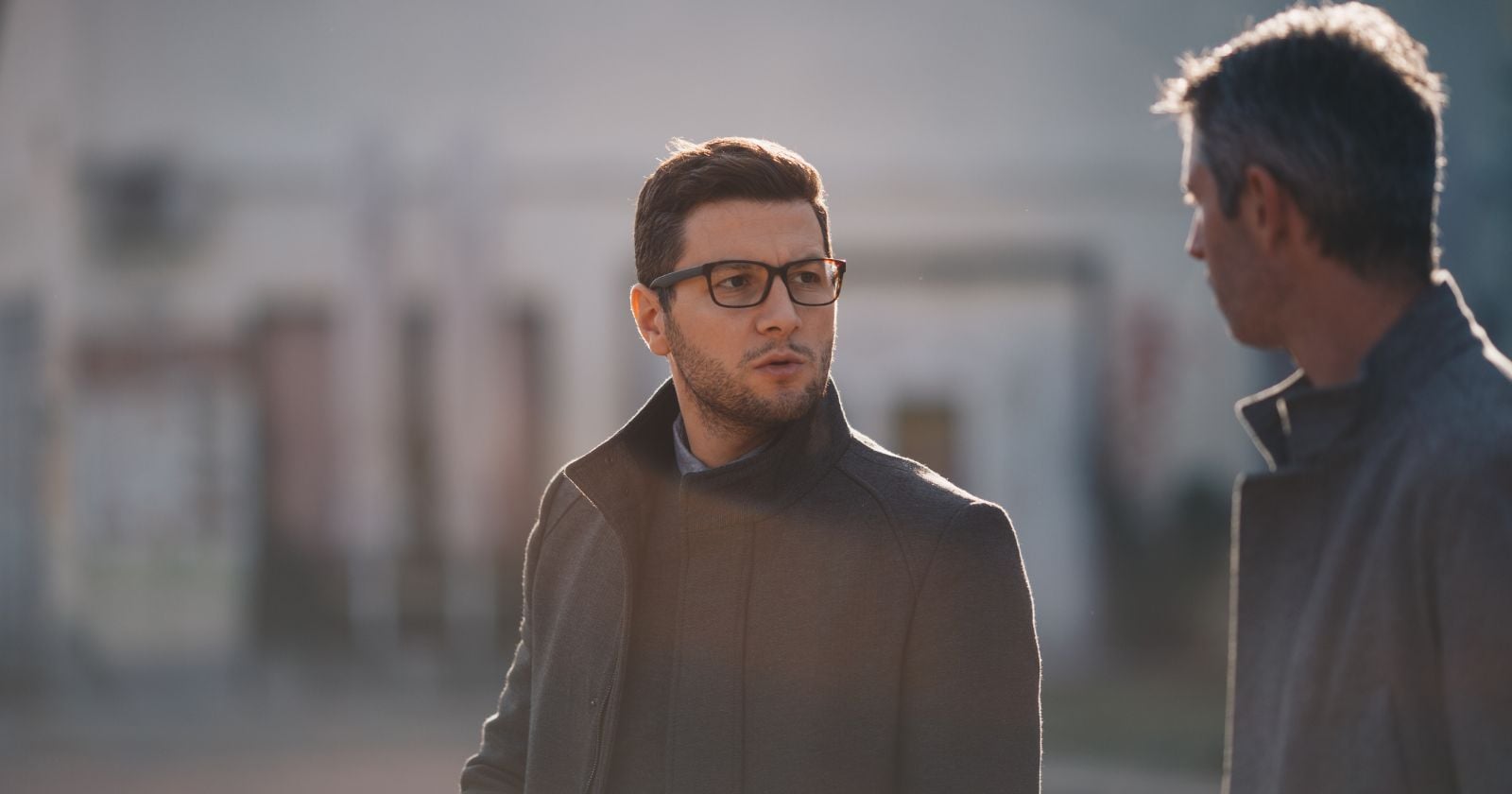
Some conversations refuse to happen indoors. The kitchen table sets them up to fail, the sofa makes them feel too heavy, and the office chair across a desk turns them into a negotiation. The same words, spoken while walking, land differently.
This is not a new observation, and it is not a therapeutic technique in any strict sense. It is a pattern people notice about themselves. When something difficult needs saying, they suggest a walk.
The suggestion is usually framed as needing fresh air. What it actually seems to do is take the confrontation out of the conversation without taking the conversation out of it.
What side-by-side movement changes
Sitting opposite someone puts two faces in direct line of sight. Every pause is visible. Every flicker of expression becomes evidence. The person speaking is watched, and the person listening is watched watching.
Walking removes almost all of this. Eyes are pointed forward, not at each other. Silence stops being a stalemate and becomes ordinary shared quiet. If a sentence lands badly, both people have somewhere to look that isn’t the other person’s face.
The refusal to make eye contact isn’t avoidance in the usual sense. It’s a structural change in what the conversation is doing. Sitting across a table asks two people to perform a dialogue. Walking asks them to accompany each other while one of them says something hard.
Those are different acts.
Why the therapeutic version of this exists
Clinicians have taken this pattern seriously enough to build a practice around it. Walk-and-talk therapy, described in a recent piece for Psychology Today, moves the session out of the consulting room and onto a path. The reasoning offered by practitioners covers two things: movement itself, and the environment it happens in.
We would add a third, which the format quietly assumes: the geometry of two people walking beside each other is not the geometry of two people facing each other. The client is not being looked at. The therapist is not looking. Something about that arrangement makes certain sentences possible that were not possible in the chair.
This is one clinical use of a much older habit. Long before it was a therapy modality, it was what friends did when one of them had something to say that wouldn’t come out over dinner.
What the workplace version tells us
The corporate world has noticed the same effect and, predictably, tried to productise it. A Sweden-based company called Walking Talking, described in Digital Trends, has built an app around walking meetings, complete with map interfaces, agendas, and step tracking. The company describes its mission as combining movement with meaningful conversation, and grounds it in a Swedish cultural tradition of doing exactly that.
Read past the app and there’s a useful admission underneath. The company’s own framing is that traditional team-building, training courses, and retreats rarely produce lasting change. What seems to work, in its account, is a small structural change to how conversations happen day to day.
We are careful about company claims. What is worth taking seriously is the observation that motivated the product in the first place: people talk differently when they are moving beside each other than when they are sitting opposite each other.
Managers have known this informally for a long time. Difficult feedback tends to travel better on a walk to get coffee than in a scheduled one-to-one. This is not because the coffee helps. It’s because the room stops being a room.
The distance that closes rather than opens
There is a body of work in environmental and social psychology on psychological distance, which describes the perceived gap between a person and an event across temporal, spatial, social, and hypothetical dimensions. Most of the applied research has been about climate communication, where the challenge is that a distant, abstract threat produces less action than a near, concrete one.
The mechanism is worth borrowing, carefully, for a different setting. When two people sit across a table with a hard subject between them, the subject becomes the focal object. It sits in the middle, close and concrete, watched by both of them.
Walking seems to soften that concreteness. The subject becomes something being discussed rather than something being confronted. It moves along with the walkers rather than sitting in front of them. The distance changes not between the two people, but between the people and the topic they are trying to talk about.
This is a reading of the pattern, not a claim from the research. The literature on psychological distance was not built to explain difficult footpath conversations. But the underlying idea, that how close or abstract something feels changes what we’re willing to do about it, is a useful lens for what is going on when a couple who cannot argue at home can suddenly talk on a country lane.
What walking is doing that talking isn’t
The other honest observation is that walking uses part of the mind that would otherwise be free to escalate.
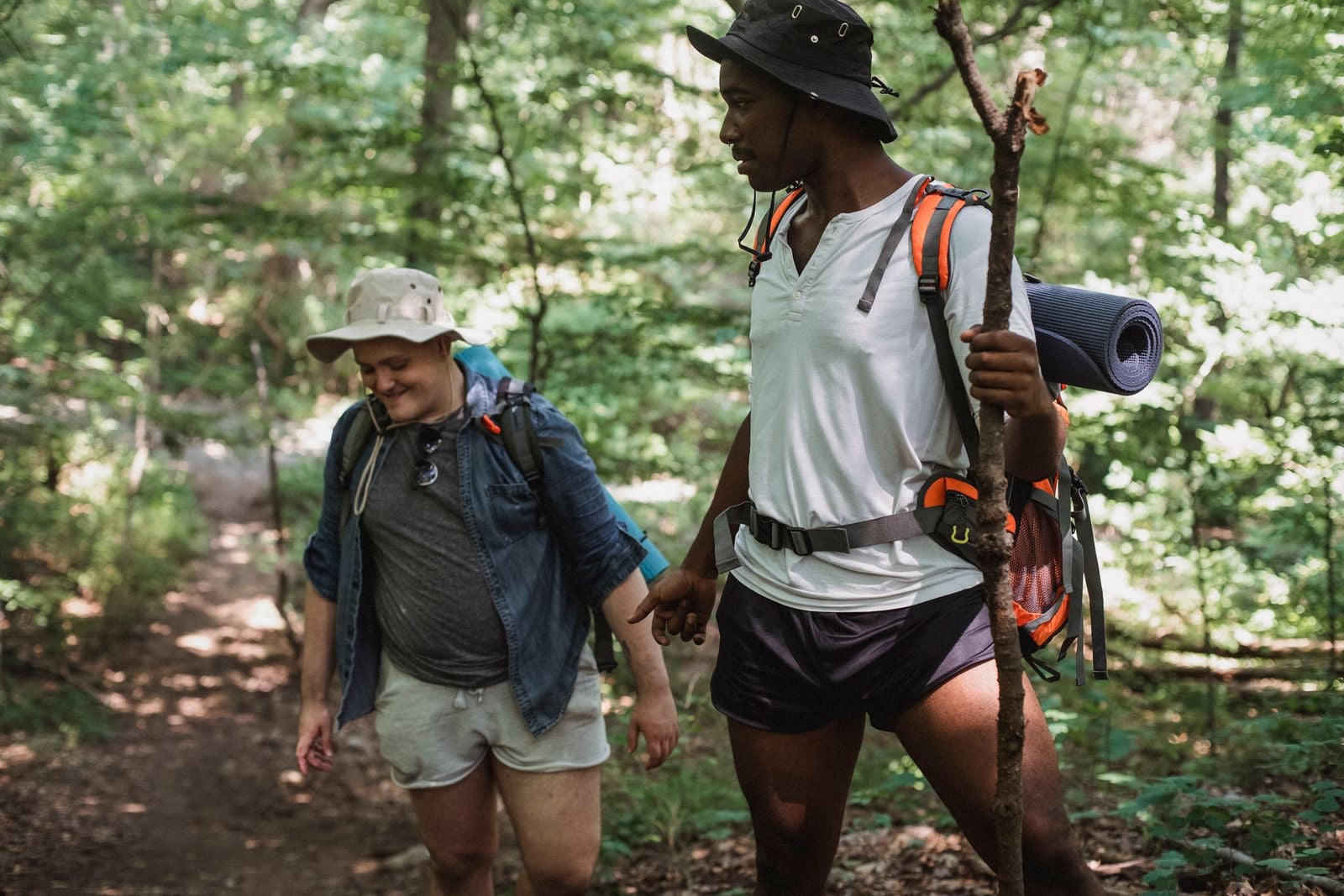
Sitting still, a person listening to something painful has nowhere for their attention to go except the pain and the face of the person delivering it. Walking gives the body something to do. Feet track the path. Eyes track the traffic, the dog, the puddle, the turn ahead. The parts of attention not required for the conversation are quietly occupied.
This is not a therapeutic claim. It is what people report about themselves. Something in the ordinary work of moving forward makes it easier to say the thing that, in a still room, would have caught in the throat.
We’ve written before about the habit of preparing for conversations that never happen, the endless internal rehearsal that stands in for the actual exchange. Some of those conversations never happen because the imagined venue is impossible: a table, a moment of eye contact, a silence too heavy to break. Put the same conversation on a footpath and the venue changes what is thinkable.
What this doesn’t mean
A few things are worth closing off.
Walking together is not a fix for a conversation that shouldn’t be happening at all, and it is not a workaround for a relationship in which one person is unsafe with another. The pattern being described here is about ordinary difficulty: the family conversation that has been postponed for months, the feedback a manager has been carrying for weeks, the thing a friend has needed to say and hasn’t found a way to.
It is also not the case that every difficult conversation improves outdoors. Some people find walking distracting. Some conversations need eye contact precisely because eye contact is the point. A serious apology often needs to be delivered face to face, not shoulder to shoulder.
And we should be careful with the corporate version. A walking meeting can be a genuine act of accompaniment. It can also be a way to raise something difficult in a setting where the other person cannot easily push back, close the door, or ask for a witness. The form is neutral. What people do with it isn’t always.
The quiet reason it works
Movement tends to work best when it is not treated as a separate task from the rest of life. The walking conversation belongs to that same category. It isn’t scheduled as an intervention. It happens because the person suggesting the walk knows, without being able to articulate it, that the thing they want to say will not survive being placed on a table between them.
The suggestion sounds casual. Shall we go for a walk. Do you fancy some air. Come with me to the shop.
What is actually being offered is a change of geometry. A different arrangement of two bodies in space, so that a sentence which has been rehearsed in silence for weeks can finally be spoken aloud, with the path taking some of the weight the room could not.
People who prefer this format aren’t avoiding the conversation. They’re choosing a venue where it can actually happen.