The line is a fixture of conference slides and keynote openings: “The illiterate of the 21st century will not be those who cannot read and write, but those who cannot learn, unlearn and relearn.” It is usually flashed up with a single name beneath it, Alvin Toffler, and left to do its inspirational work. Two things are worth doing with it instead, and pleasingly, both turn out to be demonstrations of the very skill the quote is praising. The first is to check where it actually came from. The second is to ask which of its three verbs is the hard one.
The quote is a requote
The crisp version everyone shares is not, word for word, Toffler’s. It is a later blend of two separate passages from his 1970 book Future Shock. In one, Toffler makes the case that education should teach people to learn, unlearn and relearn. In another, he quotes someone else entirely, the psychologist Herbert Gerjuoy, whose actual line was: “Tomorrow’s illiterate will not be the man who can’t read; he will be the man who has not learned how to learn.” Somewhere along the way, Gerjuoy’s illiterate and Toffler’s three verbs were spliced into the single polished sentence now attributed wholesale to Toffler.
This is not pedantry for its own sake. The point of running down a familiar quotation, rather than passing it along because you have seen it a hundred times, is precisely the reflex the sentence is recommending. The idea belongs at least as much to Gerjuoy as to Toffler, and noticing that is a small, practical instance of unlearning something you were sure you knew.
The hard verb is unlearn
Of the three verbs, learning and relearning are the ones humans are built for. Unlearning is the awkward middle term, and cognitive science has a good deal to say about why it is so much harder than the slogan makes it sound. The relevant idea is the Einstellung effect, first studied by Abraham Luchins in the 1940s with a set of water-jar puzzles: once people found a method that worked, they kept applying it even when a far simpler solution was sitting in plain view.
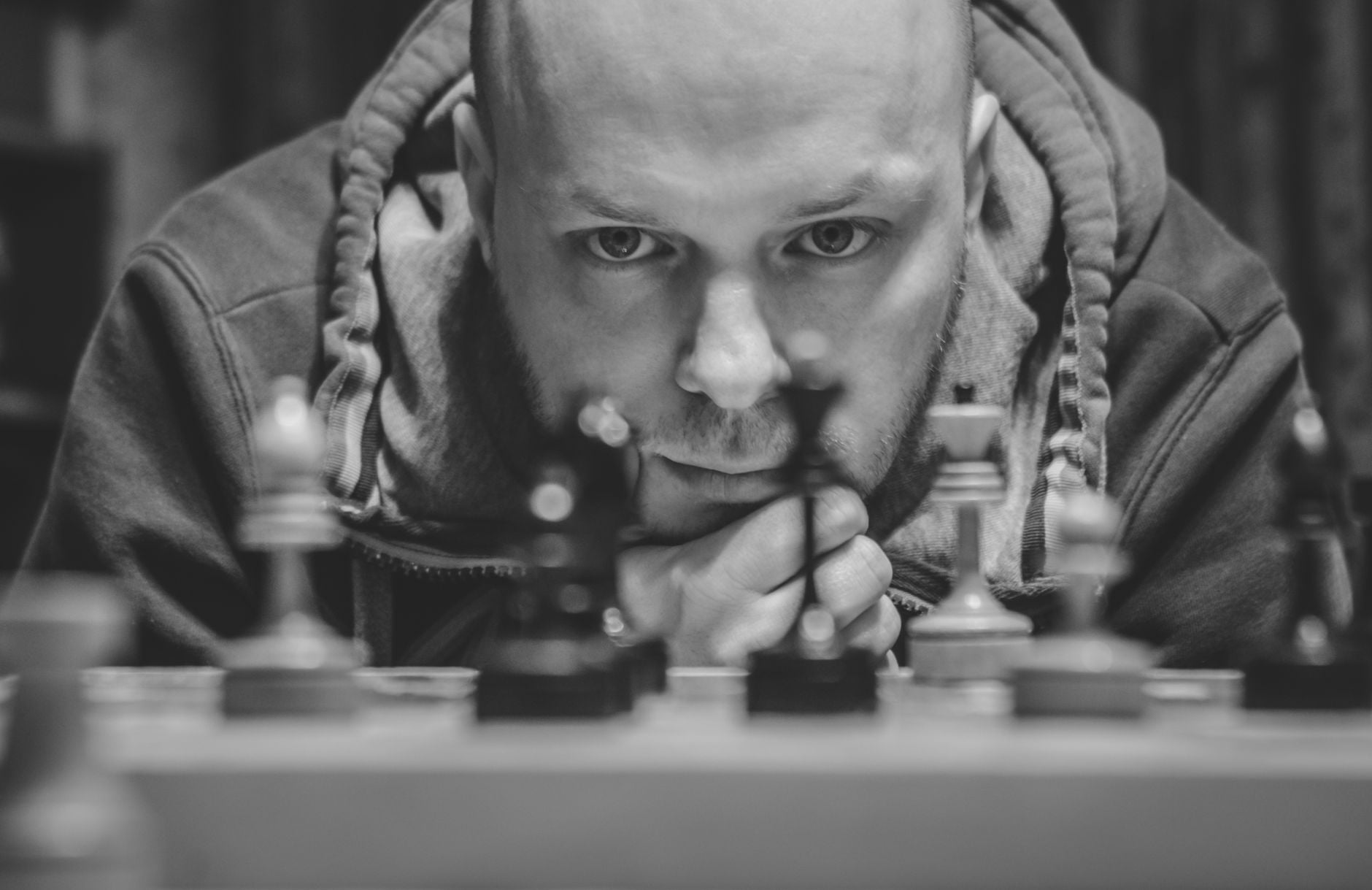
The sharpest modern demonstration comes from Merim Bilalic, Peter McLeod and Fernand Gobet, who studied chess players facing positions that contained both a familiar, decent solution and a better, less obvious one. Using eye tracking, they could see where attention actually went. Even strong players who had been asked explicitly to find the best move kept looking at the squares relevant to the familiar solution, their gaze drawn back to it, while they sincerely believed they were searching for something better. The first idea did not merely compete with the superior one. It captured attention and hid the alternative, and it did so beneath conscious awareness. That is what unlearning is really up against: not laziness or stubbornness, but a mind whose attention has been quietly commandeered by what it already knows.
The deeper read: expertise is both the asset and the trap
The uncomfortable part of this research is that the mechanism causing the rigidity is the same one that makes expertise valuable. An expert is fast because the proven method comes to mind instantly and unbidden; that instant retrieval is the whole point of knowing your field. The Einstellung effect is the shadow side of that gift, the same automatic recall now foreclosing the better option before you have consciously considered it. Rigidity, on this account, is not a character flaw layered on top of competence. It is baked into competence itself, which is why smart, experienced people are far from immune and are sometimes more exposed.
The boundary condition Bilalic and colleagues found is the genuinely useful bit. When the familiar move was an obvious blunder, players easily set it aside. The trap sprang shut only when the familiar move was good but not best. The danger, in other words, is never the clearly wrong habit you would catch anyway. It is the reliable, good-enough method that works well enough to keep you from ever seeing the better one. Unlearning, understood properly, is therefore not a heroic willingness to doubt everything you know, which would just be paralysis. It is the narrower and harder discipline of noticing when a method that has served you well has quietly become the thing standing between you and a superior approach.
What the evidence does and does not settle
A few limits are worth stating plainly. The studies here are specific, water jars and chessboards, though the Einstellung effect and its cousin functional fixedness have been reproduced across many domains, which is why they are treated as general features of cognition rather than quirks of puzzles. None of this is an argument against expertise, which remains overwhelmingly an asset; it is a map of one known failure mode within it. And the quotation’s sweeping futurology, the confident claim about the whole of the 21st century, is rhetoric rather than data, however well it has aged.
Read carefully, though, the requote survives and improves. The difficulty it names is real, and it is concentrated in the verb people skate past. Learning and relearning we manage more or less naturally. The unlearning in the middle runs against a documented bias in which our own knowledge captures our attention and conceals what we have not yet thought of. Fittingly, the most modest possible act of unlearning is available immediately: correcting who actually said the thing about learning to learn.