

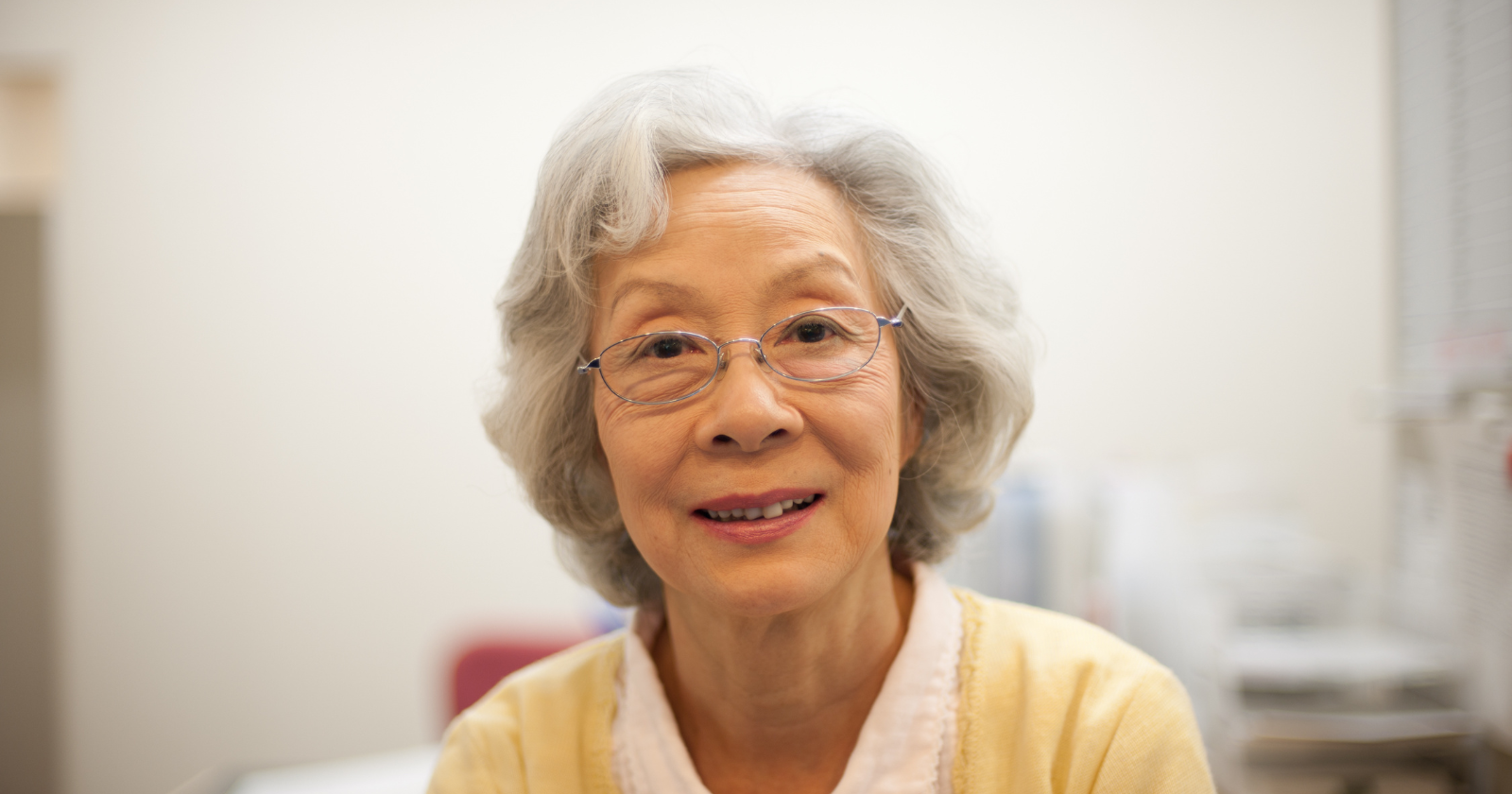
Picture a woman born in a farming village outside Daegu in the spring of 1930. Her birth is recorded in Japanese, by Japanese officials, in a country that does not legally exist. By the time she turns sixty, her grandchildren are watching the Olympic Games on a colour television made forty minutes down the road.
That is not a metaphor. That is a plausible, unremarkable life. Millions of Koreans lived some version of it, and most of them never thought of it as extraordinary, because they had nothing to compare it to.
She was ten when the government took her surname
Korea had been annexed by Japan in 1910, and by the time she started school, Japanese was the classroom language. Korean was taught, when it was taught at all, as a foreign subject in its own country.
Then came November 1939. The colonial administration issued an ordinance requiring Korean households to register a Japanese-style family name, a policy known as sōshi-kaimei. Enforcement began the following February. Registration was slow at first, and then it was not slow at all: by August 1940, roughly eighty per cent of households had complied, under a mixture of official pressure and the quiet understanding that non-compliance made schooling, employment and rations harder to come by.
So she went to school under one name and came home to another. She was ten years old.
Liberation lasted about three weeks
Japan surrendered in August 1945. She was fifteen. For a few weeks Korea was, in some meaningful sense, Korea again.
Then two American colonels drew a line at the 38th parallel, more or less arbitrarily, to divide the peninsula into Soviet and American occupation zones. In 1948 the line hardened into two states with two governments, two armies and two irreconcilable claims to the whole. She had been alive for eighteen years and lived in three different political entities without moving house.
The war did most of its damage to people who were not fighting
She was twenty when North Korean troops crossed the parallel in June 1950. Seoul changed hands four times over the following year. Villages were fought through, bombed, occupied, liberated and occupied again, sometimes within the same month.
Roughly three million Korean civilians became refugees, and civilian deaths across the peninsula are generally estimated in the millions. Over five days in December 1950, some 98,000 civilians were evacuated from the port of Hungnam alongside retreating troops, most of them carrying whatever they could hold. The people who fled south generally assumed they would be back within months.
The fighting stopped in July 1953 with an armistice, not a peace treaty. There is still no peace treaty. Families separated in those three years stayed separated for the rest of their lives, and many of them died waiting for a reunion programme that only started in 2000 and has never operated reliably.
Then came the part nobody talks about, which is the hunger
The war ended when she was twenty-three, and what followed was not recovery. It was destitution. Infrastructure was rubble. The economy ran on foreign aid. Barley season, the stretch in late spring when the previous autumn’s rice had run out and the barley had not yet come in, was a normal annual event rather than a crisis.
By 1960 South Korean income per head was around $158 a year, below much of sub-Saharan Africa at the time. Life expectancy at birth stood at 53.8 years. She was thirty. On the statistics available to her, she was already past the halfway mark.
The next thirty years moved faster than anyone could absorb
From the early 1960s the state poured everything it had into export manufacturing: textiles first, then steel, ships, cars, semiconductors. Growth ran at around ten per cent a year for three decades. Her country went from making wigs to making container vessels inside a single working career.
In June 1987, mass protests forced the military government into direct presidential elections. She was fifty-seven. It was the first time in her life she had voted in a genuinely competitive national election, having spent her childhood as a colonial subject and her middle age under a series of generals.
The following year, Seoul hosted the 1988 Summer Olympics, with athletes from 159 nations arriving in a capital that had been shelled to pieces thirty-five years earlier. She was fifty-eight.
By 1990, the year she turned sixty, life expectancy had reached 71.7 years. She had outlived her own life expectancy at birth by nearly two decades, and the number had moved further away from her the whole time.
Compression is the wrong word for what she experienced
From the outside, this reads as a curve on a chart. Development economists have a tidy phrase for it, the Miracle on the Han River, which makes it sound like weather rather than work.
From the inside it was just Tuesday, then Wednesday. Nobody experiences a national transformation. They experience a landlord, a queue, a ration, a son leaving for the city, a phone line installed, a refrigerator arriving. The aggregate only becomes visible once you are old enough to look back at it, and by then the people who could confirm the early parts are mostly gone.
What that generation carried was not resilience in the greeting-card sense. It was the specific and unglamorous ability to keep functioning while the ground under them was rewritten roughly once a decade. There is no leadership seminar for that. There is only the fact that a great many people did it, quietly, and then made dinner.
