

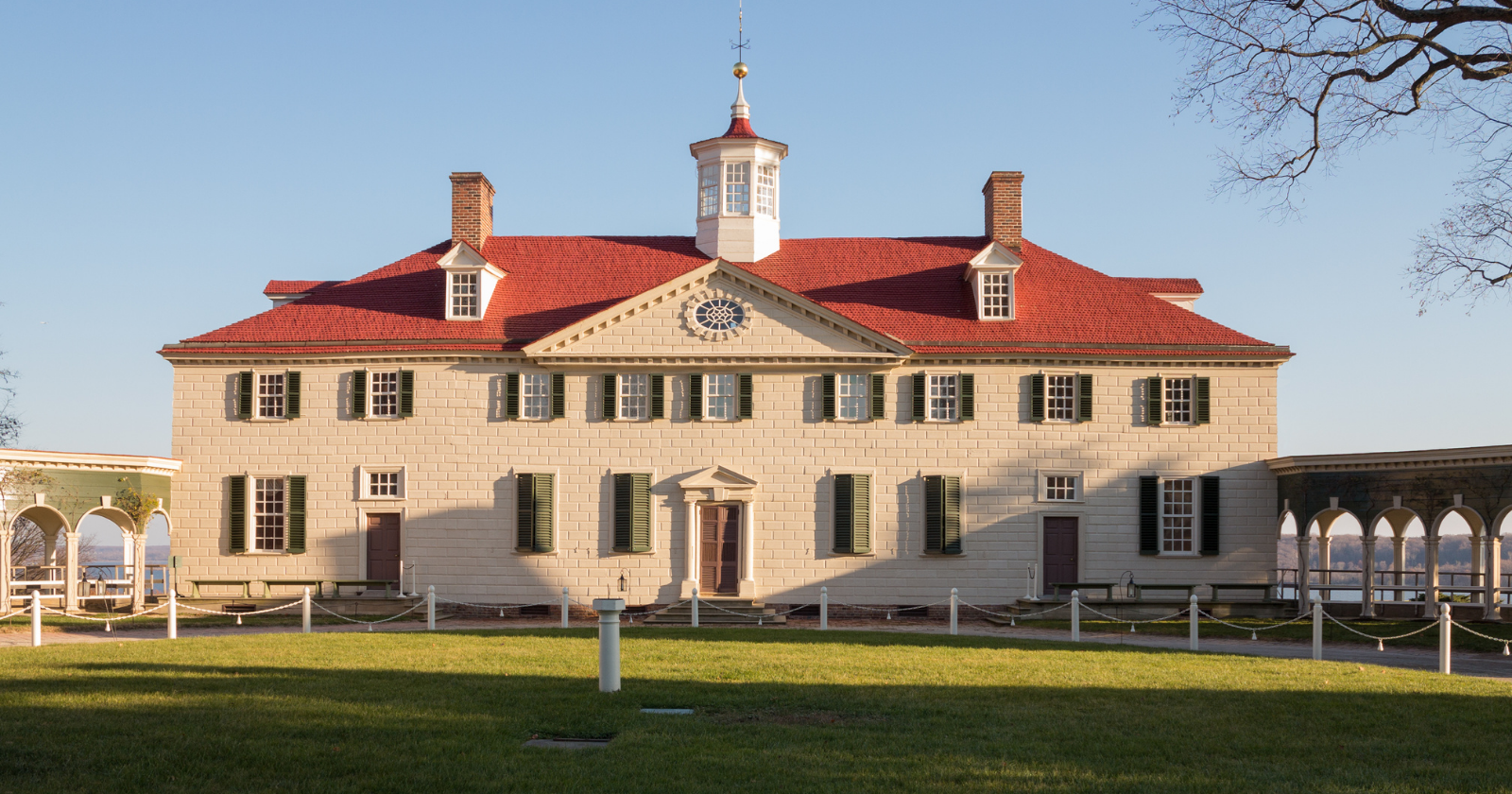
By the early 1850s, the most famous house in America was falling down. Mount Vernon, George Washington’s estate on the Potomac, had passed through three generations of Washington heirs, each less able than the last to afford it. The mansion’s roof leaked; the columns of the piazza were rotting; souvenir hunters chipped pieces from the walls. Steamboat passengers on the Potomac would ring their bells in salute as they passed, then look up at a national shrine visibly returning to the soil.
The owner, John Augustine Washington III, the first president’s great-grand-nephew, knew he could not keep it, and he tried to do the responsible thing. He offered the mansion and 200 acres to the Commonwealth of Virginia, and to the United States government, at a price of $200,000.
Both said no. Virginia’s legislature balked at the cost. In Congress, the objection was constitutional as much as financial: buying and keeping an old house, the argument ran, was simply not the federal government’s business. It was the 1850s, the Union itself was splitting at the seams, and nobody in public office wanted to spend a fortune on real estate sentiment. The house of the man who created the country was, officially, nobody’s problem.
The invalid of Rosemont
It became one woman’s problem because of a letter. Louisa Cunningham, a South Carolina plantation matron, passed Mount Vernon by steamboat one night in 1853 and was appalled by its condition, and she wrote about it to her daughter. If the men of America would not save the home of its greatest man, she wondered, why could the women not do it?
The daughter, Ann Pamela Cunningham, was 37, unmarried, and an invalid; a riding accident in her teens had left her in chronic pain and often bedridden at the family plantation, Rosemont. She had, by the century’s expectations, no public role available to her at all. Women could not vote, could barely hold property in many states, and did not run national campaigns. Cunningham read her mother’s letter and started one anyway, publishing an appeal, initially signed only “A Southern Matron,” summoning the women of the South, and soon of the whole country, to buy Mount Vernon themselves.
What she built to do it had no precedent: the Mount Vernon Ladies’ Association, a national organization run entirely by women, with a “vice regent” appointed in each state to lead local fundraising, an architecture somewhere between a federal system and a chain of command, designed by a woman who directed much of it from a sofa.
Two hundred thousand dollars, mostly in small bills
The money came from everywhere and mostly in small amounts. Schoolchildren sent pennies; church groups and sewing circles held subscription drives; the association sold memberships for a dollar and printed donors’ names. The campaign also recruited the era’s biggest celebrity speaker, Edward Everett, the orator who would later share the platform at Gettysburg, and he barnstormed the country delivering his lecture on Washington over a hundred times, donating every fee, tens of thousands of dollars, to the cause, along with the proceeds of a newspaper column written for the purpose.
Cunningham, meanwhile, had to land the seller. John Augustine Washington had grown wary of speculators and initially refused to deal, and Virginia law did not even clearly allow a chartered association of women to hold such property until the legislature was persuaded to amend the charter. Cunningham traveled to Mount Vernon in person and won him over, and in April 1858 the contract was signed: $200,000 for the mansion and its immediate grounds, paid in installments raised dollar by dollar. The Association took possession in early 1860, and its first resident secretary moved into the crumbling house with a housekeeper and began the repairs.
The timing turned out to be providential in a way no one intended. When the Civil War broke out a year later, Mount Vernon sat almost exactly between the lines, and the Association, a deliberately national body with Northern and Southern officers, declared the estate neutral ground. Soldiers of both armies visited, by custom unarmed, throughout a war fought all around it. The one piece of the country both sides agreed not to fight over was the piece the government had declined to own.
The precedent
Cunningham retired in 1874 with a farewell address that became the Association’s scripture: keep the place as Washington left it, and let no irreverent hand change it. The Mount Vernon Ladies’ Association runs the estate to this day, and it still operates on the founding arrangement, funding preservation through admissions, donations and its endowment, and, as it has pointedly noted for a century and a half, without regular government money. Roughly a million people a year now visit a house the public purse never bought.
The purchase’s afterlife is bigger than the house. The campaign is generally counted as the birth of historic preservation in the United States, the template every later effort copied, and it was the first great demonstration that American women, formally excluded from politics, could organize nationally and win. The federal government eventually came around to the idea that saving the past was its business too; the National Park Service arrived in 1916, fifty-eight years after Congress passed on Mount Vernon. By then the precedent was set, by a bedridden woman from South Carolina who was told the republic’s own birthplace was no one’s responsibility, and answered, in effect: then it is mine.
