

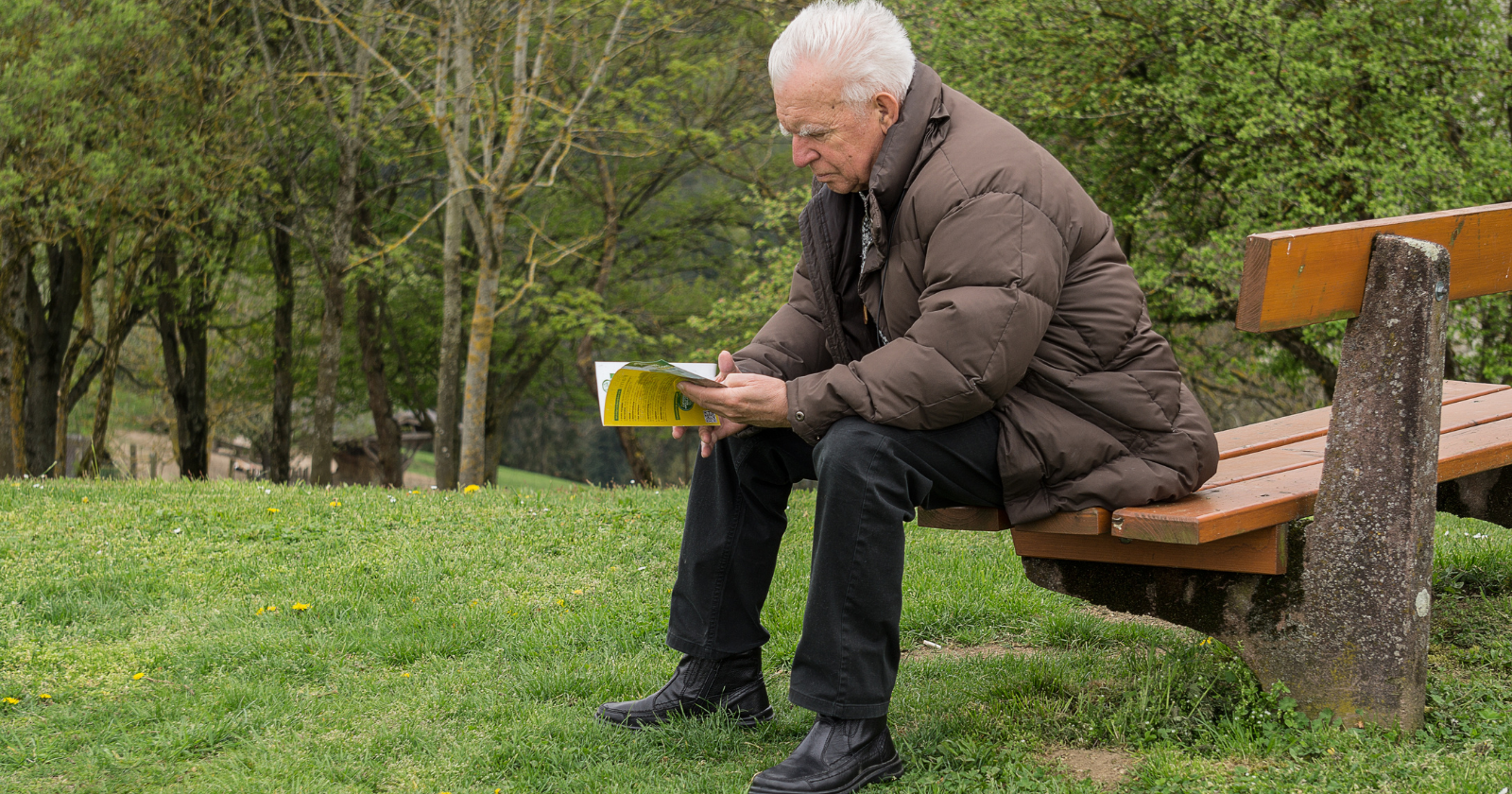
There is one on every street. He ran something once. A department, a shop floor, a crew of eighteen. Now he is in the garden by seven, back indoors by nine, and the neighbours have quietly agreed he has gone downhill since the job ended.
Often he has not. He has just stopped turning up to the leaving drinks.
The psychology here runs against the obvious reading. What looks like a man shrinking is frequently a man cancelling a performance he signed up for thirty years ago and never got round to ending.
Three decades of the work face
There is a name for decades of paste-on cheer. Arlie Hochschild coined it in 1983 as emotional labour: managing your own feelings as part of the job. Deep acting means genuinely talking yourself into the required mood. Surface acting means pasting the expression on and leaving the insides exactly as they were.
Surface acting is the expensive one. Researchers call the gap between what is felt and what is shown emotional dissonance, and the evidence links it to emotional exhaustion, a sense of being fake, and knock-on effects that follow people home.
Now run that forward across forty years. The cheerful one at the counter. The reasonable one in the meeting. The man who could handle a properly awful client without visibly wanting to reverse over him in the car park. A real skill, and also a bill, paid daily, for decades.
Retirement cancels the contract. A fair chunk of what reads as withdrawal is just that bill no longer being paid.
The circle gets smaller on purpose
Why does the invite list shrink first? Stanford psychologist Laura Carstensen has an answer in socioemotional selectivity theory: when time ahead feels wide open, you invest in breadth, banking contacts for a limitless future. When time starts to feel finite, priorities flip toward whatever is emotionally worth the hours.
What gets cut is the tell. A longitudinal study by Tammy English and Carstensen, tracking people across the full adult age range, found social networks growing through young adulthood and then declining steadily across later life. The decline came almost entirely from peripheral partners. The number of close partners stayed roughly stable.
So the man in the garden did not lose his friends. He lost the golf society, the two blokes from the regional office, and the couple next door who only ever discussed guttering. His actual people are intact. The buffer layer went.
This is still research on averages, not a diagnosis of any one retiree. Some quiet really is trouble, and that comes next.
Chosen quiet and imposed quiet behave differently
A 21-day diary study in Scientific Reports tracked how much time people spent alone and how they felt about it. On days with more hours of solitude, people did report being lonelier and less satisfied. That effect is real and worth taking seriously.
But the same study complicates that. When the solitude was autonomous, chosen rather than imposed, and did not pile up day after day, the negative effect was reduced or wiped out altogether. People who were generally alone more were not, on the whole, lonelier.
Two men can spend identical Tuesdays in identical armchairs. One picked the armchair. The other ran out of options. The hours look the same from the pavement and do very different things to a person.
Leaving a role takes longer than clearing a desk
Nobody hands you paperwork when a role ends. Helen Rose Fuchs Ebaugh spent years studying that gap, calling it role exit: leaving behind an identity other people used to recognise you by. Her 1988 book drew on 185 interviews with nuns, police officers, divorcees and retirees, and found a common shape: first doubts, a search for alternatives, a turning point, then the slow work of building a self that accounts for the old role without being it.
Robert Atchley’s continuity theory, set out in The Gerontologist in 1989, sits alongside it. He argued that people adapting to age try to preserve continuity with who they already were, using strategies drawn from their own past. Where retirement rips that continuity badly, adjustment is harder than the cheerful cultural script allows.
Neither of those processes is fast, and neither of them is visible from a driveway.
How to tell which one is in front of you
Pruning and depression can look identical from the street. Up close, they are nothing alike.
Pruning is selective. He has dropped the committee and the quiz night, and still lights up for the grandson, the one old colleague, the dog. He does things alone that he clearly enjoys. Ask him about it and he is unbothered, sometimes a bit smug.
Depression is indiscriminate. The close relationships go too. Sleep and appetite shift. Things he used to love stop registering. The quiet has no shape and no pleasure in it, and he cannot tell you what he does with his days. That is a matter for a doctor, rather than a nudge to get out more.
What actually helps
Stop inviting him to the group thing. He left it deliberately, and the invitation comes across as a request to put the work face back on.
Invite him to the one thing instead. One person, one specific activity, no small talk overhead.
Ask about the work rather than the retirement. Forty years of competence does not stop being interesting because the payroll ended, and most people only ask how he is filling the time.
And if he says he is fine sitting in the garden, consider that he might simply be telling the truth.
