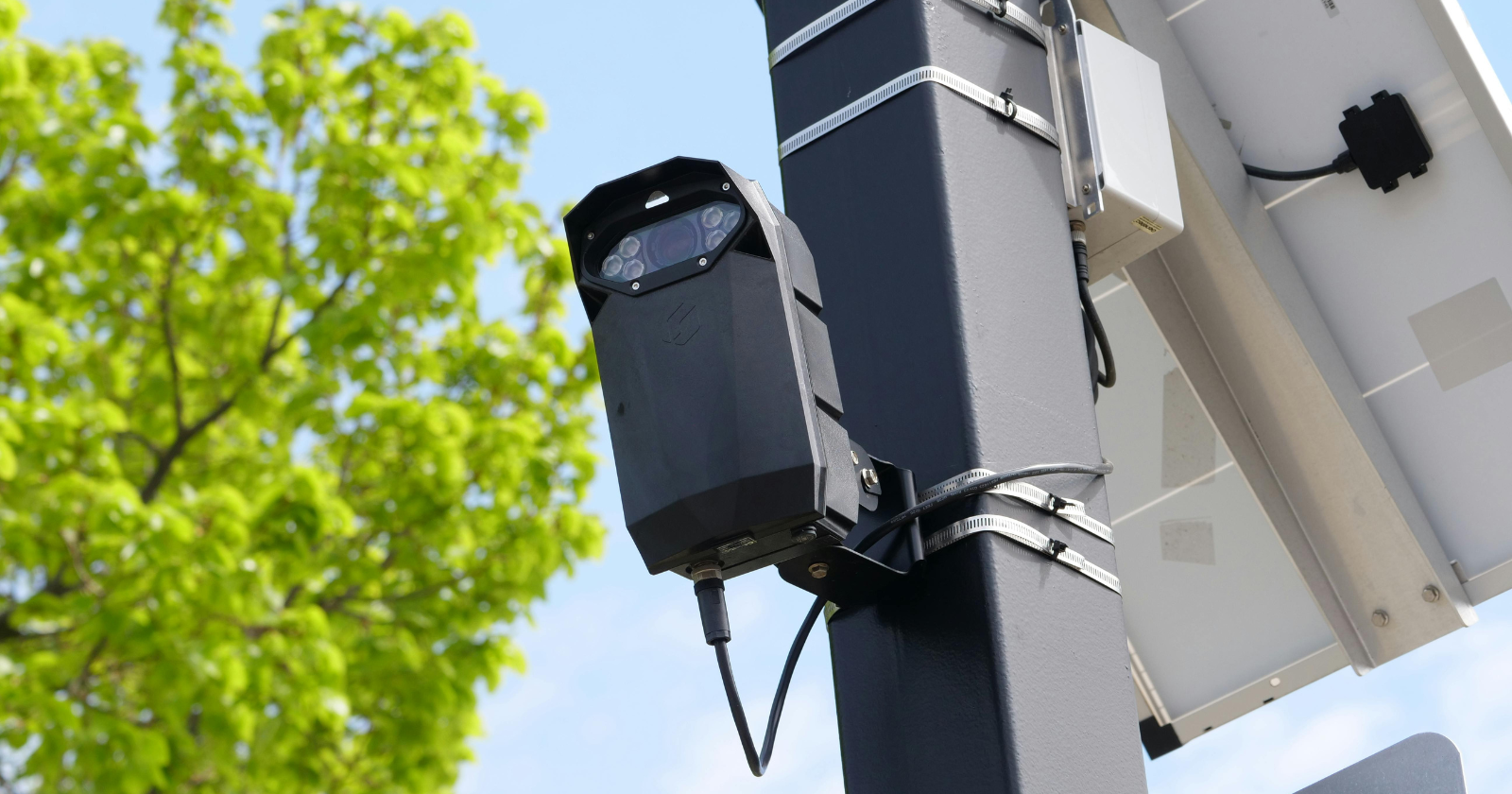
New York City’s noise cameras logged almost 16,000 loud-vehicle events last year, but the programme meant to police the city’s illegally modified exhausts is running at less than half the size the law says it should be. Twelve microphone-equipped cameras were operating in 2025, against a legal requirement for twenty-five, and the gap between what drivers owe and what the city actually collects is just as wide.
The figures come from the New York City Department of Environmental Protection’s own 2025 annual report on its Noise Camera Enforcement Program, which the agency is required to file each year under local law. They show a system that works technically but is starved of funding, and a collections process that recovers only a fraction of the penalties it hands out.
What the cameras caught
DEP’s twelve sound sensor cameras captured 15,994 loud-vehicle events across the city in 2025. Of those, 1,691 resulted in summonses filed with the Office of Administrative Trials and Hearings, or OATH, which is roughly 11 percent of all logged events. DEP says the daily average worked out to 4.6 summonses, with about 33 a week and 141 a month.
The cameras work by pairing a sound level meter with a camera. When a passing vehicle trips a decibel threshold set under the city’s Noise Code, the system photographs the vehicle’s plate and the reading is reviewed before a summons is issued. It is a civil penalty process, not a police stop, which is part of the appeal for a city that has struggled to enforce muffler and exhaust rules through traditional policing.
Total penalties from those 1,691 summonses came to $1,472,265. Only $308,229 of that had actually been paid, an amount equal to about 21 percent of the total assessed. DEP’s own report notes that just 1.2 percent of summonses were dismissed at OATH hearings, and that defaults, cases where the vehicle owner never responded or appeared, accounted for 965 of the 1,691 filings, well over half. That default rate helps explain the low collection figure: a summons that ends in default still carries a penalty on paper, but the city has to chase down an owner who never engaged with the process in the first place, often because a plate is registered out of state or the address on file is out of date.
For comparison, Streetsblog Empire State’s analysis of DEP figures for the prior year found 849 summonses issued in 2024 and roughly $462,000 in fines collected, meaning both enforcement volume and, in dollar terms, the collections dwarfed the previous year even before accounting for penalty size. The programme’s revenue also appears to have covered its own set-up costs, according to that same analysis, even as the city has failed to expand it.
Why only twelve cameras exist
The camera requirement itself is not new. It stems from the “Stop Spreading the Noise” Act, a package of noise bills introduced by City Council Majority Leader Keith Powers, which became Local Law 7 of 2024. That law directs DEP to install no fewer than five noise cameras in each of the city’s five boroughs, twenty-five in total, by September 2025.
The cameras themselves grew out of an earlier pilot programme, which DEP ran on a smaller scale before the 2024 law made a citywide rollout mandatory. Illegally modified exhausts, the kind that produce the sharp cracks and drones the cameras are built to catch, had been a persistent complaint category for the department well before the technology existed to enforce against them automatically. The pilot’s results were part of what the Council pointed to when it moved to lock a specific camera count into law rather than leaving deployment to the agency’s discretion.
The catch is a single clause: the requirement is explicit that it applies “subject to appropriations.” DEP’s own annual report states plainly that in 2025 the agency had twelve cameras and “has not received appropriations to expand the program.” In other words, the City Council wrote a mandate for twenty-five units into law, but never guaranteed the money to buy the other thirteen, and the mayor’s office has not allocated it since.
That has left DEP’s noise camera fleet at less than half its legal target for a full year past the law’s own deadline. A Streetsblog Empire State opinion piece on the shortfall points out the awkwardness of the situation: a programme that appears to be self-funding through the fines it generates is still waiting on the city to release capital for more units, even as complaint volumes handled by the police remain high. That same analysis cites NYPD figures showing officers fielded 46,913 vehicle noise complaints in 2024 but issued only 568 summonses off the back of them, a fraction of what the automated cameras managed with a twelfth of the borough coverage the law envisions.
What the numbers suggest
The discrepancy is not about whether the technology works. The cameras are doing what they were built to do: they detect loud vehicles reliably enough to generate more summonses per unit than an officer working complaints on the ground. The problem sits upstream, in the budget process that is supposed to fund the other thirteen units the law calls for.
The low payment rate is a separate issue from the camera shortage, but the two compound each other. A city running at less than half its mandated camera count is already leaving large parts of the network gap-covered; when combined with a collection rate hovering around one in five dollars assessed, the deterrent effect of the fines depends heavily on whether drivers believe they’ll ever actually have to pay them. DEP’s report does not explain why collection lags so far behind assessment, beyond the default figures it publishes, and a request for further detail on DEP’s follow-up enforcement against defaulters was not addressed in the annual report itself.
This is not a minor quality-of-life dispute for the residents living along the routes these cameras cover. Modified exhausts run loud enough to register well above the thresholds the city’s Noise Code sets for ordinary traffic, and complaint volumes to 311 and the NYPD have stayed high for years partly because a single vehicle can wake an entire block on one pass. The cameras were built to substitute automated, consistent detection for the patchy coverage a limited number of patrol officers can provide. On that narrow technical question, the 2025 numbers say the substitution works. Whether the city treats it as worth fully funding is a separate decision, and one the data alone cannot make for it.
For a city government that frequently cites automated enforcement as a model for scaling up limited staff, the noise camera programme is a useful test case. The technology has outpaced the appropriations process built around it. The gap between the twelve cameras running and the twenty-five the law requires is a budget failure, not a technical one — a line item that has gone unfunded for more than a year past its statutory deadline.