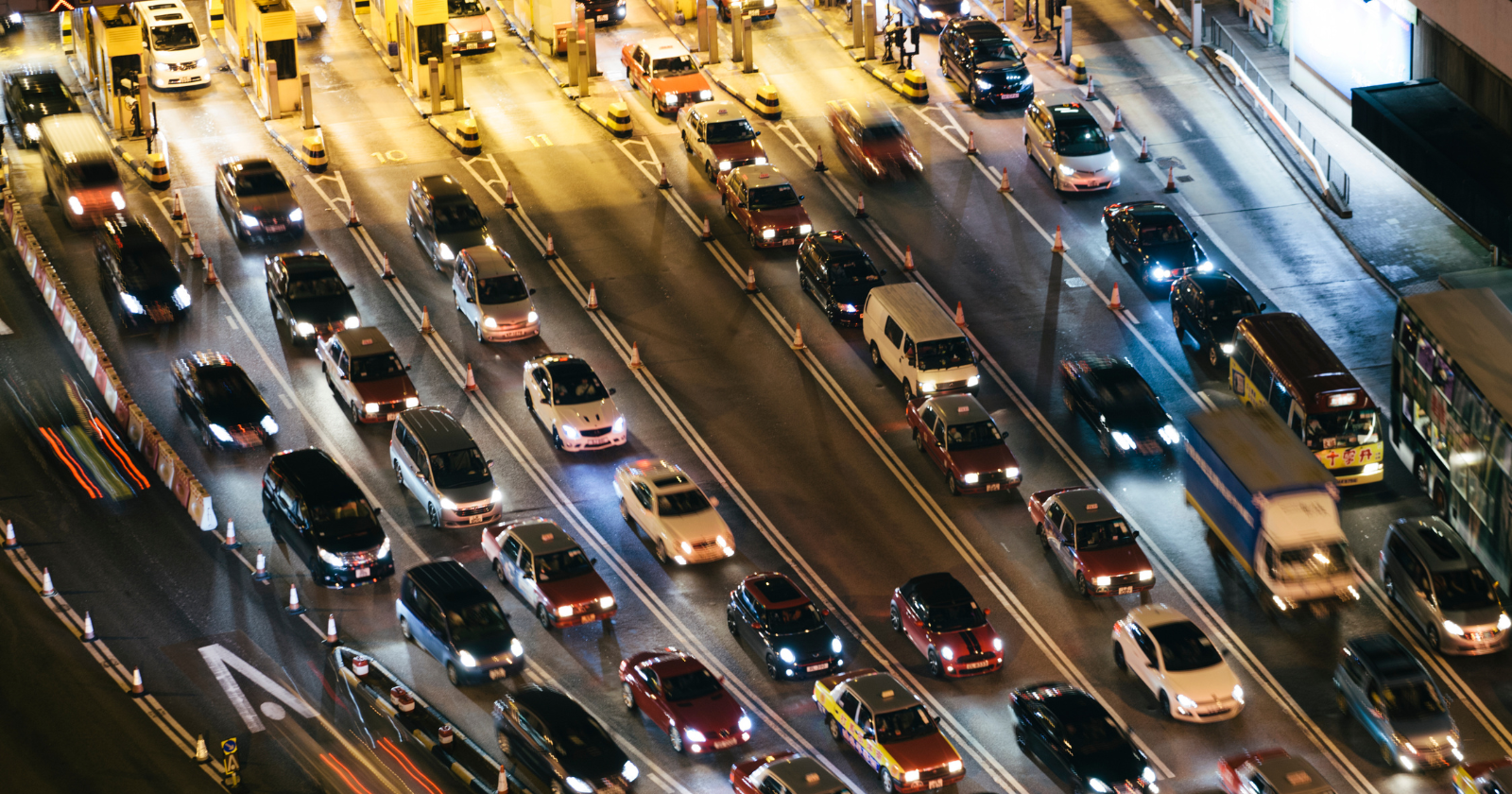
On January 5, 2025, New York started charging most drivers to enter Manhattan below 60th Street. The Metropolitan Transportation Authority’s Central Business District Tolling Program, better known as congestion pricing, applies a base E-ZPass toll of $9 for passenger vehicles during peak hours, with higher rates for trucks and buses and a discount overnight. It was the first program of its kind in the United States, and by its first anniversary on January 5, 2026, the MTA had a full year of data to defend it.
The agency’s own numbers, released around that anniversary rather than at New Year’s Eve as sometimes reported, show 27 million fewer vehicles entered the tolling zone over the twelve months than would otherwise have been expected. That is a cumulative first-year figure, not a daily or monthly one. On an average day, the MTA says about 73,000 fewer vehicles crossed into the zone, an 11 percent reduction. Bus speeds inside the zone rose 2.3 percent over the same period, a reversal after two years of declining speeds in 2023 and 2024.
What the numbers show, and what they don’t
Those figures are close to what the program’s supporters projected before launch, and they hold up against independent sources beyond the MTA’s press office. A National Bureau of Economic Research working paper on the program’s network-wide effects found the speed gains extend past the tolling zone itself, with roads carrying heavy traffic toward the district seeing average speeds rise as much as 6.4 percent. Air quality is a murkier picture: that same NBER paper and a separate New York City Department of Health study both found no clear evidence that congestion pricing measurably changed pollution levels, inside the zone or citywide, a result the city’s health department has attributed partly to already-tightening vehicle emissions standards. Governor Kathy Hochul’s office has also cited a 4 percent increase in weekday car speeds within the zone, a figure the MTA has repeated in its own materials.
The bus number deserves a specific caveat. A 2.3 percent gain in average speed is real but modest, and it follows a period of decline. Some of that improvement is simply ground recovered, not a new high. Riders on the busiest crosstown and avenue routes have reported bigger gains than the zone-wide average suggests, while some outer-zone connections have seen little change.
Revenue has tracked close to plan. Through November 2025, the program had generated $518 million in net tolling revenue, with the MTA projecting more than $550 million for the first full year, in line with its original $500 million estimate. That revenue is meant to back $15 billion in bonds for the MTA’s capital program, and the agency has already tied specific projects, including signal upgrades on the A and C subway lines and new elevators at five stations, to congestion pricing funds.
Who is still fighting it
The program has plenty of supporters beyond the MTA. Transit riders’ groups, environmental organizations including the New York League of Conservation Voters, and business groups that argued gridlock was costing the city more than tolls would have generally backed the plan and point to the first-year data as vindication.
The opposition has not gone away. New Jersey, under then-Governor Phil Murphy, sued to block the program before it launched and has continued to press its case since, arguing the tolls push traffic and pollution onto New Jersey roads and unfairly tax residents who work in Manhattan to help fix the MTA’s finances. A federal judge rejected New Jersey’s bid to halt the launch in January 2025. A related claim against the Federal Highway Administration was later sent back for further explanation of mitigation funding — it was not resolved outright.
Outer-borough and suburban interests have filed their own challenges. Rockland County, whose case against the Triborough Bridge and Tunnel Authority has drawn public support from its congressman, Republican Mike Lawler, saw its suit dismissed and has appealed. The Town of Hempstead has filed two separate suits against the authority: a state-court case that was dismissed as moot and is now on appeal, and a federal case that is still pending. A trucking industry group’s case also remains pending after an amended complaint. According to a tally by the Regional Plan Association, twelve lawsuits have targeted the program in some form, and none has succeeded in forcing the MTA to stop tolling.
The most consequential fight came from Washington. The Trump administration’s Department of Transportation, under Secretary Sean Duffy, moved multiple times in 2025 to revoke federal approval for the program and threatened to cut other federal funding to New York if the tolls continued. In March 2026, U.S. District Judge Liman ruled that Duffy’s termination order was unlawful, finding the government had acted arbitrarily and noting that President Trump had publicly declared the program dead on social media before any final agency decision existed. The toll has stayed in place throughout.
What is still unsettled
New Jersey’s underlying lawsuit has not been dismissed. It continues on a separate track from the federal termination fight, and a ruling against the MTA there could still force changes to tolling rates, exemptions, or mitigation payments even though the program itself has survived every attempt to shut it down so far.
There is also the question of durability. A single year of lower traffic and marginally faster buses is a real result, but it is one year. Drivers adjust to tolls over time, and other cities with congestion charges, London among them, have seen initial traffic reductions erode somewhat as trip patterns shift. Whether New York’s 11 percent reduction and 2.3 percent bus-speed gain hold, grow, or fade as the novelty of the toll wears off will only be answered by a second and third year of data the MTA has not yet published.
Then there is the money. The $15 billion in bonds backed by toll revenue is meant to fund a specific slate of subway and bus projects, but the MTA’s broader capital plan has faced its own political battles over state and city funding commitments that predate congestion pricing. How reliably toll revenue keeps flowing, and how directly it translates into finished signal and accessibility projects rather than plugging other budget gaps, is the open question the program’s first year has not resolved.