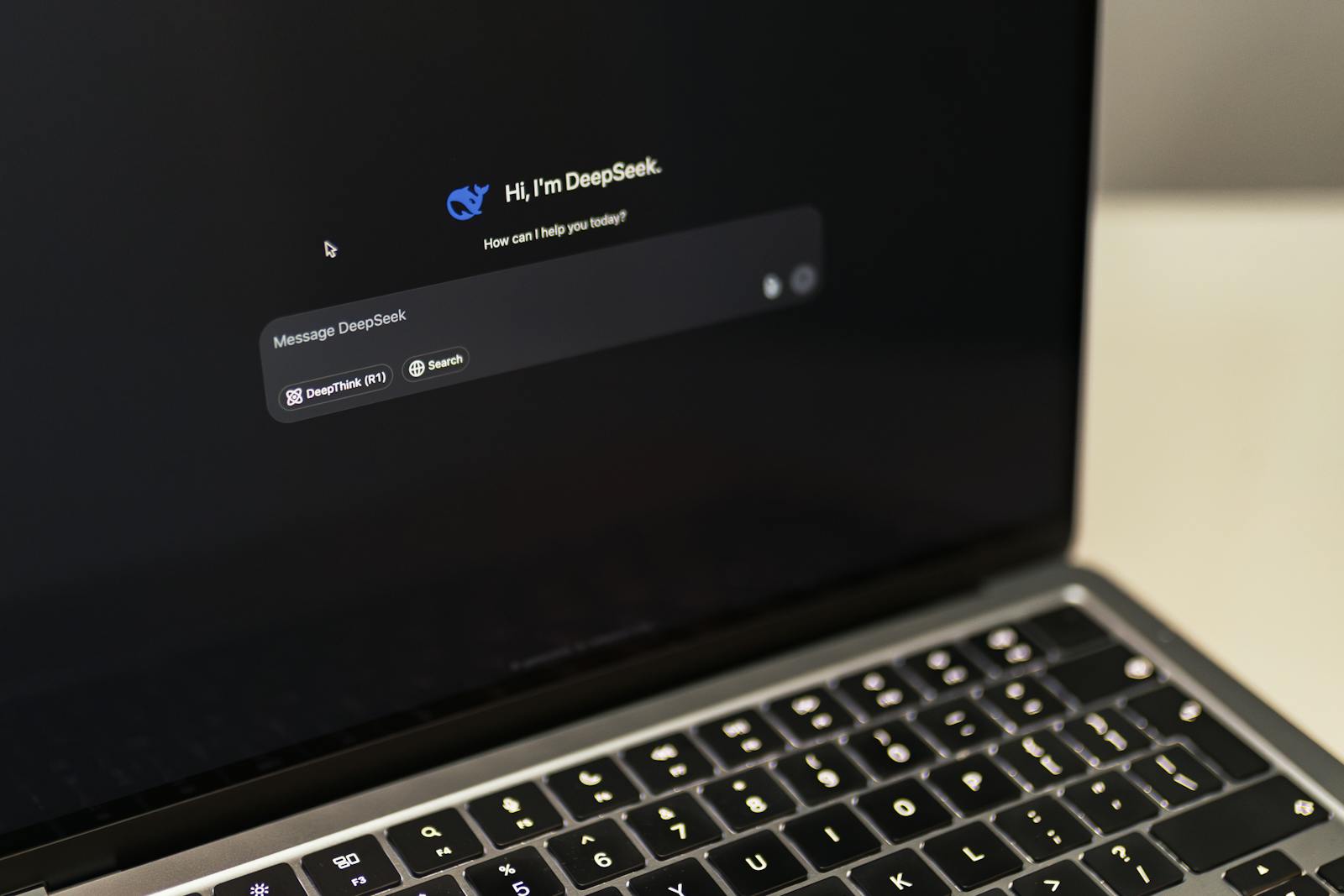
The global AI industry is undergoing a rapid repricing event, and the catalyst is a Chinese startup that most Western observers barely noticed six months ago. DeepSeek, the Hangzhou-based lab backed by quantitative hedge fund High-Flyer, has forced a reckoning across the AI supply chain by releasing highly capable models at a fraction of the cost charged by OpenAI, Google, and Anthropic.
The result: a cascading price war that is reshaping how companies budget for intelligence, how developers choose their tools, and how the entire economics of foundation models may evolve over the next 12 to 18 months.
What DeepSeek actually did
In January 2025, DeepSeek released its R1 reasoning model, which matched or exceeded OpenAI’s o1 on several key benchmarks. The kicker was the price. DeepSeek’s API costs came in at roughly 90-95% cheaper than comparable offerings from OpenAI and Anthropic. The company achieved this through a combination of architectural innovations (notably mixture-of-experts and multi-head latent attention), aggressive training efficiency, and what appears to be a fundamentally different cost philosophy shaped by operating in a market where margins are razor-thin by default.
According to Reuters reporting, the release sent shockwaves through global markets, wiping hundreds of billions of dollars off the stock valuations of AI infrastructure companies, most notably Nvidia, which saw its largest single-day market cap decline in history.
The domino effect: who’s cutting prices and by how much
The response from major AI providers has been swift and, in some cases, dramatic.
OpenAI slashed prices on its GPT-4o mini model and accelerated the rollout of cheaper API tiers. Google DeepMind responded by making Gemini 1.5 Flash significantly more affordable, positioning it as a direct competitor for cost-sensitive enterprise workloads. Anthropic, while more measured in its public pricing moves, has introduced new batch processing options designed to bring per-token costs down substantially.
In China, the effect has been even more pronounced. Alibaba’s Qwen team, Baidu with its Ernie models, and ByteDance’s Doubao have all engaged in aggressive price cuts, with some providers offering free API tiers for lighter usage. As the Financial Times reported, China’s domestic AI market has effectively entered a “race to zero” on inference pricing, a dynamic that is now spilling across borders.
Why this matters beyond the spreadsheet
Price wars in technology tend to be transformative. When AWS drove cloud computing costs down relentlessly through the 2010s, it unlocked an entire generation of startups that could never have afforded their own infrastructure. The same dynamic is now emerging in AI.
For developers in Lagos, São Paulo, Jakarta, and Bangalore, the cost of accessing frontier-level AI capabilities has dropped from prohibitive to plausible in a matter of months. A startup building AI-powered legal tools for the Indian market, for example, might have budgeted $50,000 per month in API costs a year ago. That same workload could now cost $3,000 to $5,000. The implications for adoption across the Global South are significant.
This pricing shift also changes the strategic calculus for companies deciding whether to build their own models or rent intelligence from a provider. When API costs were high, the case for training proprietary models (even small ones) was strong. As costs plummet, more companies may opt to stay on commercial APIs, concentrating even more power with the foundation model providers while reducing the incentive for independent AI research.
The geopolitical dimension
DeepSeek’s emergence has complicated the narrative around US export controls on advanced AI chips to China. The company reportedly trained its models using older Nvidia A100 chips rather than the restricted H100s, raising uncomfortable questions about the effectiveness of sanctions designed to maintain American AI dominance.
As the South China Morning Post noted, DeepSeek’s success has become a point of national pride in China and a source of anxiety in Washington. US Commerce Secretary Howard Lutnick has publicly acknowledged that the competitive threat is real, while bipartisan congressional voices have called for a reassessment of the chip export control strategy.
The stock market reactions have been telling. While Nvidia and other chip companies initially suffered steep declines, the broader effect has been more nuanced. Companies positioned as AI consumers (rather than AI infrastructure providers) have generally benefited from the expectation of lower input costs, a pattern visible across sectors from healthcare to financial services.
What to watch next
Three dynamics will determine whether this price war produces lasting structural change or simply compresses margins temporarily before a new equilibrium emerges.
First, sustainability. DeepSeek is reportedly subsidizing some of its API pricing, a classic land-grab strategy. The question is whether its hedge fund backing gives it enough runway to outlast competitors, or whether prices will stabilize at a higher (though still reduced) level once market share battles cool.
Second, quality differentiation. As pricing converges toward commodity levels, the competitive battleground shifts to reliability, latency, safety features, and ecosystem tooling. OpenAI and Anthropic are already emphasizing their safety research and enterprise support as differentiators that justify premium pricing, even in a deflationary environment.
Third, the open-source wildcard. DeepSeek released its models with relatively open weights, and Meta continues to push Llama as a free alternative. If open-source models close the quality gap with proprietary ones (and the evidence suggests they’re doing so rapidly), the entire commercial API model faces existential pressure. The price war may be a transitional phase on the way to a world where frontier AI capabilities are essentially free at the point of use, with monetization shifting to services, fine-tuning, and deployment infrastructure.
The bigger picture
What we’re witnessing is the rapid commoditization of a technology that, just two years ago, seemed destined to remain the exclusive province of a handful of trillion-dollar companies. DeepSeek has demonstrated that breakthrough AI capabilities can emerge from unexpected places, built by relatively small teams working under significant resource constraints.
For founders and builders worldwide, the practical takeaway is clear: the cost barrier to integrating powerful AI into products and services is falling faster than almost anyone predicted. The companies that move quickly to redesign their products around this new cost reality will have a meaningful advantage over those still budgeting at 2024 prices.
The AI price war is, at its core, a redistribution event. Value is migrating from model providers to model consumers, from infrastructure companies to application builders, and from wealthy markets that could always afford AI to emerging markets that couldn’t. That shift, if it holds, may prove to be DeepSeek’s most consequential contribution to the industry.
Feature image by Matheus Bertelli on Pexels