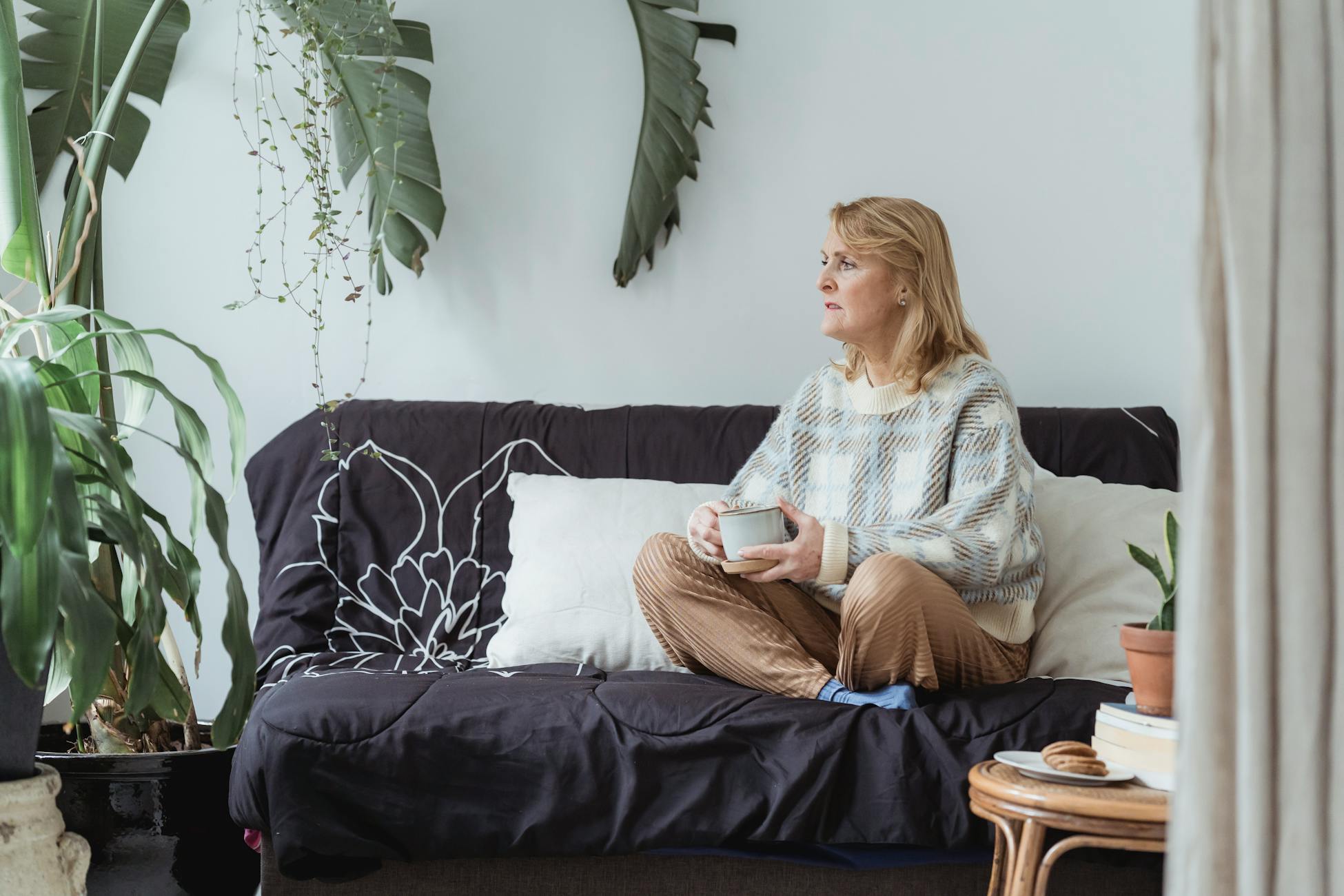
Middle age, researchers have suggested, is becoming a breaking point for loneliness and social connection. That finding landed differently for me than most headlines do. Because I’ve been watching this pattern play out in real time, not in data sets, but in the way people in their forties talk about being alone. The specific words they choose. The speed at which they deliver them. The subtle, practiced flatness in their voice when they say, “I actually prefer it this way.”
There’s a version of that sentence that carries real weight. And there’s a version that sounds like a line from a play the person has been performing for so long they’ve forgotten the curtain ever went up.
The difference between peace and performance
Someone who genuinely prefers solitude tends to describe it the way you’d describe a favorite meal. Casually. Without urgency. They don’t need you to believe them. They’re not watching your face for signs of pity or disbelief. The preference exists independent of your reaction to it.
Someone who has rehearsed the preference speaks differently. There’s a tightness. A pre-loaded quality, as if the answer was ready before you asked the question. The phrasing is too clean. Too final. “I’m just wired that way.” “I’ve always been a loner.” “People drain me.” These aren’t observations. They’re walls built from language, and they were constructed brick by brick over years of needing to explain a situation that felt unexplainable.
Psychologists have outlined clear distinctions between rejuvenating solitude and fear-driven avoidance. Genuine solitude tends to feel restorative. The person returns from it with more energy, more clarity, more capacity for connection when they choose it. Defensive solitude, on the other hand, looks similar from the outside but operates on entirely different mechanics. The person isn’t recharging. They’re hiding. And they’ve gotten so good at hiding that they’ve redecorated the hiding spot and called it home.
How the script gets written
Nobody wakes up at forty-three and decides to pretend they enjoy being alone. The script develops slowly. It usually starts with a handful of social injuries in the late twenties or early thirties: a friendship that evaporated without explanation, a relationship that ended with silence rather than conversation, a stretch of time where every attempt at connection felt like it cost more than it returned.
At some point, the math changes. The emotional cost of reaching out begins to exceed the emotional cost of staying in. And so the person stops reaching. Not dramatically. Not with a declaration. They just… slow down. They decline one invitation, then another, then stop receiving them altogether. And when someone finally notices and asks if they’re okay, they need a response. Something quick. Something that closes the conversation without opening a wound.
“I prefer being alone” works perfectly. It answers the question. It discourages follow-up. And if you say it enough times, you start to believe it yourself.
I’ve written before about how the hardest loneliness to recover from is the slow realization that friendships you believed were mutual were actually maintained entirely by your effort. That specific wound tends to calcify into something that looks, from a distance, like self-sufficiency. The person isn’t self-sufficient. They’re exhausted. But exhaustion and independence can wear the same face for years before anyone thinks to look closer.
The rehearsal has a sound
Here’s what I’ve noticed, and I’ll admit this comes from personal observation rather than any controlled study: people who have genuinely chosen solitude don’t explain it unprompted. They don’t bring it up at dinner parties. They don’t preface stories with “I know this is weird, but I actually like being by myself.” The preference is so integrated into their identity that it requires no defense.
People who are performing the preference, though, volunteer it. They announce it. They weave it into introductions. “I’m kind of a hermit.” “I’m not really a people person.” The frequency with which someone references their aloneness is often inversely proportional to how comfortable they actually are with it.
Think about anything you’re truly at peace with. Your height. Your taste in music. The city you live in. You don’t explain these things constantly. You don’t brace for judgment when they come up. Peace is quiet. Rehearsal is loud, even when the volume is carefully controlled.
Research into the downsides of prolonged solitude highlights something that complicates the picture further: people who spend extended periods alone often experience a gradual erosion of social skills, which in turn makes social interaction feel more effortful, which reinforces the desire to be alone. The feedback loop is vicious and almost invisible from the inside. By the time someone in their forties has been running this loop for a decade, the idea of re-entering social life can feel less like a choice and more like learning to walk again after years in a wheelchair. The preference for solitude, at that point, is real in the sense that it reflects their current capacity. But it didn’t start as a preference. It started as a wound that went untreated long enough to reshape the bone.
Why the forties are where this crystallizes
There’s something specific about midlife that hardens these scripts into permanent fixtures. In your twenties, loneliness still carries a sense of temporary embarrassment. You assume you’ll grow out of it. Social opportunities feel abundant, even if you’re not taking them. In your thirties, the pace of life offers cover: careers, children, relocations. Being too busy for friendships is socially acceptable and often true.
But the forties strip away the excuses. The career has either stabilized or plateaued. The children, if there are any, are increasingly independent. The relocations have slowed. And what remains is whatever social infrastructure you actually built, which for many people turns out to be far thinner than they assumed.
This is the decade where the gap between rehearsing being fine and actually being fine becomes load-bearing. Either the solitude is genuinely nourishing, or the performance starts to show structural cracks: sleep problems, low-grade irritability, a relationship with alcohol that’s shifted from social to functional, a creeping sense that weekends are something to survive rather than enjoy.

What listening actually requires
When someone in their forties tells you they prefer being alone, the instinct is to take them at their word. Respecting boundaries matters. Autonomy matters. And nobody wants to be the person who pathologizes someone else’s legitimate choices.
But there’s a difference between respecting a boundary and accepting a barricade. Boundaries have doors. Barricades don’t.
Listening carefully means paying attention to what surrounds the statement. Does the person describe their solitude with specific, textured details? “I’ve been reading this series of novels and I look forward to the quiet every evening” sounds different from “I just don’t need people the way other people do.” The first is a description of life. The second is a thesis statement, and thesis statements are for papers you’re trying to defend.
It also means noticing what happens when you gently push back. A person at peace with their solitude can tolerate curiosity about it. They’ll elaborate. They’ll even laugh about the quirks of living alone. A person performing the preference will stiffen. They’ll repeat the script with slightly more force. They’ll change the subject. The defensiveness is the tell.
I’ve noticed this pattern with people whose loneliness exists inside relationships too. The script adapts to whatever container it needs to fit. “We’re just independent people” can mean exactly that, or it can mean two people who stopped trying to reach each other and built separate emotional bunkers in the same house.
The part nobody wants to say out loud
Here’s what makes this particularly difficult to navigate: telling someone that their stated preference might actually be a defense mechanism is, in most social contexts, unforgivable. We’ve built an entire cultural framework around the idea that people know their own minds, that self-reported preferences are sacred, that questioning someone’s inner life is a form of aggression.
And mostly, that framework is correct. Mostly.
But research into defense mechanisms and psychological functioning has long established that the narratives we construct about ourselves can serve protective functions that operate below conscious awareness. The person isn’t lying when they say they prefer being alone. They believe it. The belief is sincere. It’s also, in some cases, a sincerely held belief that was manufactured by a psyche that needed to stop the bleeding.
I was the quiet, observant kid growing up. The one who read philosophy books while other children played. I was praised for being “mature,” which I’ve written about at length. For years, I carried a version of the same script: “I’m just more comfortable alone.” And I was comfortable alone. That part was true. What was also true, and what took much longer to admit, was that the comfort had been constructed on top of something I hadn’t dealt with. The solitude was real. The peace was partial.
What peace actually sounds like
Genuine contentment with solitude has a quality that’s hard to describe but easy to recognize. It sounds unfinished. Casual. The person trails off mid-sentence because they don’t need to convince you. They shrug. They mention their alone time the same way they’d mention having toast for breakfast: as a fact so ordinary it barely warrants discussion.
Rehearsed contentment sounds complete. Polished. Every sentence lands with the precision of something that’s been said before, many times, in front of a mirror. The logic is airtight. The delivery is smooth. And that smoothness is exactly what should give you pause. Because real peace with a difficult thing is almost never smooth. It’s messy and contradictory and full of caveats. “I mostly prefer being alone, but sometimes I don’t, and I’m still figuring out when it tips” is what honesty sounds like. “I prefer being alone” with a period and no further elaboration is what a script sounds like.
The difference between those two sentences is the distance between someone who chose a life and someone who stopped fighting for a different one. Both deserve compassion. Only one is being honest about what they need.